
TL;DR

Get decor and gifts delivered free — and shop member deals
- Fast, free delivery on millions of items
- Access to Prime Big Deal Days deals on October 6–7
- Prime Video, Amazon Music and more included
A House Beautiful report describes how interior designers use color, rugs, millwork, wallpaper and decorative vent covers to make awkward or dated features less noticeable. The approaches redirect attention rather than remove the underlying feature, and can offer alternatives when replacement or remodeling is costly or disruptive.
A House Beautiful report describes how interior designers use paint, furnishings and architectural details to make unwanted home features less conspicuous, an approach the report calls “decorative camouflage.” The examples include aging floors, a gap above kitchen cabinets, a sloped ceiling and prominent air vents—features that may be costly or impractical to replace.
Rachel Simpson, a senior interior designer at Revive Design and Renovation, told House Beautiful that designers can use artwork, lighting, textures, plants and rugs to shift a room’s visual focus. The idea is not to remove an eyesore but to make it a less dominant part of the space. Simpson’s examples show how color and decor can work with an existing feature instead of trying to disguise it with a major renovation.
For a bedroom with old flooring, Simpson chose paint and furnishings to lighten the room rather than replace the floors. The report also suggests complementary wall colors and area rugs or runners to add softness and break up the visual weight of older flooring. Simpson said the aim is for the floor to become a background element rather than the room’s main feature.
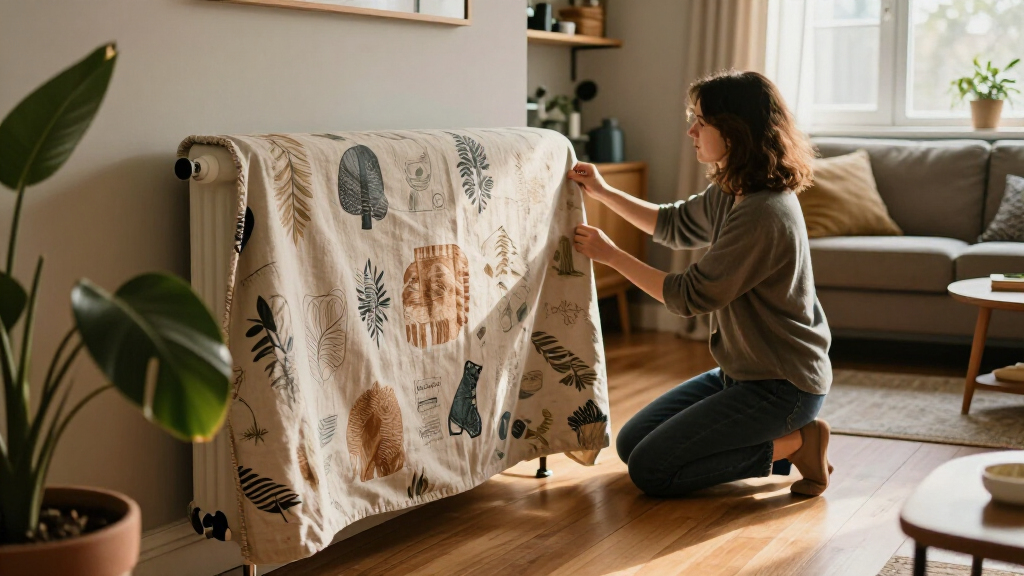
In a kitchen with a gap between the upper cabinets and ceiling, Simpson recommended painting the wall above the cabinets the same color as the cabinetry. That can make the gap less visible and create an impression of greater height, though it does not extend the cabinets. For a living room with a one-directional sloped ceiling, designer Hilary Greenhalgh instead emphasized the fireplace with millwork, crown molding and strong horizontal lines. Designer Raquel Skrobarczyk suggested covering a vent with matching wallpaper or choosing a decorative grille.
Low-Cost Ways to Shift the Focus
These suggestions matter to homeowners because they offer ways to improve how a room looks without immediately replacing materials or undertaking a full remodel. Replacing flooring or reworking kitchen cabinetry can involve expense and disruption; visual changes may be more manageable, depending on the room and the homeowner’s budget.
The advice also draws a useful distinction: camouflage changes what stands out, not necessarily the underlying condition. Rugs can cover portions of a floor, matching paint can soften the appearance of a cabinet gap, and a decorative grille can make a vent more attractive. None of those steps repairs damaged flooring, adds cabinet storage or removes the need for ventilation. Homeowners should treat the techniques as design choices, not structural or mechanical fixes.
As an affiliate, we earn on qualifying purchases.
Four Features Designers Reframed
The report presents the techniques through examples from designers’ work, rather than through a controlled study or a cost comparison. Simpson’s flooring and cabinet suggestions rely on color coordination and visual continuity. Greenhalgh’s family-room project used architectural detail around the fireplace to establish a stronger focal point amid competing features, including stairs, French doors and an opening to the kitchen.
For air vents, Skrobarczyk’s suggestions address both blending in and adding decoration: wallpaper can reduce contrast, while patterned grilles can make the vent a more intentional detail. The report does not say that every method suits every home. Results depend on the existing finishes, room layout and whether a feature still functions as it should.
“By using strategic design elements such as bold artwork, statement lighting, interesting textures, plants, rugs, or thoughtfully placed decor, we can redirect the eye toward something more visually appealing.”
— Rachel Simpson, senior interior designer at Revive Design and Renovation
Limits of Visual Camouflage
The report does not provide prices, measurements, before-and-after performance data or evidence that these approaches work equally well in different homes. It is also unclear how much each treatment changes a room’s appearance without seeing the full projects and their materials. The examples are designer recommendations, not a guarantee of a particular result or savings compared with replacement.
The source gives no technical guidance on covering vents. Any treatment must leave the vent able to provide adequate airflow; a homeowner should not block a ventilation opening with wallpaper or another material. The report also does not establish whether older floors in its example had damage or other issues requiring repair.
Choosing a Suitable Design Fix
The report describes no upcoming project, policy change or follow-up announcement. For homeowners considering a similar approach, the next step is to identify whether the problem is mainly visual or whether it signals a repair need. Paint, rugs and decorative details may address appearance; damaged flooring and ventilation problems may call for qualified assessment rather than concealment.
Before changing an air vent, confirm that its opening and airflow will remain unobstructed. For larger work, homeowners can ask a designer or relevant tradesperson to assess the space and compare a cosmetic treatment with replacement or repair. The article’s examples offer options to discuss, but the appropriate solution depends on the feature and the home.
Key Questions
What does “decorative camouflage” mean?
It means using color, furnishings or decorative details to make an unwanted feature less noticeable without removing it.
How can homeowners make old flooring less prominent?
Designer Rachel Simpson recommends coordinating wall paint with the floor and using area rugs or runners to add color and texture. These steps change the room’s appearance but do not repair damaged flooring.
Can paint make the gap above kitchen cabinets disappear?
Painting the wall above the cabinets to match the upper cabinetry can make the gap less visually distinct. It does not extend the cabinets or create additional storage.
Is it safe to cover an air vent with wallpaper?
The report presents matching wallpaper as a visual technique, but any covering must leave the vent’s airflow unobstructed. Do not block the opening; check with an appropriate professional if you are unsure how to treat it.
Source: rss
Fall Picks
fall essentials
As an affiliate, we earn on qualifying purchases.