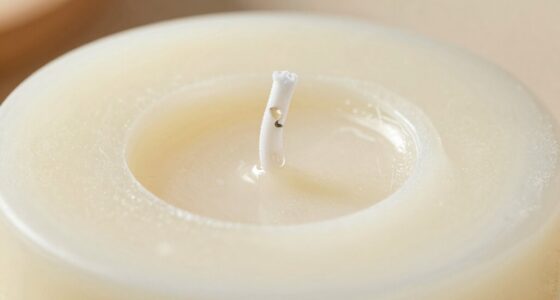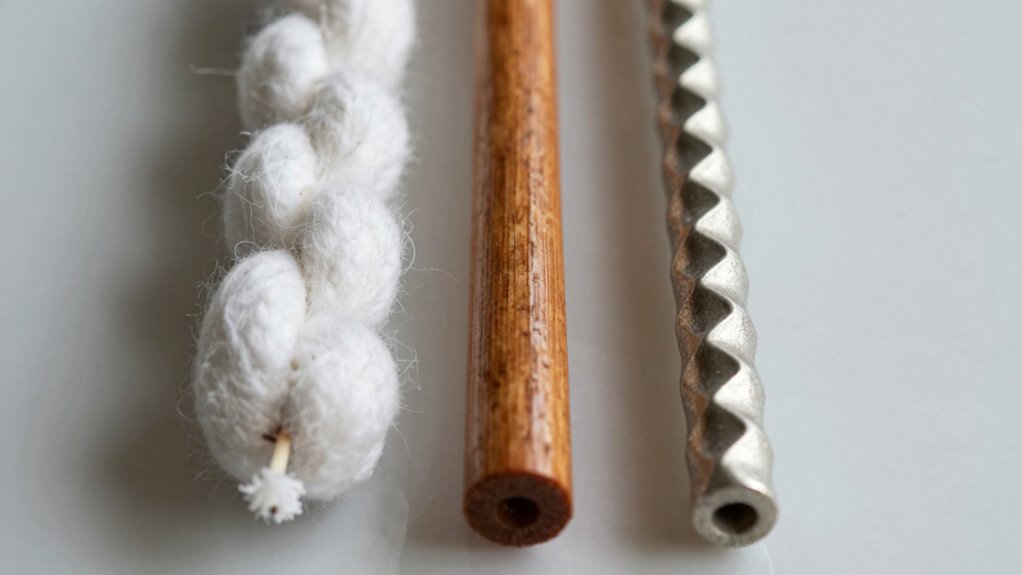

When choosing between cotton, wood, or specialty wicks, consider your candle’s size, wax type, and desired look. Cotton wicks work well for most waxes and smaller candles, providing a steady, even burn. Wood wicks create a lively flame and crackling sound, perfect for larger or decorative candles. Specialty wicks are ideal for industrial or unique designs but require careful matching. To guarantee safety and the best performance, it’s helpful to understand each option’s specific needs. Keep going to learn how to pick the perfect wick for your candle.

Get decor and gifts delivered free with Prime
- Fast, free delivery on millions of items
- Prime Video, Amazon Music and more included
- Member-only deals all year
Key Takeaways
- Match wick material to your candle’s aesthetic, size, and burn purpose for optimal performance and safety.
- Consider wax type (soy, beeswax, paraffin) to ensure compatibility with the chosen wick.
- Choose wick size based on candle diameter to prevent uneven burning, flickering, or flare-ups.
- Use wood wicks for larger or decorative candles to achieve a lively flame and crackling sound.
- Follow manufacturer guidelines and test different wicks to find the best fit for your specific candle design.
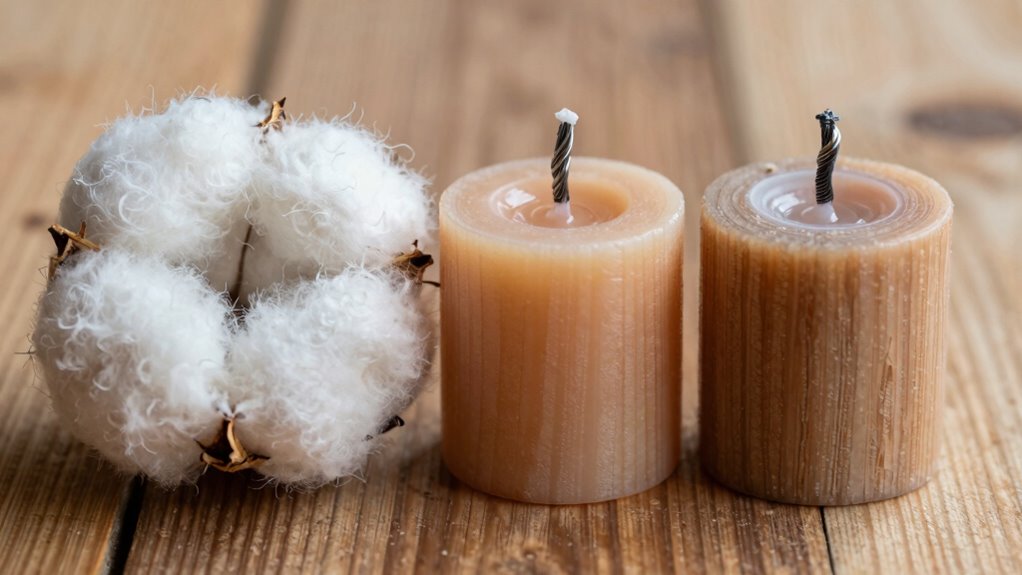
Have you ever wondered what makes a candle burn brighter or longer? The answer often comes down to the wick you choose. Picking the right wick isn’t just about aesthetics or tradition; it directly influences how well your candle performs. To get the most out of your candle, you need to think about factors like flare up prevention and wick style compatibility. These elements help guarantee a steady, safe burn while preventing issues like excessive flickering or tunneling. When choosing between cotton, wood, or specialty wicks, think about how each type interacts with your wax and container, as well as your burning environment.
Cotton wicks are the most common and versatile option. They work well with a broad range of waxes, including soy, beeswax, and paraffin. Cotton wicks tend to burn evenly, producing a steady flame that’s easy to control. They are generally safe, especially if you choose the right size for your candle. Proper wick style compatibility is essential here; a too-small or too-large wick can cause uneven burning, tunneling, or excessive flickering. For flare up prevention, it’s imperative to select a wick size that matches your candle’s diameter and wax type. When the wick is too large, it can cause the flame to flare up, increasing the risk of accidents or soot. Conversely, a wick that’s too small may produce a weak flame that struggles to melt the wax evenly, leading to tunneling. Additionally, the wax type you select can significantly influence how your wick performs and burns. Ensuring proper wick selection based on wick material and wax compatibility is crucial for optimal performance.
Wood wicks offer a different burning experience, producing a crackling sound and a distinctive, lively flame. They’re often used for larger candles or decorative purposes because they create an eye-catching, rustic look. However, wood wicks require careful consideration of wick style compatibility; some are designed specifically for certain wax types and container sizes. They tend to flare up more easily if not properly matched with your candle’s dimensions, so paying attention to recommended sizes is crucial. To prevent flare ups, ensure your wood wick isn’t too thick for your candle’s diameter and that the wax melts evenly across the surface. Properly trimmed and maintained, wood wicks can burn safely and beautifully, but improper pairing can lead to excessive flickering or unpredictable flare ups.
Specialty wicks, which include metal-core, hemp, or other materials, are tailored for specific needs and often used in industrial or specialty candles. These require even more attention to wick style compatibility, as they often need precise sizing and wax compatibility to burn safely. Flare up prevention becomes critical here, especially since some specialty wicks are more prone to flickering or uneven burning if not correctly matched. When selecting a specialty wick, always follow manufacturer guidelines and test your candles thoroughly. A poorly matched wick can cause irregular burning, smoky flames, or dangerous flare ups. In essence, your choice of wick should align with your candle’s design, wax type, and intended use, ensuring a safe, steady, and beautiful burn every time.
As an affiliate, we earn on qualifying purchases.
Frequently Asked Questions
Are There Eco-Friendly Wick Options Available?
Yes, eco-friendly wick options are available. You can choose wicks made from eco-friendly materials like organic cotton or sustainably sourced wood. These options are designed to reduce environmental impact, often using sustainable sourcing methods. By selecting these, you support eco-conscious practices and reduce your carbon footprint. Look for certifications or labels indicating sustainable sourcing to guarantee you’re making environmentally responsible choices for your candles.
How Do Wick Choices Affect Candle Burning Time?
Did you know that a well-chosen wick can extend your candle’s burn time by up to 20%? Your wick choice directly impacts wick longevity and burn consistency. Cotton wicks often provide a steady burn, while wood wicks tend to burn faster but create a larger flame. Specialty wicks are designed for specific candle types, balancing burn time and performance. Picking the right wick guarantees your candle burns evenly and lasts longer.
Can Wicks Be Mixed for Custom Flames?
Yes, you can mix wicks for a custom flame design by using wick layering. Combine different materials like cotton and wood to create unique flames, adjusting the wick sizes and placement for the desired effect. Experimenting with layered wicks allows you to achieve a specific flame height, flicker, or burn pattern, giving your candles a personalized touch that enhances their visual appeal and ambiance.
What Safety Considerations Are Important for Different Wicks?
Think of wick safety as keeping your flame’s dance controlled and graceful. With cotton, make sure it’s properly coated to prevent uneven burning; with wood, avoid splinters that can cause unpredictable sparks; and with specialty wicks, check for flame stability to prevent flickering or fire hazards. Always monitor your candle, keep it away from drafts, and trim wicks regularly—safety first keeps the flame a warm, steady glow.
Do Wick Materials Influence Scent Throw?
Yes, wick materials influence scent throw, affecting fragrance diffusion and scent intensity. Cotton wicks tend to produce a steady, even burn, enhancing consistent scent diffusion. Wood wicks often create a crackling flame that can boost scent strength and spread aroma more widely. Specialty wicks, like braided or metal-core types, can intensify the scent throw by burning hotter or more evenly. Choose your wick based on how strong and dispersed you want your fragrance to be.
Conclusion
When choosing the right wick, consider your candle’s purpose and desired burn. Did you know that wood wicks can increase burn times by up to 30%, creating a more immersive experience? Cotton wicks are versatile and widely used, while specialty wicks can add unique touches. Ultimately, selecting the right wick guarantees a cleaner, longer-lasting burn that perfectly complements your candle. Trust your instincts and experiment to find what works best for you!
Fall Picks
fall essentials
As an affiliate, we earn on qualifying purchases.