
As a beginner candle maker, avoid common mistakes like skipping proper testing, using the wrong wax, and not measuring ingredients accurately. Safety should always come first, so follow safety guidelines and make certain good ventilation. Pay attention to wick selection and avoid rushing the cooling and curing process. Overloading with fragrance or additives can cause burning issues. Mastering these basics will set you up for success, and if you keep exploring, you’ll learn more essential tips to create beautiful, safe candles.

Get decor and gifts delivered free with Prime
- Fast, free delivery on millions of items
- Prime Video, Amazon Music and more included
- Member-only deals all year
Key Takeaways
- Conduct small-scale tests with precise measurements to identify issues early and ensure consistent quality.
- Choose materials carefully, matching wax types and fragrances to prevent compatibility problems.
- Maintain proper safety protocols, including ventilation and temperature control, to avoid accidents and ensure safe melting.
- Use the correct wicks and proper construction techniques for even burning and safe candle performance.
- Allow sufficient curing time and manage fragrance loads to improve scent throw, appearance, and overall candle quality.
As an affiliate, we earn on qualifying purchases.
Skipping Proper Testing Before Full Batches
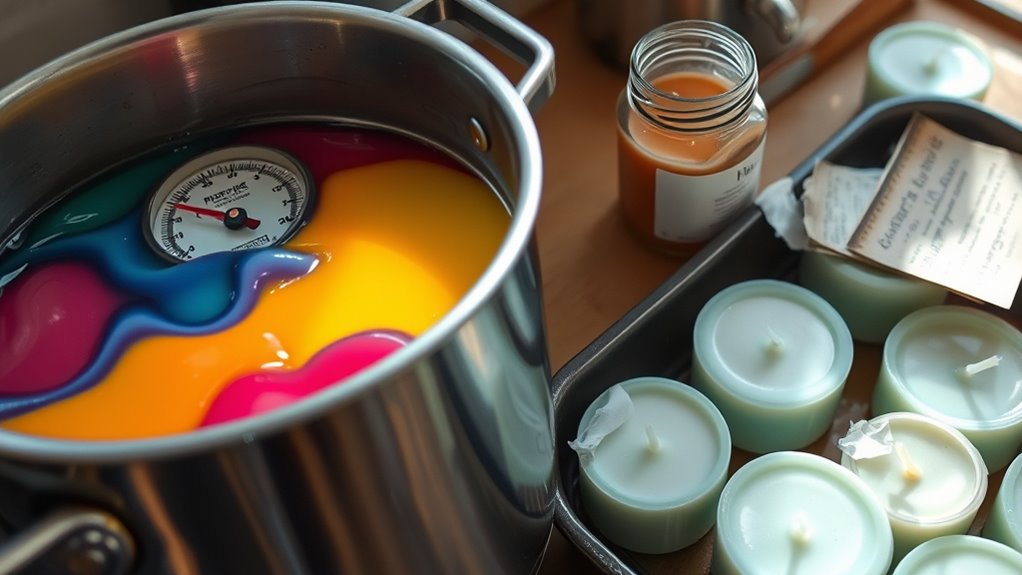
Before making large batches, testing your candle recipe on a small scale is essential. Proper testing procedures help you identify potential issues early, saving time and resources. When you scale up a batch, subtle differences in heat, cooling, or ingredient ratios can affect the final product. By conducting small tests first, you can fine-tune your formula and guarantee it burns evenly, has the right scent throw, and looks appealing. Additionally, understanding material compatibility can improve your patience and attention to detail during the testing process, leading to better results. This practice ensures that your testing process is thorough and consistent, helping you avoid costly mistakes. Incorporating quality control measures during testing can further enhance the reliability of your candles and prevent defects.
Using the Wrong Type of Wax for Your Project
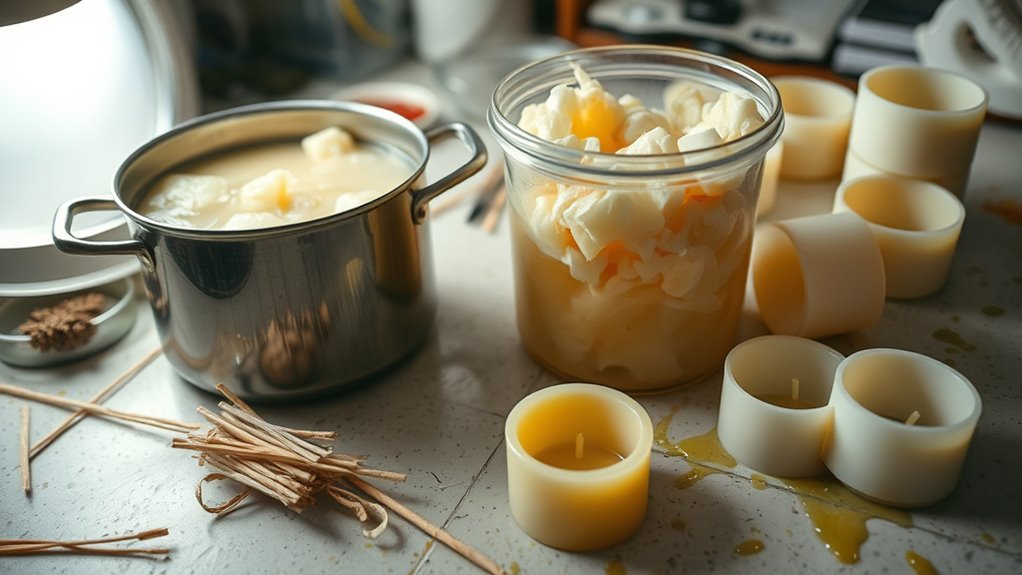
Choosing the wrong wax can lead to compatibility issues with your chosen fragrance and color, affecting the final look and scent. You also need to take into account the melting point to ensure your candle burns safely and evenly. If you don’t match the wax type to your project, you might end up with a candle that doesn’t perform as expected. For example, using a wax designed for convenient installation might not melt properly or hold fragrance well in certain candle types.
Wax Compatibility Issues
Using the wrong type of wax can cause your candle to perform poorly or even fail altogether. Different waxes have unique properties, and choosing incompatible waxes can lead to issues like uneven burning or poor scent throw. Before starting your project, it’s crucial to do compatibility testing—melt small amounts of wax together to see if they blend well and maintain proper wax melting behavior. If the waxes don’t melt smoothly or separate, they’re incompatible. This step helps prevent future problems and ensures your candle will burn evenly and safely. Remember, not all waxes mix well, so taking the time to test compatibility saves you from wasted materials and disappointing results later on. Proper testing is essential for a successful, high-quality candle. Additionally, understanding self watering plant pots can help you better care for your plants and avoid watering mistakes that could harm them. Being aware of wax compatibility can also guide you in selecting the right wax blends for your specific candle projects, ensuring optimal performance. For instance, choosing the correct wax types is especially important when working with candle additives or other embellishments that may affect melting properties. Conducting compatibility tests can reveal how different waxes interact, preventing separation or inconsistent burning.
Melting Point Concerns
Since different waxes melt at varying temperatures, selecting the wrong type for your project can lead to practical issues during candle making. Melting point concerns are vital because they affect how your wax behaves during the process. If the wax melts too quickly or at too low a temperature, it may cause uneven pouring or poor adhesion to the container. Conversely, wax melting at too high a temperature can make it difficult to work with and increase the risk of overheating. Proper temperature regulation is essential to achieve a smooth, even melt and avoid ruining your candle. Choosing a wax with a suitable melting point ensures easier handling, better scent throw, and a professional finish. Always check the wax’s melting temperature before starting to prevent avoidable mistakes. Additionally, understanding the different wax types and their melting points can help you select the best wax for your specific project.
Fragrance and Color Compatibility
When selecting wax for your candle project, considering how it interacts with fragrance oils and dyes is just as important as understanding its melting point. Not all waxes have the same fragrance compatibility, which can affect scent throw and overall aroma. Some waxes hold fragrance oils better, ensuring a stronger, longer-lasting scent, while others may cause scent fade. Additionally, choosing the right wax impacts color coordination. Certain waxes absorb dyes differently, affecting how vibrant or muted your colors appear. Using incompatible wax and dyes can result in dull or uneven coloring. To avoid these issues, research the wax’s fragrance compatibility and how it reacts with your chosen dyes. Properly matching wax, fragrance oils, and colors ensures your candles look beautiful and smell fantastic. Moreover, understanding the wax properties can help you select the best type for your specific project, leading to more successful and satisfying results. For example, knowing the melting point of your wax can influence how well it combines with other ingredients and affects the overall finish. Additionally, being aware of the compatibility with additives can help prevent issues like sweating or mottling in your candles. Paying attention to fragrance load limits is also crucial, as exceeding recommended amounts can cause burning issues or affect the candle’s safety and performance.
Neglecting to Measure Ingredients Accurately
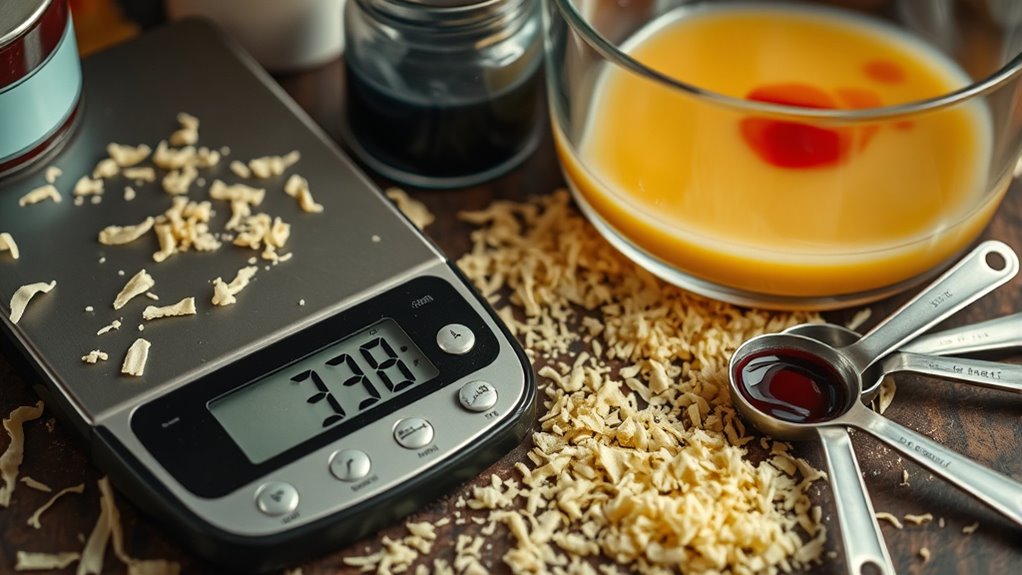
Failing to measure ingredients accurately can lead to inconsistent or failed candles. Measurement accuracy is essential to ensure proper ingredient proportions, which directly affect the candle’s appearance and burning quality. If you don’t measure precisely, your wax might burn unevenly or the scent throw could be weak. Using too much fragrance oil can cause smoking or sweating, while too little may result in a scentless candle. Similarly, incorrect wax-to-additive ratios can compromise the candle’s structure and safety. To avoid these issues, use a reliable scale or measuring tools to carefully follow your recipe. Accurate measurements help produce consistent results, giving your candles a professional finish and better performance. Remember, small deviations in ingredient proportions can make a big difference in your candle-making success.
Overlooking Candle Safety Guidelines
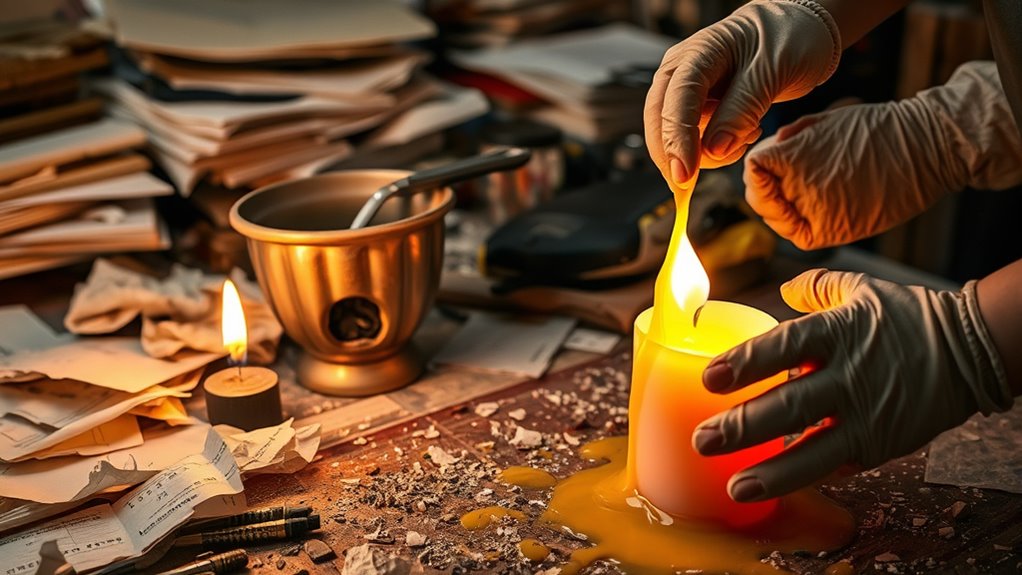
You need to prioritize safety when making candles to prevent accidents. Make sure your workspace is well-ventilated, handle wax carefully, and never leave a burning candle unattended. Following these safety practices safeguards you and ensures a successful candle-making experience. Additionally, staying informed about candle safety guidelines can help you avoid common hazards and create a safe environment for your craft. Being aware of AI security considerations can also provide insights into protecting your personal information and digital safety while working on your hobby. Remember that understanding essential oils for safety can also be beneficial if you choose to incorporate fragrances into your candles. Incorporating Farmhouse 1807 decor elements into your workspace can create a cozy and inspiring environment that promotes safety and creativity.
Proper Ventilation Essential
Proper ventilation is essential for safe candle making because the process involves fumes and vapors that can accumulate quickly in an enclosed space. Without adequate airflow, you risk inhaling harmful fumes or creating a fire hazard. To ensure ventilation safety, always work in a well-ventilated area and keep windows or exhaust fans running. Maintaining proper airflow helps disperse fumes and prevents buildup. Consider the following tips:
| Tip | Why It Matters | Best Practice |
|---|---|---|
| Use exhaust fans | Removes fumes efficiently | Install or turn on during candle making |
| Open windows | Enhances natural airflow | Keep at least one window open |
| Avoid enclosed spaces | Reduces inhalation risk | Choose open areas for work |
| Regularly check vents | Prevents airflow blockages | Clear vents and maintain airflow |
Additionally, choosing the right ventilation setup can significantly improve air quality during candle making. Proper ventilation is especially important when working with certain waxes and fragrances that release volatile compounds. Ensuring your workspace has sufficient air exchange can greatly reduce the buildup of potentially hazardous vapors.
Correct Wax Handling
Handling wax correctly is vital to maintaining safety during candle making. You need to monitor the wax temperature carefully to prevent accidents. When melting wax, use a double boiler or a heat-safe container in a controlled environment. Never leave melting wax unattended, as it can reach dangerous temperatures quickly. Always use a thermometer to track the wax melting process, ensuring it stays within the recommended temperature range. Overheating wax can cause splattering or fires, so remove it from heat as soon as it’s fully melted. Pouring at the correct wax temperature also helps achieve a smooth finish and avoids cracks or sinkholes. Additionally, recent advances in AI-driven solutions are helping to develop safer and more efficient candle-making processes by predicting optimal melting points and handling procedures. Properly managing wax temperature is crucial for consistent results and safety. Using temperature sensors and automated controls can further enhance safety and precision in the process. By paying attention to wax temperature and handling it properly, you reduce risks and make the candle-making process safer and more successful. Incorporating smart monitoring technology can also provide real-time alerts and improve overall safety during the process.
Safe Flame Practices
Neglecting candle safety guidelines can lead to dangerous situations, including fires or burns. To prevent fire hazards, always keep your flame under control and never leave burning candles unattended. Use safe equipment, like heat-resistant holders and proper wicks, to guarantee stability and reduce the risk of accidents. Trim your wick to about a quarter inch before each burn to avoid high flames and excessive soot. Keep candles away from drafts, curtains, and flammable objects, and always place them on stable, heat-resistant surfaces. Never move a burning candle, and ensure the flame is completely extinguished when finished. Following these safe flame practices helps you enjoy candle making while minimizing risks, creating a safer environment for you and your home.
Ignoring Winding or Wicking Considerations
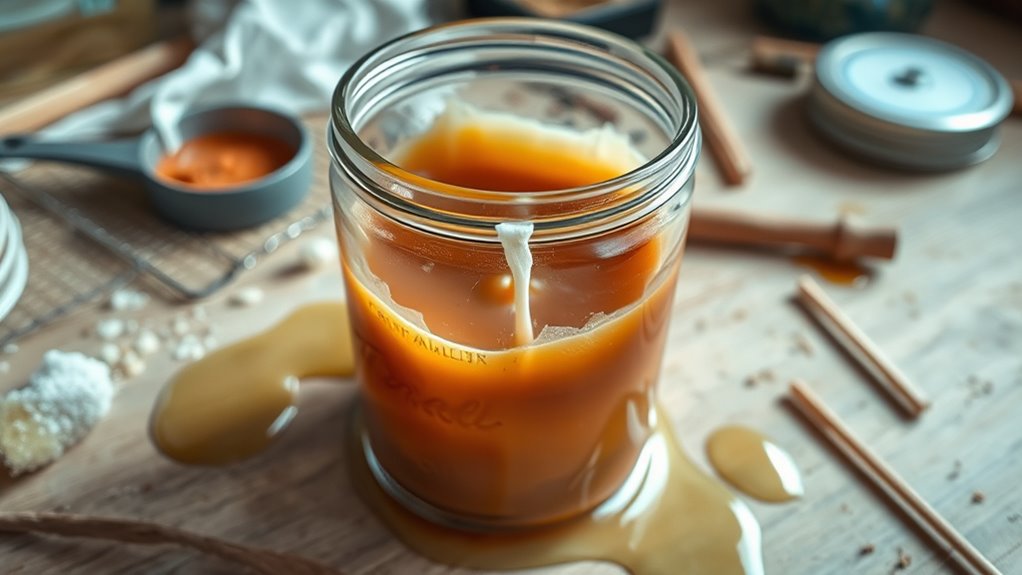
Ignoring winding or wicking considerations can lead to uneven burns, excess soot, and other common candle-making problems. Wicking issues often stem from choosing the wrong wick size or material, which affects how the candle burns and how the wax melts. Proper winding techniques are essential to ensure the wick stays centered and straight as the wax cools. If the wick is too small, your candle may drown in wax; if too large, it might burn too quickly or produce soot. Always select a wick appropriate for your candle size and wax type, and wind it carefully to maintain proper tension. By paying attention to winding and wicking, you ensure a cleaner, more even burn, and prevent many frustrating candle-making mistakes.
Failing to Achieve the Correct Pouring Temperature

Getting your candle wax to the right pouring temperature is essential for a smooth finish. Using a thermometer helps you stay consistent and avoid issues like sinkholes or cracks. Don’t guess—measure accurately to guarantee your candles turn out perfect every time.
Temperature Control Importance
Achieving the right pouring temperature is crucial because it directly affects how your candle sets and performs. If your temperature is too high or too low, it can cause uneven burning or poor adhesion to the wick. To maintain consistency, verify your thermometer is properly calibrated; inaccurate readings can lead to temperature fluctuations that compromise quality. Small fluctuations in temperature during pouring can cause surface imperfections or weak spots in the wax. Always monitor your thermometer closely, especially as the wax cools, to prevent sudden changes. Controlling your pouring temperature helps create a smooth, even surface and maximizes scent throw. Remember, precise temperature control isn’t just about following a recipe—it’s a key step in producing professional-looking, safe candles.
Using a Thermometer
Using a thermometer effectively is key to reaching the right pouring temperature. If your candle temperature is off, your wax may not set properly, affecting scent throw and appearance. To guarantee thermometer accuracy, always calibrate it regularly and avoid using cheap, unreliable tools. Here’s a quick guide:
| Temperature Range | Candle Type |
|---|---|
| 170-180°F | Soy, paraffin |
| 180-190°F | Beeswax |
| 150-160°F | Container candles |
Monitoring the correct temperature helps you pour wax at the ideal point, preventing issues like sinkholes or uneven surfaces. Remember, precise measurements lead to better candle quality and consistency. Don’t overlook your thermometer — it’s a crucial tool for successful candle making.
Not Allowing Candles to Cure Properly

One of the most common mistakes beginners make is rushing the curing process. Allowing your candles ample curing time is essential for maximum scent development and overall quality. If you skip or shorten this step, your candle’s fragrance might not fully emerge, leaving it weak or inconsistent. Typically, candles need at least a couple of days to a week to cure properly, depending on the wax and scent load. During this period, the fragrance binds with the wax, resulting in a stronger, more balanced scent when burned. Patience is key—resisting the urge to use your candles immediately will ensure you get the best scent throw and a smoother burn. Proper curing elevates your candle’s quality and makes your finished product more professional.
Choosing Unsuitable Fragrance Oils

Choosing the right fragrance oils is just as important as allowing your candles to cure properly. Selecting unsuitable fragrance oils can lead to poor scent throw or even cause your candle to burn unevenly. When it comes to essential oil selection, avoid using oils that are too overpowering or don’t blend well with your wax. Instead, opt for fragrances specifically designed for candle making, as they are formulated for ideal scent release. Fragrance blending is also vital; mixing incompatible scents can result in a muddled aroma. Test small batches first to ensure your chosen fragrance oils complement each other and work well with your wax. This careful approach helps you create a balanced, pleasant scent that enhances your candle’s overall quality.
Rushing the Cooling and Setting Process
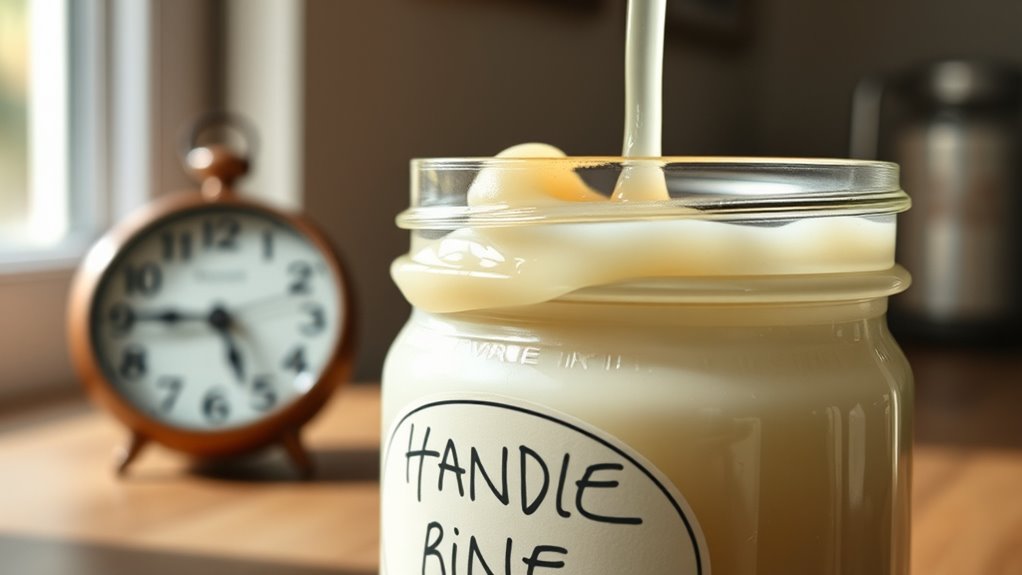
Rushing the cooling and setting process can considerably compromise your candle’s quality. If you don’t allow enough time for the cooling process, your candle may develop cracks, sinkholes, or uneven surfaces. Proper cooling guarantees the wax solidifies evenly and maintains its smooth finish. Skipping or shortening the recommended setting time can also cause issues with fragrance retention and scent throw. Patience is key—let your candle cool completely at room temperature before moving or trimming the wick. Rapid cooling, like placing your candle in the fridge or freezer, can cause thermal shock and surface imperfections. By respecting the proper cooling process and setting time, you help ensure a well-formed, durable candle with excellent appearance and performance.
Overloading Candles With Fragrance or Additives

Adding too much fragrance or too many additives can actually weaken your candle’s quality and performance. Fragrance overload can cause the wax to burn unevenly or create excessive soot, while additive excess may lead to poor scent throw or compromised candle stability. When you overload your candles, the wax may not set properly, resulting in cracks or a rough surface. It’s tempting to make your candles smell strong, but using the recommended fragrance load—usually around 6-10% of the wax weight—ensures a balanced burn. Similarly, adding too many additives can interfere with the wax’s melting point and burning qualities. Stick to small, measured amounts to avoid these issues and produce candles that burn cleanly, smell great, and last longer.
Frequently Asked Questions
How Do I Select the Best Wax Type for My Candles?
To select the best wax type for your candles, consider its wax consistency and how it affects your candle’s appearance and burn. You want a wax that melts smoothly and holds fragrance well, ensuring good fragrance quality. Experiment with different types like soy, beeswax, or paraffin to see which one meets your desired finish and scent throw. Testing small batches helps you find the perfect wax for your candle-making goals.
What Tools Are Essential for Accurate Candle Ingredient Measurements?
Did you know that precise measurements can improve candle quality by up to 30%? To achieve this, you need crucial tools like measuring spoons for small quantities and a digital scale for accuracy with larger amounts. Using a digital scale ensures you get exact measurements every time, while measuring spoons help with precise small ingredient portions. These tools are essential for consistent, professional-looking candles.
How Can I Test Candle Safety Before Making Large Batches?
To test candle safety before making large batches, start by choosing the right candle wick for your wax and container, ensuring it won’t cause excessive soot or smoke. Conduct color stability testing by burning small samples with your chosen dyes to check for discoloration or bleeding. Always monitor burn times, flame size, and melting behavior, making adjustments as needed, so your candles burn safely and consistently before scaling up production.
What Are Common Mistakes When Choosing Fragrance Oils?
Imagine your candle’s scent swirling beautifully in the air, but choosing the wrong fragrance oils can hinder that magic. You might overlook fragrance layering, causing clashing notes, or pick oils with poor scent throw quality, leaving your candle underwhelming. To avoid these mistakes, test small batches first, understand how oils blend, and prioritize high-quality scents. This way, your candles will fill the space with inviting, well-balanced aromas.
How Does Ambient Temperature Affect Candle Pouring and Setting?
Ambient temperature effects your candle pouring and setting process profoundly. If your room is too hot, the wax may set too quickly, causing imperfections like sinkholes or cracks. Conversely, in a cold environment, the wax might take longer to cool and cure properly. Ideal candle setting conditions involve a stable, moderate temperature, around 70°F (21°C), ensuring smooth pours and even curing. Keep your workspace consistent for the best results.
Conclusion
Remember, candle making is a dance of patience and precision. Avoid these pitfalls, and you’ll turn your wax into warm, glowing masterpieces. Think of each mistake as a shadow on your masterpiece—distracting but fixable with care. Embrace the learning journey, and soon you’ll be crafting candles that shine brighter than a thousand stars. Keep your passion flickering and your techniques sharp—your perfect candle is just waiting to glow.
Halloween Picks
halloween
As an affiliate, we earn on qualifying purchases.