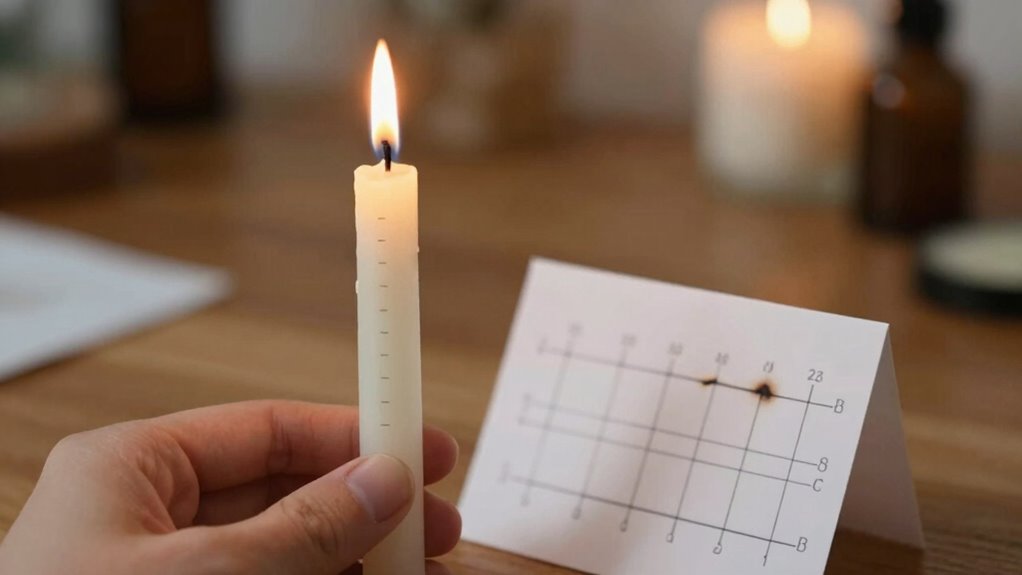
To assess a candle’s quality, watch how the flame behaves—steady and gentle flames are a good sign, while flickering or flicking out can indicate problems. Check the melt pool to see if it reaches the container edges evenly; uneven pools or tunneling show poor burn quality. Observe wax color; consistent, clear wax means better manufacturing. If you pay attention to these signs, you’ll start to understand what makes a safe, high-quality candle. Keep exploring for more tips.
Key Takeaways
- Observe the flame for steadiness; a stable flame indicates proper wick and wax quality.
- Check the wax color; consistent, clear wax suggests even burning and good manufacturing.
- Monitor the melt pool; it should reach container edges evenly without tunneling.
- Look for flickering or excessive soot; these signal potential safety or quality issues.
- Evaluate overall burn pattern; uniform, steady flames and consistent wax behavior indicate a safe, high-quality candle.
If you’re new to candle testing, learning how to interpret a burn test can seem confusing at first. But once you understand what to look for, it becomes a valuable skill to assess a candle’s quality and safety. Candle safety is vital, especially since poorly-made candles can pose fire hazards or produce harmful fumes. By carefully observing the burn, you can determine if a candle is safe to use or if it might cause problems down the line.
Learning to interpret burn tests helps ensure candle safety and quality.
A key aspect of candle testing is wax color analysis. When you light a candle, pay attention to how the wax color changes as it burns. Healthy candles typically produce a consistent, even color throughout the burn. If you notice areas where the wax appears discolored or cloudy, it might indicate impurities or poor quality wax. These inconsistencies are often signs of subpar candle manufacturing, which could lead to uneven burning or excessive soot. Conversely, a clear, uniform wax color suggests the candle is well-made and safe for use.
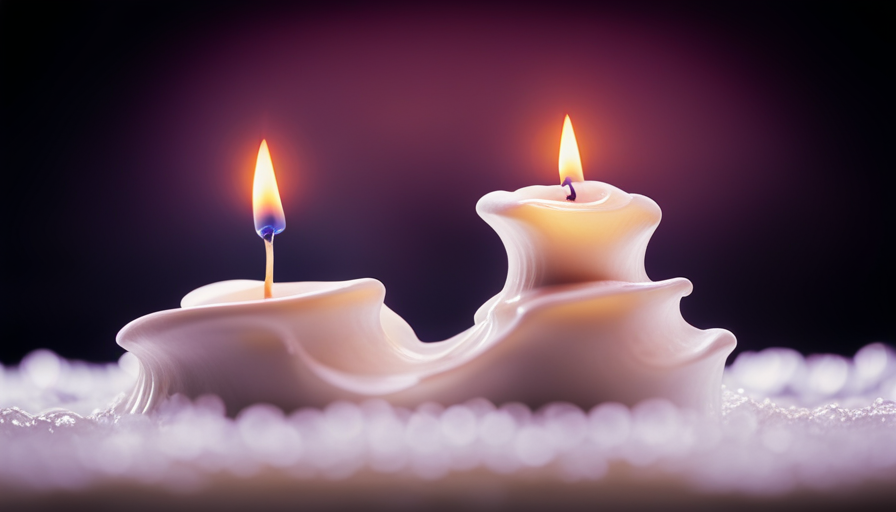
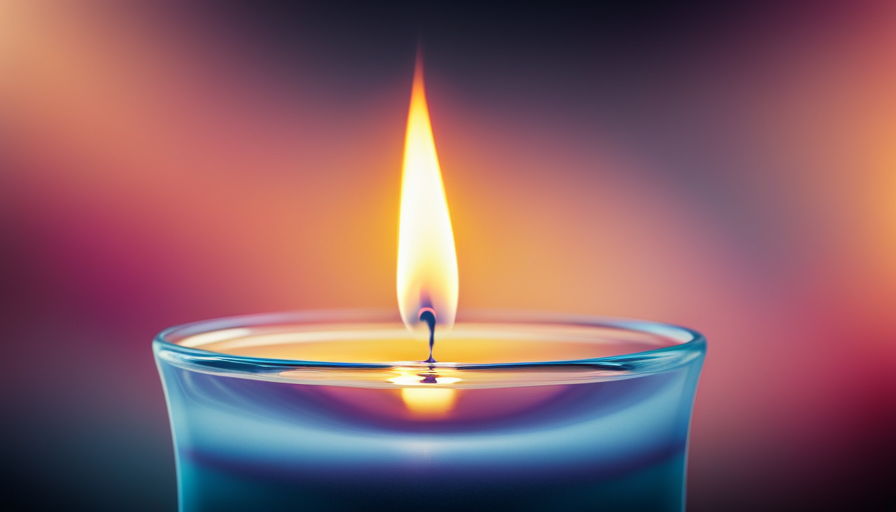
In addition to wax color, observe how the candle’s flame behaves. A steady, gentle flame indicates good wick quality and proper wax formulation. If the flame flickers excessively or flicks out frequently, it could be a sign that the wick is too large or too small, or that the wax isn’t properly formulated. Such issues can be a safety concern because unstable flames increase the risk of accidents or fire hazards. Always verify your candle burns with a steady flame and doesn’t produce excessive soot or smoke. Proper wick size is essential for safe and efficient burning.
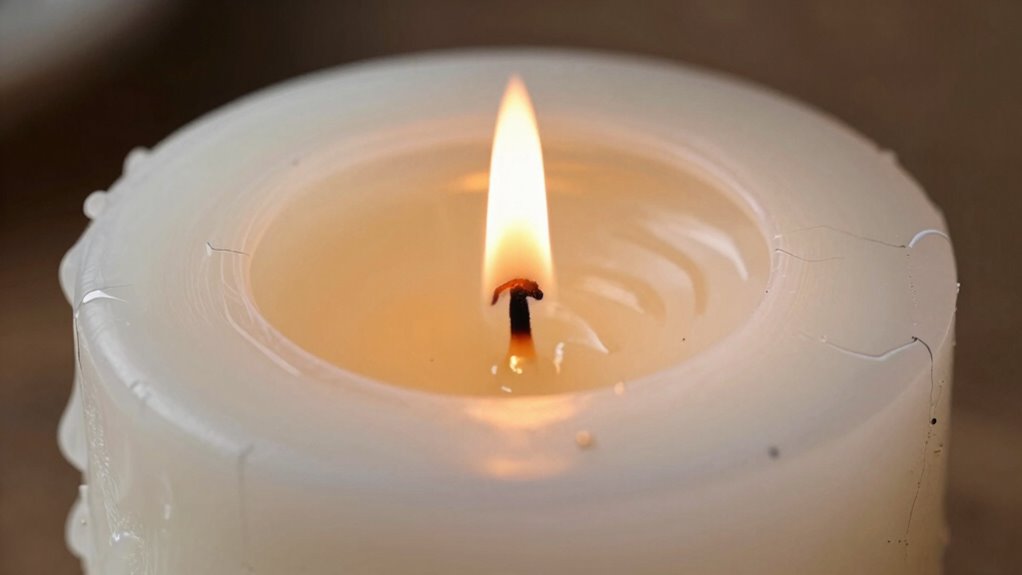
Another important aspect is the formation of the melt pool, which is the liquid wax around the wick. A proper melt pool is even, reaching the edges of the container without causing excessive dripping or tunneling. If you see the melt pool is uneven or the wax is tunneling deep into the candle, it indicates poor burning behavior, which can lead to incomplete combustion and produce more soot or smoke. Properly monitoring burn behavior can help you identify the overall quality of the candle and ensure safe usage over time. Additionally, consistent burn patterns are crucial indicators of a well-made candle, as irregularities can compromise safety and performance. When analyzing a candle’s burn, look for minimal flickering, consistent wax color, a steady flame, and an even melt pool. These signs point to a safe and well-made candle.
As an affiliate, we earn on qualifying purchases.
Frequently Asked Questions
Can Candle Burn Tests Detect Hidden Objects?
Candle burn tests aren’t reliable for detecting hidden objects. While they help with candle shape analysis and reveal certain wax properties, they don’t serve as a tool for hidden object detection. The patterns you observe are mostly influenced by wax composition and burning conditions, not concealed items. If you want to find hidden objects, consider specialized techniques like metal detection or imaging methods rather than relying on candle burn tests.
How Long Should I Observe a Candle During the Test?
You should observe the candle for at least 10 to 15 minutes during the burn test. Pay close attention to wick behavior; a steady, upright wick indicates a good burn, while flickering or leaning suggests issues. Also, watch the flame color—blue often signifies a healthy burn, while yellow or uneven flames may point to impurities or hidden objects. Longer observation helps you identify subtle irregularities in these aspects.
Are Certain Candle Types Better for Testing?
Certain candle types are better for testing because they provide more consistent results, improving your testing accuracy. Beeswax candles are ideal since they burn cleanly and evenly, making it easier to observe the flame and wax behavior. Soy and paraffin candles can also work well, but their burn patterns might vary more. Choosing high-quality, plain candles without additives or scents helps guarantee your test results are accurate and reliable.
What Safety Precautions Are Necessary During Testing?
You should wear safety gear like gloves and eye protection to avoid burns and soot. Guarantee proper ventilation because candle testing releases fumes and smoke that can irritate your lungs. Always test in a well-ventilated area away from flammable objects. Keep a fire extinguisher nearby, and never leave the candle unattended. These precautions keep you safe while you observe the candle’s burn patterns more closely.
How Often Should I Perform a Candle Burn Test?
You should perform a candle burn test every few weeks to guarantee your candle’s scent and color remain consistent. Regular testing helps you spot changes in the candle scent that could indicate quality issues. Keep an eye on the candle color too, as discoloration might signal burning problems or contamination. Frequent testing allows you to enjoy a safe, high-quality candle experience, ensuring your candle burns cleanly and smells great each time you light it.
Conclusion
By paying close attention to the candle’s burn patterns, you’ll soon decipher the secret language of wax and wick. Think of the test as a dance, where each flicker and drip tells a story about the candle’s quality and the environment it’s in. With practice, you’ll read these signals like an old friend, guiding you to better candle choices. Remember, every burn is a chapter in your candle-reading journey—full of surprises waiting to be uncovered.