
TL;DR

Get decor and gifts delivered free with Prime
- Fast, free delivery on millions of items
- Prime Video, Amazon Music and more included
- Member-only deals all year
A Livingetc stylist recommends starting with two lamps in most living rooms, with more for larger or zoned spaces. The aim is to create separate pools of light for different activities and moods, not to meet a fixed numerical rule.
Livingetc’s stylist recommends two lamps as a starting point for most living rooms, with additional lamps for larger or divided spaces. The advice frames the decision around how people use the room and the atmosphere they want, rather than a universal count.
The report says a smaller living room with a suitable ceiling light may need just one table lamp and one floor lamp. A larger room, or one with separate areas for television, reading or other activities, may benefit from three or more lamps. The stylist stresses that the suggestion is a starting point, not a fixed requirement.
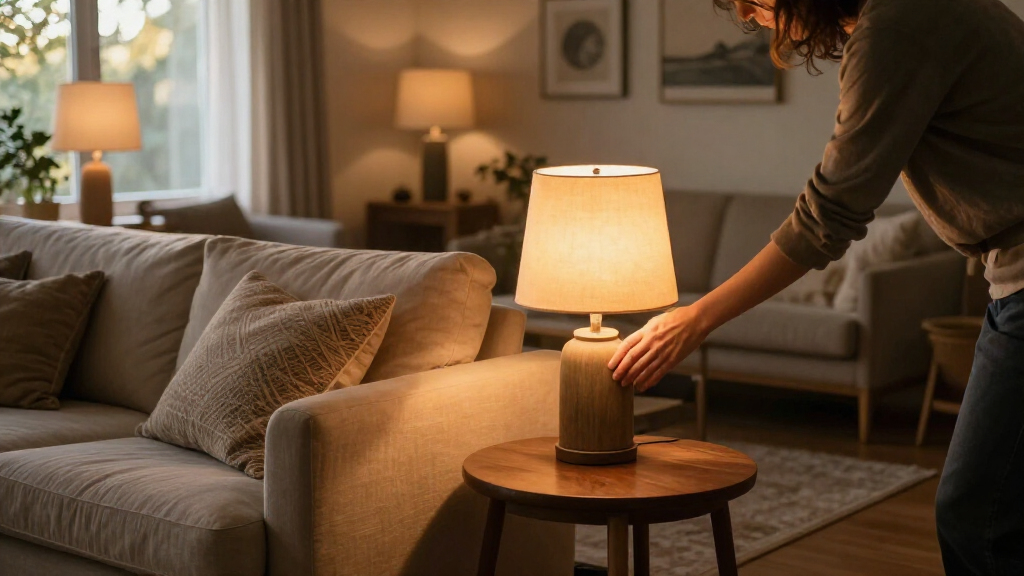
The recommended approach is to give each light a distinct role. A table lamp beside a sofa can soften the room for evenings, while a floor lamp near an armchair can provide focused light for reading. A lamp on a console or sideboard can brighten a darker wall and highlight objects or artwork.
The article also advises distributing light around the room and using lamps at different heights instead of relying on a single central source. It recommends choosing a mix of ambient, task and accent lighting, and checking a lamp’s size, reach, bulb and dimmer compatibility before buying.
Lighting That Fits Daily Use
The guidance gives readers a practical way to plan living-room lighting without treating lamp count as a design formula. A few well-placed lights can support different activities, such as reading or watching television, while allowing the room to feel comfortable when the ceiling light is off.
It also shifts the buying decision from simply adding more fixtures to considering what each lamp contributes. That can help avoid a crowded arrangement in which several lights serve the same purpose, and can make a room’s separate seating areas feel connected.
Products Worth Considering

Blueair Blue Pure 211i Max Smart Air Purifier for Large Rooms

Philips Hue Festavia Globe Outdoor String Lights, 32 Bulbs, 91 ft

Philips Hue Large Smart Light Tube, Black – White and Color Ambiance LED Color-Changing Light – 1 Pack
As an affiliate, we earn on qualifying purchases.
From Lamp Count to Light Layers
The Livingetc report presents its recommendation as stylist guidance, not as a technical standard or a requirement for every home. Its central point is that room layout matters alongside size: lamps may be useful near separate seating areas, while a compact room may need fewer.
Emma Deterding, founder and creative director of Kelling Designs and KDLoves, says lighting should be considered early in the design process and planned around how the room will be used. Suzanne Duin, founder of Maison Maison, similarly recommends balancing ambient, task and accent lighting to serve different purposes.
For renovations, the report advises thinking about outlets and switches during planning. Where existing wiring and outlet locations limit options, plug-in table and floor lamps can still provide layered light.
“When it comes to the living room, your lighting is a crucial part of the overall design scheme and should be planned at the beginning of the design process.”
— Emma Deterding, founder and creative director of Kelling Designs and KDLoves
No Fixed Number for Every Room
The recommendation does not establish a universal lamp count, and the report provides no measurements or lighting calculations that would determine the right number for a particular room. The appropriate setup remains dependent on room dimensions, layout, existing ceiling light and activities.
The source also does not specify a publication date or provide independent testing of the suggested arrangements. Readers should treat the numbers as stylist advice rather than a formal standard.
Plan Before Buying Lamps
The next step for homeowners is to identify where light is needed and what each area is used for, then assess existing fixtures, outlets and switches. The report recommends checking lamp height, light reach and bulb or dimmer compatibility before purchase, and adding a lamp only when it serves a distinct purpose.
For a renovation, outlet and switch locations can be considered during the design process. The source gives no further reporting or scheduled follow-up on the recommendation.
Key Questions
How many lamps does a living room usually need?
The Livingetc stylist suggests starting with two lamps in most living rooms. Larger rooms or spaces divided into several activity zones may need three or more.
Can a small living room use only one lamp?
The report says a smaller room with a good ceiling light may work with one table lamp and one floor lamp. The advice does not set a minimum that applies to every room.
Where should living-room lamps go?
Place lamps where they support everyday activities: near a sofa for softer evening light, beside an armchair for reading, or on a console to brighten a dim area. The report also recommends spreading light around the room and varying its height.
What should I check before buying a lamp?
Check the lamp’s height and light reach, along with whether its bulb and dimmer are compatible. Consider whether it provides ambient, task or accent light that is not already covered by another fixture.
Source: rss