
Scented candles work by combining wax, wick, and heat to release fragrance. When you light the wick, it creates a flame that melts the wax and produces heat. This heat vaporizes the fragrance oils embedded in the wax, releasing scent molecules into the air. These molecules then disperse, creating the aroma you smell. Understanding how wax, wick, and heat interact reveals the science behind their fragrant glow—keep exploring to learn more.
Key Takeaways
- When lit, the wick produces heat that melts the wax, allowing fragrance oils to evaporate into the air.
- The melting wax releases embedded fragrance molecules, which are then vaporized by the heat from the flame.
- Vaporized fragrance molecules disperse through the air, creating a layered and diffuse scent experience.
- Proper wick size and combustion control ensure consistent heat, optimizing fragrance release and scent longevity.
- Environmental factors like airflow and temperature influence how effectively fragrance molecules diffuse and how long the scent lasts.
Composition of Candle Wax and Its Role in Fragrance Release

The composition of candle wax considerably influences how effectively fragrance is released when the candle burns. Your choice of wax affects both candle coloring and wax melting behavior, which directly impacts scent diffusion. Different waxes, such as soy, paraffin, or beeswax, have unique melting points and textures that determine how well the fragrance oils mix and evaporate. Proper wax melting ensures the fragrance disperses evenly, creating a consistent aroma. Candle coloring can also alter the wax’s melting properties, potentially affecting scent release. When selecting wax, consider how its composition interacts with your chosen fragrance oils and coloring agents. A well-balanced wax blend optimizes fragrance release, providing a rich, long-lasting scent while maintaining visual appeal and proper melting characteristics. Additionally, understanding candle wax melting behavior can help in designing candles that release fragrance more effectively during use, especially when considering factors like wax melting temperature and how it influences scent evaporation. Recognizing wax composition is essential for customizing the scent experience and achieving desired performance. The melting point of the wax plays a crucial role in controlling the rate at which fragrance is released during burning, impacting the overall scent longevity.
The Wick’s Function in Heat Generation and Fragrance Dispersion
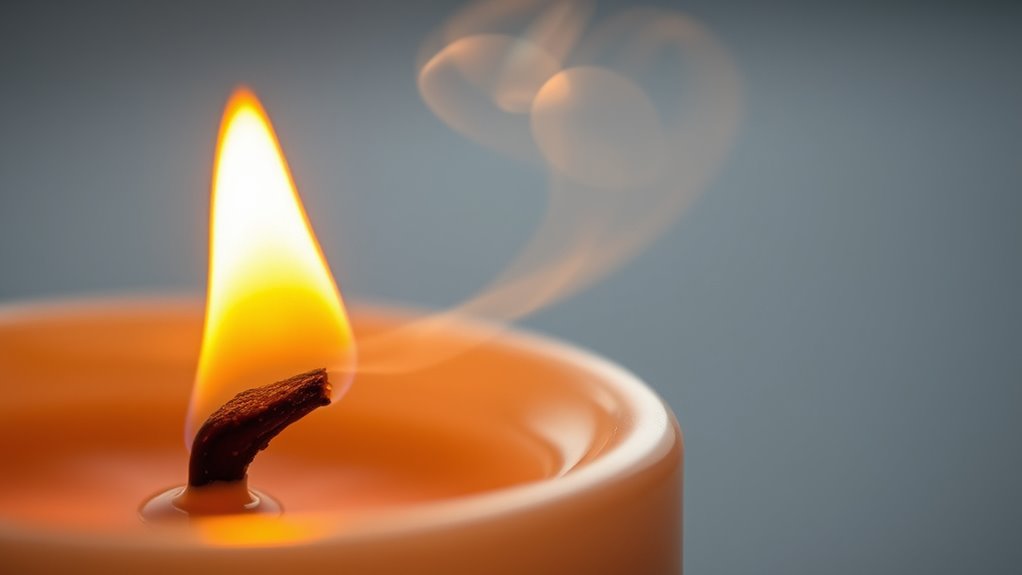
When you light a candle, the wick ignites, producing combustion that generates heat. This heat causes the fragrance molecules in the wax to vaporize and disperse into the air. The wick size influences how much heat is produced and how evenly the wax melts, which in turn affects the rate of fragrance release and burn quality. Understanding how the wick influences this process helps you appreciate how your candle fills a space with scent. Additionally, industry trends can impact wick design choices to optimize fragrance dispersion and burn time. Recognizing the role of heat in fragrance diffusion highlights how proper wick selection enhances the overall candle experience.
Combustion and Heat Production
As you light a scented candle, the wick plays a crucial role in generating heat through combustion. When the flame ignites, chemical reactions occur at the wick’s tip, converting the fuel—wax—into heat and light. This process involves the oxidation of hydrocarbons, releasing energy that sustains the flame. The heat produced enables thermal transfer, warming the surrounding wax and causing it to melt. As the wax melts, capillary action pulls it upward along the wick, feeding the flame continuously. Combustion maintains a steady temperature, ensuring consistent fragrance release. The balance of chemical reactions and heat generation keeps the flame steady and the candle burning efficiently, making the process essential for fragrance dispersion and overall candle performance. Additionally, the wax composition influences how effectively the fragrance is released during burning, and understanding the combustion process helps in designing better candles for optimal scent throw. Ensuring proper wick maintenance not only maintains flame stability but also optimizes the heat distribution, which is vital for consistent fragrance dispersal.
Fragrance Vaporization Process
Once the candle’s flame heats the wax near the wick, the heat causes the fragrant oils embedded in the wax to vaporize. This process releases scent molecules into the air, enabling fragrance layering and scent layering techniques to create complex aromas. As the heat rises, the vaporized fragrance rises with it and disperses outward, filling your space. The wick plays a vital role by maintaining a consistent heat source, ensuring steady fragrance vaporization. Here’s how the process works:
| Step | Action | Effect |
|---|---|---|
| Heat Generation | Wick burns, heats wax | Vaporizes fragrance oils |
| Vapor Release | Fragrance molecules turn to vapor | Disperses into the air |
| Scent Layering | Multiple scents vaporize sequentially | Creates layered aroma |
| Diffusion | Vapor spreads throughout the room | Enhances scent experience |
| Repetition | Continuous burning maintains vaporization | Sustains fragrance release |
Additionally, the wick’s design influences how evenly and efficiently the fragrance is released throughout the burning process.
How Heat Affects the Evaporation of Scent Molecules
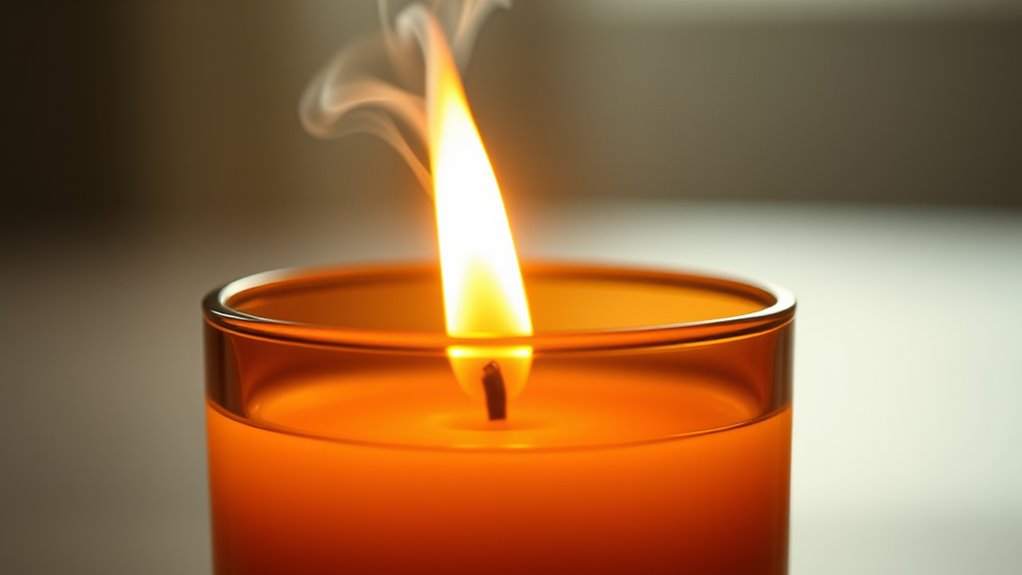
Heat plays a crucial role in how scent molecules evaporate from candles. When you light a candle, the warmth increases the rate at which scent molecules turn into vapor, enhancing aroma perception. As heat rises, it causes molecules to escape more quickly, making scents more immediate and vibrant. This process influences scent layering, where different notes release at various temperatures, creating a complex aroma experience. Temperature control is essential for maintaining consistent scent release and avoiding over- or under-perfuming the space. Proper candle design can help distribute heat evenly, optimizing fragrance diffusion. Consider these factors:
- Higher heat speeds up evaporation, intensifying scents.
- Cooler areas release subtler fragrances.
- Consistent warmth helps maintain a balanced scent profile.
- Overheating can cause rapid scent loss or uneven scent layering.
- Controlled heat ensures a pleasant, steady aroma experience.
- Understanding the evaporation process helps you appreciate how heat shapes the fragrance journey from candle to air.
The Process of Fragrance Diffusion Into the Air
As the essential oils evaporate from the candle, their molecules become airborne. These airborne molecules then move through the air, spreading the fragrance throughout the room. Understanding this process reveals how your candle’s scent reaches every corner. Additionally, factors like air circulation influence the dispersion and perception of the scent. The type of wax used in the candle can also affect how quickly the fragrance is released and dispersed into the environment. Moreover, the market growth in AI technology is impacting smart home devices that can monitor and optimize fragrance diffusion. Awareness of Gold IRA trends can also help in selecting high-quality candles with premium ingredients.
Evaporation of Essential Oils
When essential oils in scented candles are exposed to the air, they begin to evaporate, releasing tiny molecules that carry the fragrance. This process increases the aroma concentration around you, influencing your scent perception. As the oils evaporate, the molecules disperse into the air, creating a fragrant environment. You might notice:
- The gradual rise of a pleasant aroma as molecules diffuse outward
- A steady increase in scent intensity with continued evaporation
- How different oils evaporate at varying rates, affecting fragrance layers
- The balance between evaporation and scent perception over time
- The importance of candle temperature in controlling evaporation speed
This evaporation process is key to how your candle’s fragrance fills a space, delivering a consistent, pleasing aroma through the release of essential oil molecules.
Airborne Molecule Movement
Have you ever wondered how the scent from a candle spreads so quickly throughout a room? It all comes down to airborne molecules and their movement. When the candle’s heat warms the essential oils, tiny airborne molecules are released into the air. These molecules are lightweight and constantly in motion, allowing them to disperse through the space. As they drift, they collide with air currents, enhancing scent dispersion. This process helps the fragrance fill the room evenly, creating a pleasant atmosphere. The movement of these molecules is influenced by factors like temperature, airflow, and humidity. Understanding airborne molecule movement reveals how scent travels and persists, making your candle not just a visual feature but a source of continuous, diffused fragrance. Air circulation can further improve the even distribution of fragrance in your space.
Types of Fragrance Oils and Their Impact on Scent Longevity
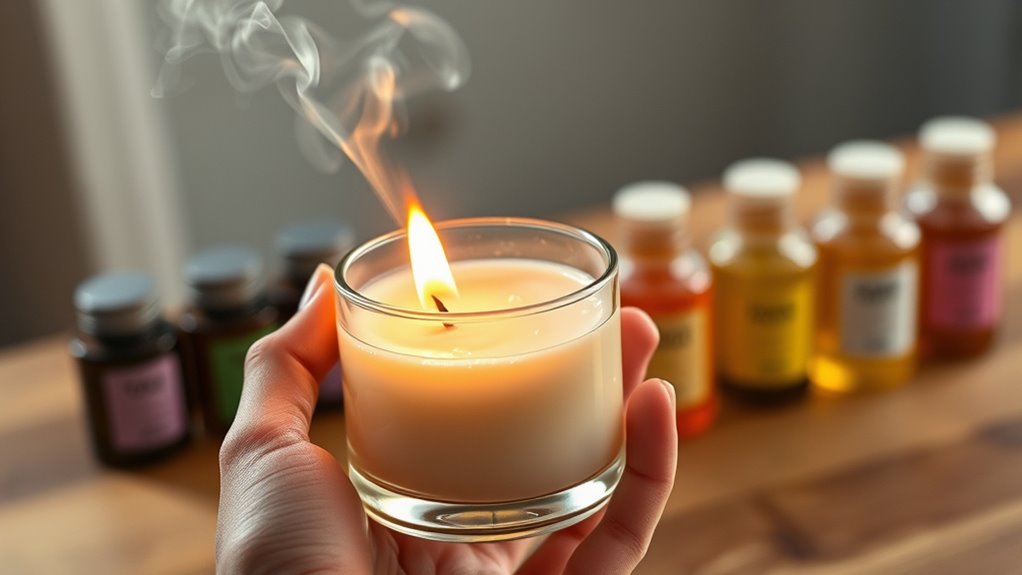
Different types of fragrance oils considerably influence how long a scented candle’s aroma lasts. Synthetic fragrances often produce a stronger, more consistent scent that may fade faster, while essential oils tend to offer a more natural, subtle aroma with longer-lasting notes. When choosing a candle, consider these impacts:
Fragrance oil type impacts candle scent strength and longevity—choose based on preference for intensity or lasting aroma.
- Synthetic fragrances provide bold scents but may dissipate quickly.
- Essential oils deliver authentic aromas with extended longevity.
- Oil quality affects how well the scent disperses and stays in the air.
- Blends of both can balance intensity and duration.
- Some oils are more volatile, impacting how fast the fragrance evaporates.
- Fragrance longevity is also influenced by the type of carrier oils and waxes used in the candle formulation, which can enhance or diminish scent release over time.
Your choice of fragrance oil directly affects your candle’s scent duration, so select based on whether you prefer intensity or longevity.
Factors That Influence the Intensity and Duration of Fragrance
Several factors directly affect how strong and long-lasting a candle’s fragrance will be. The key elements include scent concentration, which determines how much fragrance oil is in the wax, and fragrance layering, where multiple scents combine for a richer aroma. Higher scent concentrations generally produce more intense and enduring scents. Additionally, proper fragrance layering enhances complexity and longevity. The table below highlights these influencing factors:
| Factor | Effect on Fragrance | Optimization Tip |
|---|---|---|
| Scent Concentration | Increases scent intensity and longevity | Use ideal fragrance oil levels |
| Wax Type | Affects scent throw and burn rate | Choose high-quality wax |
| Fragrance Quality | Impacts scent clarity and durability | Select pure, natural oils |
| Fragrance Layering | Adds depth and prolongs scent presence | Combine complementary scents |
| Candle Design | Influences scent dispersion and strength | Consider vessel size and shape |
Additionally, the choice of wax type can significantly impact how well the fragrance disperses and how long it lasts, making it a crucial factor in candle performance.
The Science Behind Scent Throw: Cold and Hot
Understanding how a candle’s scent travels through the air involves examining its scent throw, which operates differently under cold and hot conditions. When a candle is cold, scent throw is minimal; the fragrance molecules are less active, creating a subtle aroma layering effect. As the candle warms, hot scent throw intensifies, dispersing aroma more broadly. This process enhances scent diffusion and creates a richer experience. Imagine:
A candle’s scent becomes more vibrant and widespread as it warms, creating a rich, layered aroma experience.
- The initial, gentle aroma upon lighting
- A burst of fragrance as the wax melts
- The way scent reaches different parts of a room
- Layered scents blending seamlessly
- The overall aroma layering that transforms your space
This dynamic movement of fragrance highlights how heat influences scent throw, making your candle’s aroma more vibrant and immersive when hot. Regularly maintaining your candle, such as trimming the wick and ensuring proper burn time, can also optimize scent throw for a better experience. Additionally, the fragrance release process can be affected by the candle’s composition and the environment, further enhancing the sensory experience.
Safety and Optimization in Scented Candle Usage
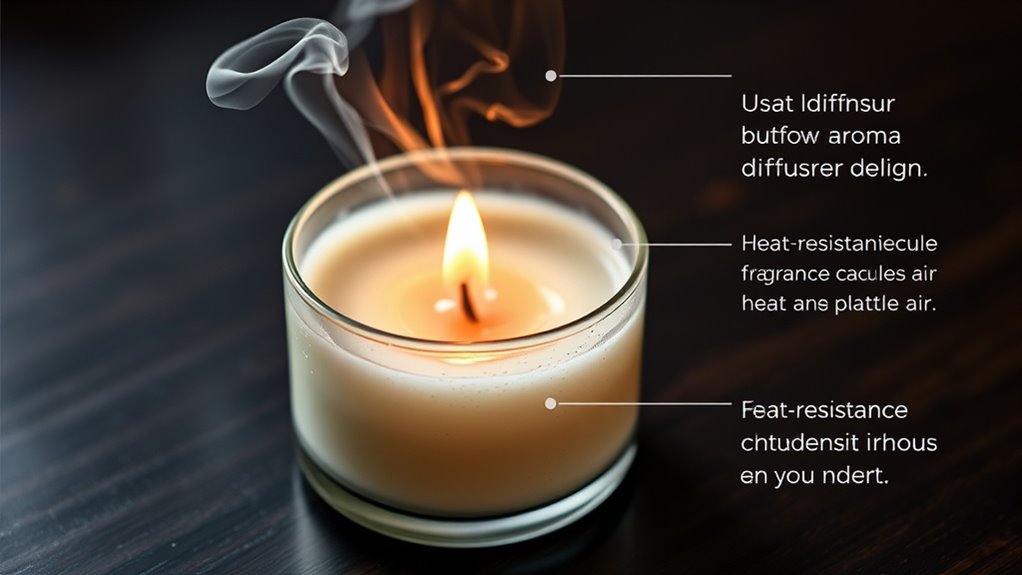
To enjoy your scented candles safely and get the most out of their aroma, it’s important to follow proper usage guidelines. Understanding chemical interactions helps prevent accidents and guarantees a safe burning experience. Always trim the wick to about a quarter-inch before lighting to reduce soot and prevent uneven burning. Keep the candle away from drafts, flammable objects, and children or pets. Follow safety precautions like never leaving a lit candle unattended and extinguishing it properly when finished. Proper burning techniques promote even fragrance release and extend the candle’s lifespan. Regularly trimming the wick minimizes soot buildup and maintains safe combustion. By paying attention to these safety measures and understanding the chemistry behind fragrance release, you can enjoy your scented candles safely while optimizing their aroma performance.
Frequently Asked Questions
How Do Different Candle Shapes Affect Scent Dispersion?
You’ll notice that different candle shapes influence how scent disperses by altering wax melting and airflow dynamics. Wide, shallow candles allow more surface area for wax to melt, releasing fragrance faster, while taller, narrow candles focus airflow, directing scent more precisely. The shape affects how heat and air currents move around the flame, impacting how evenly and strongly the scent spreads throughout your space.
Can Candle Color Influence Fragrance Release?
Imagine a splash of color transforming your space—your candle’s hue can subtly influence fragrance release. While color psychology and visual appeal boost your candle’s aesthetic charm, brighter or darker shades might slightly impact how scents disperse. Darker candles often radiate warmth, potentially intensifying fragrance, while lighter ones evoke calmness. You notice how colors evoke emotions? The same goes for how they can influence the way your candle’s scent fills the room.
What Role Does Ambient Temperature Play in Scent Strength?
Ambient temperature considerably impacts scent strength by influencing temperature fluctuation, which affects how the fragrance diffuses. When the temperature rises, the heat causes the wax to melt more evenly, releasing more scent molecules into the air. Conversely, cooler temperatures slow scent diffusion, making the fragrance less noticeable. You’ll notice a stronger scent in warmer environments because heat helps activate the fragrance release process, enhancing your candle’s aroma.
How Do Essential Oils Compare to Synthetic Fragrances in Candles?
You’ll find that essential oils provide a natural scent extraction, offering authentic aromas that reflect their botanical origins. Their fragrance molecule properties tend to be more subtle and complex compared to synthetic fragrances, which often deliver a consistent and intense scent. Synthetic fragrances are designed for durability and strength, but essential oils give you a pure, more nuanced experience, making your candle smell closer to nature.
Do Candle Additives Impact the Scent Longevity?
Like a symphony, candle additives influence scent longevity by enhancing fragrance layering and wick wicking. They can extend the aroma’s lifespan or sometimes hinder it if not balanced properly. Additives improve scent throw, ensuring your candle’s fragrance remains vibrant longer. To get the best results, choose quality additives designed for candle making, and keep an eye on how they interact with your wax and wick, much like a conductor guiding an orchestra.
Conclusion
So, next time you light a scented candle, remember it’s not just about creating ambiance—it’s a tiny science experiment. With the right wax, wick, and fragrance, you’re basically a perfumer in disguise. Just don’t forget to blow it out before your living room turns into a perfume factory. After all, who needs a science degree when you’ve got scented candles turning your home into a fragrant laboratory?