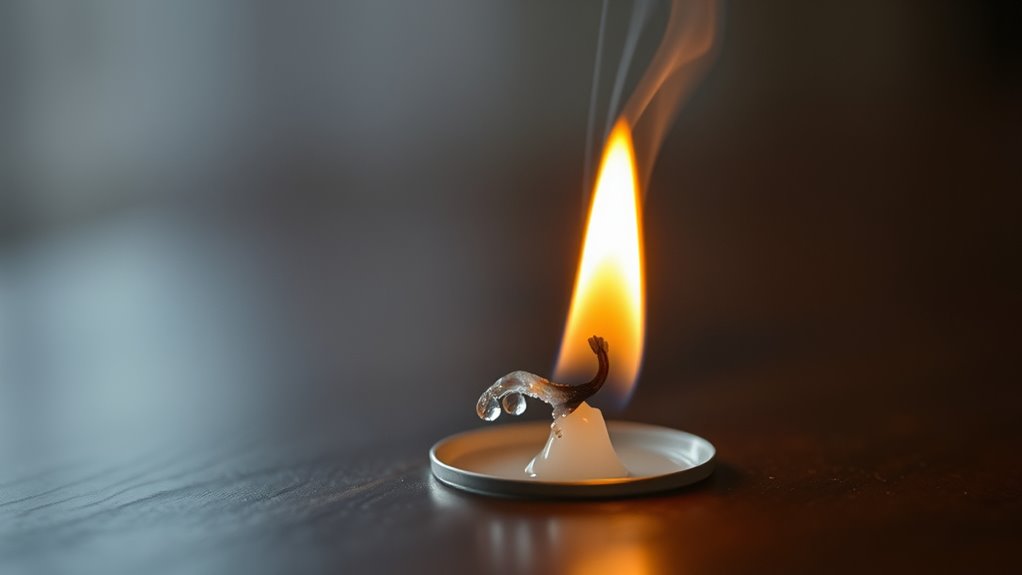

When you light a candle, heat from the wick melts the wax, which vaporizes and ignites, forming a flame. The flame has different zones—the blue core for efficient combustion and the yellow part with soot particles. Oxygen fuels the process, creating light and heat. Factors like airflow, wick size, and wax composition affect how steady or flickering the flame is, and why soot or smoke might appear. Discover more about these fascinating processes as you continue exploring.

Get decor and gifts delivered free with Prime
- Fast, free delivery on millions of items
- Prime Video, Amazon Music and more included
- Member-only deals all year
Key Takeaways
- Candle flames form through vaporized wax igniting, creating a stable combustion process sustained by heat and oxygen.
- The flame’s structure includes a blue, complete combustion zone and a yellow, soot-producing core.
- Melting wax turns into vapor, which feeds the flame, with heat maintaining continuous vaporization.
- Oxygen availability influences flame brightness, stability, and soot production during burning.
- Factors like airflow and wick size impact flame stability, soot emission, and overall burning efficiency.
As an affiliate, we earn on qualifying purchases.
The Composition of Candle Wax and Its Role in Burning

Candle wax is primarily made of hydrocarbons, usually derived from paraffin, beeswax, or soy. These hydrocarbons determine the wax’s chemical properties, such as how it interacts with heat and burns. One key characteristic is the melting point, which varies among types of wax; paraffin wax melts around 46-68°C, while beeswax melts at about 62-64°C, and soy wax at roughly 49-82°C. These melting points are essential because they influence how the wax liquefies when heated, enabling it to feed the flame continuously. The chemical properties of the wax also affect how completely it burns and how much soot it produces. Understanding these properties helps explain why certain waxes perform better in candles and how they sustain combustion. Additionally, the melting point plays a critical role in determining the stability and safety of the candle during burning. The burning process relies heavily on the wax’s ability to maintain a consistent melt pool, which is affected by its melting characteristics. Moreover, thermal stability impacts how well the wax withstands prolonged exposure to heat without degrading, ensuring safe and efficient burning. Recognizing the chemical composition of waxes aids in selecting the most suitable type for specific candle applications.
The Ignition Process and the Formation of the Flame

When you light a candle, the wick heats up quickly, causing the wax nearby to vaporize. This vapor then mixes with oxygen and ignites, creating the flickering flame you see. Understanding how wick heating, vaporization, and combustion work together reveals the fascinating process behind candle flames. Additionally, the emotional support provided during times of change, such as a candle’s comforting glow, can help soothe feelings and create a sense of stability. Recognizing the chemical reactions involved in combustion enhances our appreciation of this simple yet complex phenomenon.
Wick Heating Dynamics
The ignition process begins as the wick absorbs melted wax, which then heats up rapidly. This increases the wick temperature, causing nearby wax to vaporize. As the vapor ignites, the flame oscillates gently, maintaining a steady burn. The wick’s temperature stabilizes between ignition bursts, supporting continuous vaporization. During this process, the flame flickers due to airflow and thermal fluctuations, creating oscillations. Visualize this imagery:
| Wick Temperature | Flame Behavior | Vapor Production |
|---|---|---|
| Rising rapidly | Flame sways gently | Vaporizes wax smoothly |
| Stabilizes at high | Flickers slightly | Maintains steady vapor |
| Slight dips | Flame oscillates | Consistent vapor flow |
| Peaks briefly | Flame steadies | Continuous vaporization |
| Drops after cooling | Flame flickers again | Wax vaporizes continuously |
Additionally, the thermal stability of the flame is influenced by the balance between heat produced and heat lost to the environment. This balance is affected by factors such as airflow, which can vary depending on the surroundings. The ignition process is sustained by the continuous vaporization of wax, which depends on maintaining optimal wick temperature and airflow. Moreover, the material composition of the wick can affect how consistently the candle burns, impacting the stability of the flame.
Vaporization and Combustion
Vaporization and combustion are the core processes that turn a simple wick and wax into a steady flame. When you light the wick, heat from the flame melts the wax near the wick, causing wax melting and producing vapor. As the wax vapor rises, it reaches the flame, where it ignites through vaporization and combustion. This process sustains the flame, with the vapor burning in a controlled reaction. The flame color depends on the temperature and chemical composition of the burning gases; a blue flame indicates complete combustion, while a yellow or orange hue shows incomplete combustion with soot particles. Understanding vaporization and combustion helps you see how the heat transforms wax into fuel, creating the characteristic glow and steady burn of a candle flame. The ignition temperature of the wax plays a critical role in maintaining a consistent flame, as it determines when the vapor ignites reliably. Additionally, the combustion process involves complex chemical reactions that produce heat, light, and various combustion byproducts. Proper airflow around the flame influences oxygen availability, which is essential for efficient combustion and reducing soot formation. Proper air circulation ensures a cleaner and more stable flame, optimizing the candle’s performance.
How Combustion Creates Light and Heat

When the wax melts and turns into vapor, it reacts with oxygen to produce combustion. This process releases energy as both light and heat, making the flame bright and warm. Understanding how these elements work together helps explain why candles glow and warm your space. The combustion process is a fundamental example of self-awareness in action, as it involves understanding the natural reactions occurring within the flame. Additionally, the chemical reactions involved are influenced by factors such as oxygen availability, which can affect the intensity and stability of the flame. As technology advances, insights from AI in education and automation are increasingly applied to understand and optimize such natural processes.
Wax Melts and Vapor
As a candle burns, wax melts into liquid and then turns into vapor, which rises toward the flame. During wax melting, the heat from the flame causes the solid wax to liquefy, creating a steady stream of vapor. This vapor is vital because it feeds the combustion process, allowing the flame to stay alive. As the vapor burns, it produces heat and light, contributing to the flame’s distinctive color. The flame color depends on the temperature and the chemical reactions happening within the vapor. When vapor ignites, it creates a bright, steady glow. This process demonstrates how wax melting and vaporization are essential in sustaining the candle’s flame and producing the warm, inviting light we associate with burning candles. Additionally, the vaporization process is influenced by the heat transfer from the flame, which ensures continuous vapor production to maintain combustion. Understanding thermal dynamics helps explain how the heat from the flame maintains the vaporization process and keeps the candle burning steadily. Proper air circulation around the flame also plays a role in maintaining optimal combustion conditions and preventing the flame from going out. Furthermore, consistent oxygen supply is crucial for the combustion of the vapor, ensuring the flame remains steady and bright.
Oxygen’s Role in Combustion
Have you ever wondered what makes a candle flame glow so brightly? It all comes down to oxygen’s role in combustion. When you light a candle, oxygen from the air reacts with the vaporized wax, creating a chemical reaction that produces heat, light, and carbon dioxide. The oxygen supply directly impacts combustion efficiency; more oxygen means cleaner, brighter flames. Insufficient oxygen causes soot and dimmer flames. Here’s a quick look at how oxygen affects combustion:
| Oxygen Supply | Combustion Efficiency | Flame Brightness |
|---|---|---|
| Adequate | High | Bright |
| Limited | Low | Dim |
| Excess | Prime | Bright |
| Blocked Airflow | Reduced | Dull |
| Steady Flow | Consistent | Steady |
Without enough oxygen, your candle can’t burn effectively, reducing its warmth and glow. Proper airflow is essential for optimal combustion efficiency and a vibrant flame. Ensuring a steady oxygen supply helps maintain a steady and bright flame. Additionally, oxygen’s role in combustion is vital for achieving complete and clean burning.
Flame’s Brightness and Heat
The combustion process in a candle flame produces both light and heat through rapid chemical reactions. As gases burn, they emit visible light, creating the flame’s brightness, which varies in color due to different temperature zones and chemical substances. This color variation can range from blue at the base, indicating higher temperatures, to yellow or orange at the tip, where cooler soot particles glow. The flame’s heat results from energy released during combustion, warming nearby objects. The flame’s lifespan depends on factors like wax composition and oxygen supply. A steady flame maintains consistent brightness and heat, while flickering can cause fluctuations. Overall, combustion converts chemical energy into light and heat, making candles not only functional but also visually mesmerizing.
The Structure of a Candle Flame and Its Different Zones

| Zone | Characteristics | Flame Colors |
|---|---|---|
| Core | Incomplete combustion, soot | Yellow, orange |
| Blue Zone | Complete combustion, efficient | Blue |
| Non-luminous | Hotter, stable, no soot | Invisible |
Factors That Affect Flame Stability and Flickering

Various factors influence how stable a candle flame remains and whether it flickers. Oxygen deprivation can cause uneven combustion, leading to instability. Additionally, ambient airflow plays a significant role; even slight breezes can disturb the flame’s steady burn. To understand these effects better:
- Insufficient oxygen supply causes the flame to waver or go out.
- Air currents from nearby vents or open windows disturb the flame’s shape.
- Changes in ambient airflow can create flickering, making the flame look lively or unstable.
You can minimize flickering by shielding the candle from drafts and ensuring proper oxygen flow. Recognizing these factors helps you maintain a steady, consistent flame, enhancing both safety and aesthetic appeal.
The Science Behind Soot and Smoke Production

When a candle burns, incomplete combustion often produces soot and smoke, which are visible byproducts of the process. Soot formation occurs when carbon particles from the wax don’t fully combust, resulting in tiny, black specks that glow in the flame’s interior. These soot particles are carried upward by convection currents, creating the characteristic black smoke. Factors like insufficient oxygen or a wick that’s too large can increase soot production. The presence of unburned hydrocarbons in the smoke also contributes to the formation of smoke particles, which can vary in size and density. These particles can settle on nearby surfaces or be inhaled, affecting air quality. Understanding soot and smoke production helps you control flame conditions for cleaner, more efficient burning.
Practical Uses of Candle Flame Science in Everyday Life

Understanding how candle flames burn efficiently allows you to use candles more effectively in everyday life, whether for lighting, ambiance, or even emergency situations. By mastering flame behavior, you can enhance scent diffusion, improve decorative designs, and maximize safety. For example, you can:
- Position candles to optimize scent enhancement, ensuring fragrances disperse evenly throughout a room.
- Choose the right candle size and shape to accentuate decorative designs and create visually appealing displays.
- Adjust burning conditions, such as trimming the wick, to prevent soot and smoke, maintaining a clean environment.
Knowing these principles helps you select and care for candles that serve multiple purposes, from mood setting to practical illumination. Applying candle flame science increases both the aesthetic and functional value of your candles daily.
Frequently Asked Questions
Why Does a Candle Flame Change Shape During Burning?
You notice a candle flame change shape because of the wick shape and soot formation. As the wick burns unevenly or shifts, it causes the flame to flicker and morph. Soot buildup can also alter airflow around the flame, making it flicker or change size. These factors combine to give the flame a constantly shifting appearance, reflecting variations in combustion and the movement of gases and particles in the fire.
How Does the Type of Wax Influence Flame Behavior?
Like a skilled artist choosing their colors, you should know that the type of wax affects flame behavior through its wax composition and melting point. Softer waxes with lower melting points melt more easily, leading to a steadier, brighter flame. Harder waxes with higher melting points produce a smaller flame and less soot. Your choice of wax directly influences how the candle burns and the overall flame appearance.
What Causes a Candle Flame to Flicker Unpredictably?
You notice your candle flickering unpredictably because air drafts disturb the flame and cause irregular airflow. Poor wick quality can also make the flame unstable, leading to inconsistent flickering. When a draft hits the flame, it shifts, creating a flicker. A high-quality wick burns more steadily, reducing flickering. Keep your candle away from open windows or fans to minimize drafts, and choose wicks made to burn evenly for a calmer flame.
Can Candle Flames Burn Without Producing Soot?
Yes, candle flames can burn without producing soot if you use high-quality, clean-burning wax and keep the wick trimmed. When the flame maintains a higher temperature, it burns the wax more completely, reducing soot formation. Ensuring proper airflow around the flame also helps, as it stabilizes the flame temperature and prevents incomplete combustion, which is the main cause of soot. This results in a cleaner, soot-free burn.
How Do Environmental Conditions Affect Candle Flame Stability?
Like a delicate dance, your candle’s flame depends on environmental conditions. If you have strong air circulation, it can cause flickering or even extinguish the flame, disrupting stability. Humidity levels also play a role—high humidity can dampen the flame, making it flicker or struggle to stay lit. To keep it steady, place your candle in a calm, dry spot, away from drafts and moisture.
Conclusion
Now that you know how a candle’s flame dances like a tiny, flickering star, you can see it as more than just light. It’s a delicate ballet of chemistry and physics, glowing warmly like a whisper of fire’s secret heart. When you light a candle, you’re inviting a miniature sun to flicker and sway, turning simple wax into a mesmerizing storyteller of heat, light, and shadows—an enchanting ballet right in your hands.
Evergreen bestsellers Picks
bestsellers
As an affiliate, we earn on qualifying purchases.