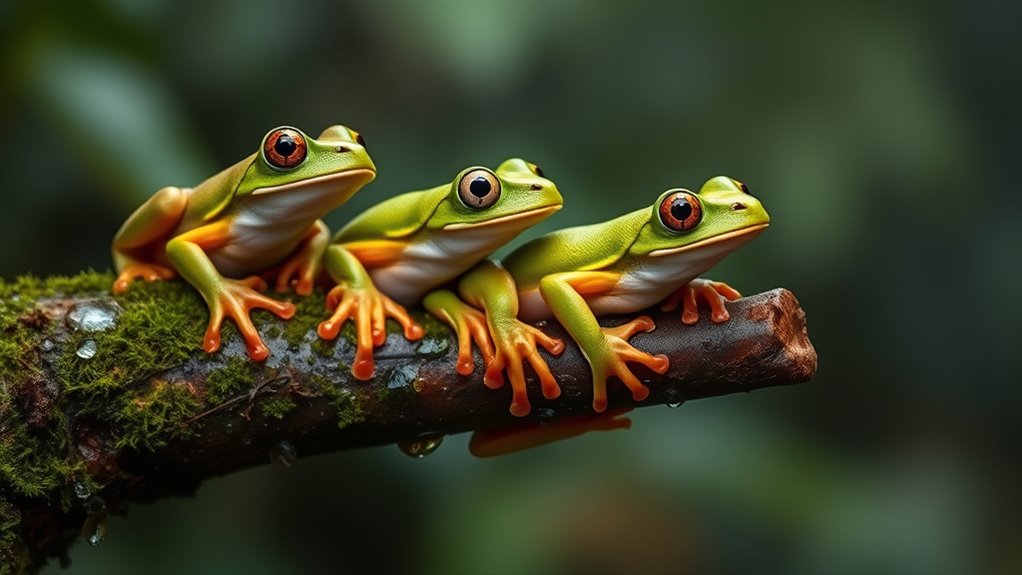

Amphibians worldwide are fighting for survival due to habitat loss, climate change, and deadly diseases like chytrid fungus. Urban expansion destroys breeding sites, while rising temperatures and droughts reduce water sources essential for reproduction. Innovative conservation efforts, such as habitat restoration, captive breeding, and disease resistance research, are helping some species recover. To learn how scientists and communities are making a difference, discover the inspiring stories and strategies behind amphibian conservation.
Key Takeaways
- Amphibian populations are declining globally due to habitat loss, climate change, and disease, pushing many species to the brink of extinction.
- Conservation efforts like habitat restoration, captive breeding, and disease management have successfully helped some frog populations recover.
- Emerging threats, such as chytrid fungus and habitat fragmentation, require innovative solutions like genetic resistance and advanced monitoring tools.
- Successful models, including reintroductions and adaptive management, demonstrate amphibians’ resilience when supported by science and community action.
- Future strategies involve habitat protection, scientific advancements, and technological tools to bolster amphibian survival worldwide.
The Global Decline of Amphibian Populations

The global decline of amphibian populations has become an alarming crisis that threatens biodiversity worldwide. You may not realize it, but frogs, salamanders, and newts are vanishing at an average rate of 3.79% annually across the United States alone. Over 30% of amphibian species are at immediate risk of extinction, and the decline is speeding up in key regions like the Palaearctic and Nearctic. Salamanders and newts are among the most threatened groups. Herpetologists first noticed these rapid drops in the 1980s, raising concerns about ecosystem stability. Their disappearance impacts insect control, nutrient cycling, and food webs. Urgent action is needed to prevent further losses and protect these crucial creatures before they vanish forever.
Fungal Threats: Chytrid and Emerging Pathogens
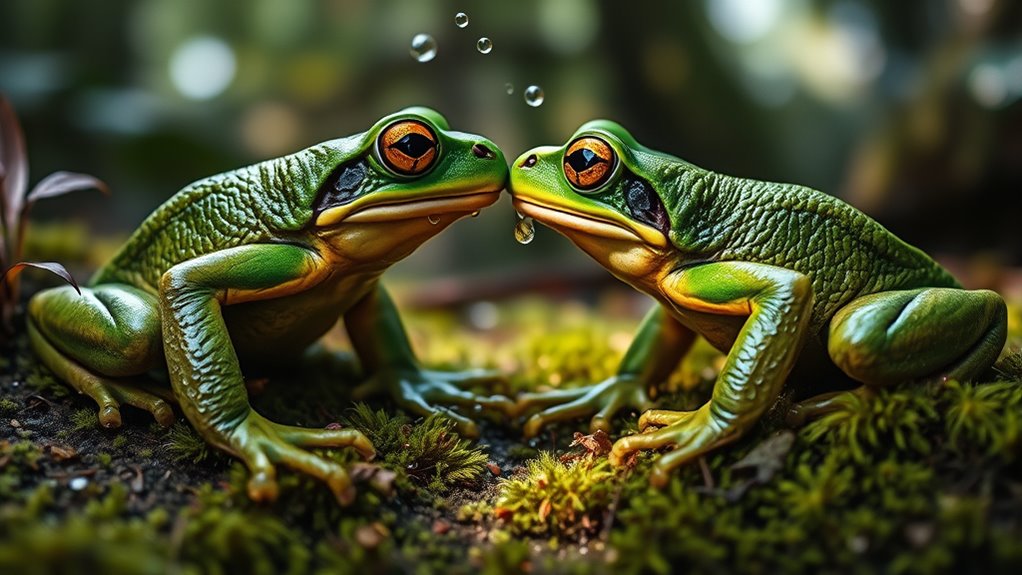
Fungal pathogens have emerged as one of the most devastating threats to amphibian populations worldwide. The chytrid fungus (Bd) has caused massive die-offs, wiping out native frogs in places like Yosemite and pushing species toward extinction. Emerging pathogens like Batrachochytrium salamandrivorans threaten salamanders and newts, especially in the Palaearctic region. These fungi infect amphibian skin, disrupting their ability to absorb water and electrolytes, often leading to death. The spread of these diseases has accelerated declines across continents, with some populations declining by over 90%. Scientists are racing to understand these pathogens and develop strategies to combat them. Efforts include disease management, captive breeding, and research into resistance, which can be supported by conservation programs, aiming to give frogs and salamanders a fighting chance against these relentless fungal threats. Additionally, public awareness and community engagement are crucial in preventing the spread of these deadly fungi and protecting vulnerable amphibian populations worldwide. Understanding the pathogen transmission routes is essential for implementing effective quarantine and biosecurity measures to curb their spread, and increasing awareness about the importance of biosecurity measures can significantly reduce disease transmission.
Habitat Loss and Urban Expansion Impacts
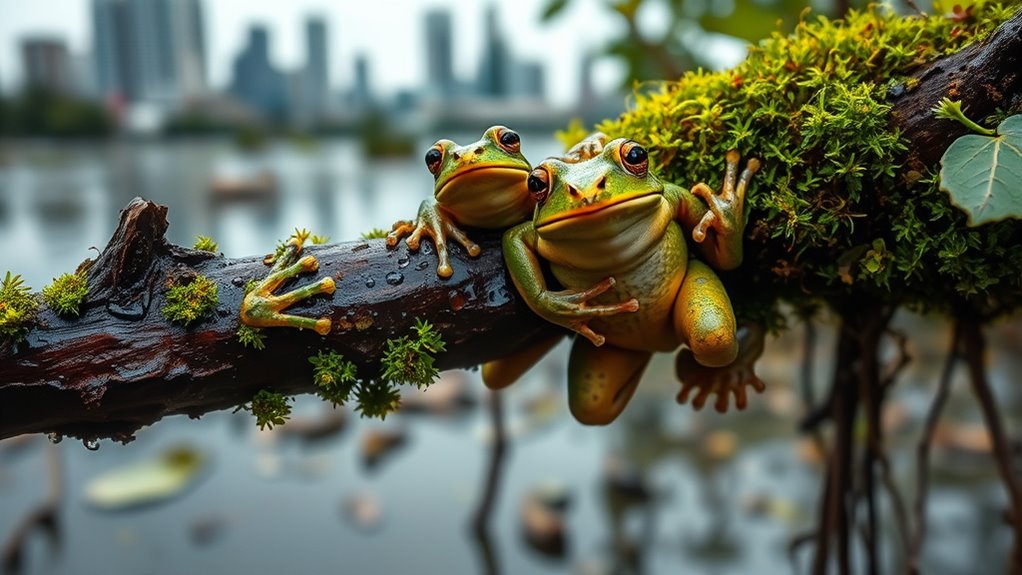
Habitat loss driven by urban expansion directly threatens amphibian survival by destroying vital breeding grounds and disrupting ecosystems. As you develop new neighborhoods and roads, you bury vernal pools and fragment forests, leaving frogs with fewer safe places to breed and feed. Larger wetlands often receive protection, but smaller, temporary pools remain vulnerable, losing their ecological role. If you depend on streams and rivers, you face additional stress as waterways dry into isolated pools, making it harder for frogs to reproduce and find food. This habitat destruction is a leading cause of amphibian declines worldwide, especially in the Palaearctic regions. Your development activities threaten the delicate balance amphibians rely on, accelerating their decline and pushing many species closer to extinction. Incorporating habitat preservation strategies can help create resilient ecosystems that support amphibian populations despite habitat fragmentation. Protecting critical breeding sites is essential for maintaining healthy amphibian populations in changing environments. Additionally, restoring wetland connectivity can help amphibians move safely between breeding and feeding areas, mitigating some effects of habitat fragmentation.
Climate Change and Its Effects on Amphibian Habitats

As climate change accelerates, its impact on amphibian habitats becomes increasingly severe, compounding existing threats from habitat loss and fragmentation. You might notice salamanders shifting northward as temperatures rise, forcing them into unfamiliar areas. Decreased rainfall can dry up breeding sites, leaving frogs stranded and unable to reproduce. Warmer temperatures cause amphibians to spend more energy hunting, stressing their survival. Additionally, smaller, isolated pools become their only refuges, making populations vulnerable. Your concern should focus on these critical effects: 1. Rising temperatures pushing species out of their habitats. 2. Diminished rainfall reducing breeding grounds. 3. Increased metabolic demands causing fatigue and decline. 4. Fragmented habitats limiting migration and genetic diversity. The loss of suitable habitat due to climate change emphasizes the importance of habitat conservation initiatives to protect these vulnerable species. Furthermore, low light office plants can serve as an analogy for creating resilient environments that support diverse life forms amid changing conditions. Implementing drainage management can help preserve vital breeding sites that are increasingly threatened by altered rainfall patterns.
Case Study: Frogs of New Zealand

Have you ever wondered how amphibians are faring in distant ecosystems like New Zealand? An expert panel recently assessed all 20 frog species and subspecies there, along with one newt. Unfortunately, four species declined in status, and none improved. Hamilton’s frogs now face Threatened – Nationally Critical status, with populations shrinking on Te Pākeka Island. Archey’s frog populations have increased to over 100,000, but they remain At Risk – Declining due to predation. Hochstetter’s frogs lost 30-40% of their population in a single night, earning a Threatened – Nationally Critical label. Predation by introduced mammals like rats, mice, and weka poses the primary threat. Despite challenges, ongoing conservation efforts aim to stabilize and recover these unique frogs in their fragile environment. Conservation strategies are crucial to ensure the survival of these vulnerable species in their natural habitats. To support these efforts, understanding the threats to amphibian populations is essential for developing effective preservation plans. Additionally, incorporating vibrational awareness techniques can help in understanding and mitigating some of these environmental impacts. Furthermore, advances in Kia Tuning demonstrate how targeted modifications can optimize performance and resilience, offering insights into how conservation measures might similarly enhance species adaptability and survival. Recognizing the importance of habitat restoration can further improve the prospects for these frogs by providing safe and sustainable living environments.
Success Stories in Amphibian Conservation

You can see that conservation efforts are making a real difference, as Yosemite’s mountain yellow-legged frogs have rebounded through reintroductions and adaptive resistance to disease. These success stories show that targeted actions can help amphibians recover despite serious threats. Such models inspire hope and guide global strategies to save amphibian populations worldwide. Additionally, innovative indoor gardening techniques, such as the use of unique and wicked planters, contribute to creating supportive habitats for these vulnerable species. Understanding habitat restoration can further enhance efforts to support amphibian recovery in changing environments. Incorporating conservation practices into habitat management ensures that ecological needs are met, fostering healthier amphibian populations. Monitoring market trends and insights can also inform conservation strategies by highlighting environmental changes affecting habitats, especially as remote hackathons promote collaboration across diverse teams working on environmental solutions.
Yosemite’s Reintroduction Triumphs
Yosemite National Park has become a remarkable success story in amphibian conservation, demonstrating that targeted efforts can reverse severe declines. Over the past 17 years, 24 reintroductions across 12 sites have revived the mountain yellow-legged frog populations. Your involvement helped achieve these milestones, showing that resilience is possible. Consider these inspiring facts:
- Reintroduced frogs developed resistance to chytrid fungus, indicating adaptive potential.
- New adult frogs successfully recruited into protected habitats, ensuring population stability.
- Multiple sites now host thriving, self-sustaining populations once on the brink of extinction.
- Yosemite’s efforts serve as a model, proving focused conservation can restore amphibian diversity.
- Incorporating management techniques has been crucial for long-term success.
- Ongoing monitoring and adaptive strategies are essential for maintaining these populations over time.
- Effective habitat management and continuous maintenance have also played key roles in supporting this recovery.
Your support and dedication foster hope, proving that even the most threatened species can recover with persistent action.
Resistance to Disease
The success of Yosemite’s amphibian recovery efforts highlights a remarkable breakthrough: some reintroduced frogs have developed resistance to chytrid fungus, a pathogen once thought to be unstoppable. This adaptive response shows that frogs can evolve defenses when given the chance. Conservationists have observed that targeted reintroductions and protected habitats foster resilience. Here’s a quick look at key recovery strategies:
| Strategy | Outcome |
|---|---|
| Selective breeding | Increased resistance in new generations |
| Habitat protection | Reduced stress, improved survival |
| Disease monitoring | Early detection, containment |
These efforts prove that with focused intervention, amphibians can combat diseases and bounce back from near extinction, offering hope for global amphibian conservation.
Global Conservation Models
Successful amphibian conservation efforts around the world demonstrate that targeted strategies can reverse declines and foster resilience. You can see this in actions such as:
- Reintroducing mountain yellow-legged frogs in Yosemite, leading to a major comeback.
- Developing disease-resistant populations through adaptive management.
- Translocating frogs to safe habitats, encouraging recruitment of new generations.
- Implementing habitat restoration that protects critical breeding sites and waterways.
These models show that with dedicated research, habitat protection, and innovative approaches, amphibians can recover from near extinction. Such successes inspire hope and provide blueprints for future efforts globally. By combining science and community action, you help turn the tide for frogs fighting for survival amid a changing world.
Innovative Strategies for Species Recovery

Innovative strategies are transforming amphibian conservation efforts by harnessing advanced technology and novel approaches. You can now use genetic tools like CRISPR to develop disease-resistant frog populations, tackling threats like chytrid fungus directly. Captive breeding programs have evolved to include habitat simulations, ensuring tadpoles and adults thrive upon release. You might implement bioacoustics monitoring to detect and track elusive species, enabling targeted intervention. Drones and remote sensing help identify habitat degradation quickly, guiding restoration efforts efficiently. Additionally, some conservationists employ microbiome manipulation, introducing beneficial bacteria to boost frogs’ immune defenses. These cutting-edge tactics increase survival chances, promote resilience, and accelerate recovery. By integrating science and technology, you’re creating smarter, more adaptable strategies to save amphibians from extinction.
The Role of Protected Areas and Reserves
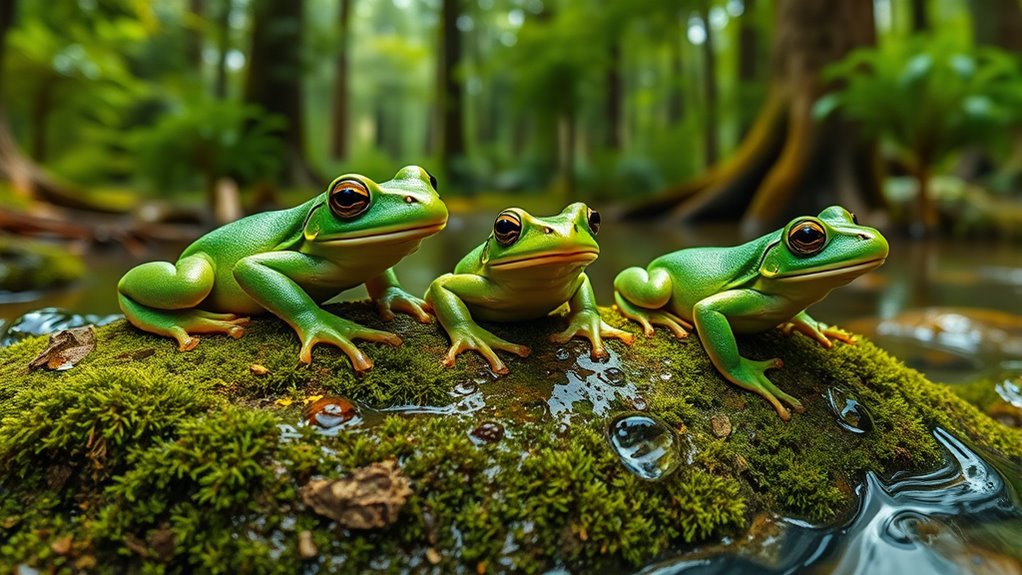
How do protected areas and reserves contribute to amphibian conservation? They create safe havens where frogs can thrive away from threats like habitat loss and disease. These areas:
- Provide undisturbed habitats essential for breeding and feeding, allowing populations to stabilize.
- Serve as refuges for species pushed to the brink by development or climate change.
- Facilitate research and monitoring, helping scientists understand threats and develop solutions.
- Enable targeted management, such as disease control and habitat restoration, increasing survival chances.
Challenges and Opportunities for Future Conservation

Addressing the challenges facing amphibian conservation requires overcoming significant obstacles such as habitat loss, emerging diseases, and climate change. Habitat destruction from urban sprawl and deforestation continues to threaten breeding sites and crucial ecosystems. You can help by supporting efforts to protect and restore wetlands, vernal pools, and forests. Emerging diseases like chytrid fungus demand innovative solutions, including research into disease resistance and captive breeding programs. Climate change alters habitats and affects amphibian life cycles, so adaptive management strategies are essential. You can promote awareness and advocate for policies that mitigate climate impacts. Despite these hurdles, opportunities exist through reintroduction projects, habitat restoration, and scientific advancements. By staying informed and engaged, you can contribute to future conservation efforts that give frogs a fighting chance in a changing world.
How You Can Help Save Our Frogs

You can make a real difference in protecting frogs by supporting local and global conservation efforts. Here’s how you can help:
- Participate in local habitat restoration projects to preserve wetlands, streams, and ponds crucial for frog breeding.
- Support organizations that work to combat disease, like chytrid fungus, and protect endangered species.
- Reduce pesticide use in your yard to prevent chemical runoff that harms amphibians.
- Spread awareness about amphibian decline by sharing knowledge and encouraging others to get involved.
Every action counts, from volunteering to advocating for policies that protect natural habitats. Your efforts can contribute to reversing the decline and securing a future where frogs thrive.
Frequently Asked Questions
What Genetic Adaptations Enable Some Frogs to Resist Diseases?
You might find that some frogs develop genetic adaptations like enhanced immune responses, stronger skin barriers, or specific gene variations that target pathogens. These changes help them fight off diseases like chytrid fungus more effectively. By evolving these traits, frogs increase their chances of survival and reproduction, allowing populations to adapt over time. Active research continues to uncover these genetic factors, offering hope for future conservation strategies.
How Do Invasive Species Specifically Threaten Native Amphibian Populations?
Invasive species threaten native amphibians by outcompeting them for resources or introducing deadly diseases. For example, in Hawaii, the introduction of the cane toad disrupted local ecosystems, and the same could happen with invasive fish consuming tadpoles. These non-native predators or competitors can cause population declines or extinctions, making it essential to prevent their spread and protect vulnerable native species from these aggressive invaders.
What Role Do Citizen Scientists Play in Amphibian Conservation Efforts?
You play a crucial role in amphibian conservation by reporting sightings, monitoring local populations, and sharing data with scientists. Your efforts help identify declining species and habitat threats early. Participating in community surveys or citizen science projects contributes valuable information that guides conservation actions. By staying informed and involved, you directly support efforts to protect amphibians and guarantee their survival amidst ongoing environmental challenges.
Are There Successful Captive Breeding Programs for Critically Endangered Frogs?
Yes, there are successful captive breeding programs for critically endangered frogs. You can support these efforts by donating or volunteering with organizations that breed frogs in controlled environments. These programs aim to boost populations and reintroduce frogs into their natural habitats. Your involvement helps guarantee genetic diversity, develop disease-resistant strains, and create sustainable populations, giving these species a fighting chance to survive and recover in the wild.
How Can Urban Planning Better Incorporate Amphibian Habitat Preservation?
You can better incorporate amphibian habitat preservation into urban planning by protecting and restoring wetlands, vernal pools, and stream buffers. Avoid destroying critical breeding sites, and implement green spaces that mimic natural habitats. Incorporate wildlife corridors to connect fragmented areas, ensuring amphibians can safely migrate. Enforce regulations that limit habitat destruction and promote environmentally friendly development practices, making sure amphibians have safe places to live, breed, and thrive amid urban growth.
Conclusion
You can make a difference in the fight to save amphibians, just like a lighthouse guides ships through stormy seas. By supporting conservation efforts, reducing habitat destruction, and spreading awareness, you become part of the solution. Every action counts, whether it’s planting native vegetation or advocating for protected areas. Together, we can turn the tide and guarantee these essential creatures thrive in a changing world, like resilient frogs bouncing back from the brink of extinction.