TL;DR

Get decor and gifts delivered free — and shop member deals
- Fast, free delivery on millions of items
- Access to Prime Big Deal Days deals on October 6–7
- Prime Video, Amazon Music and more included
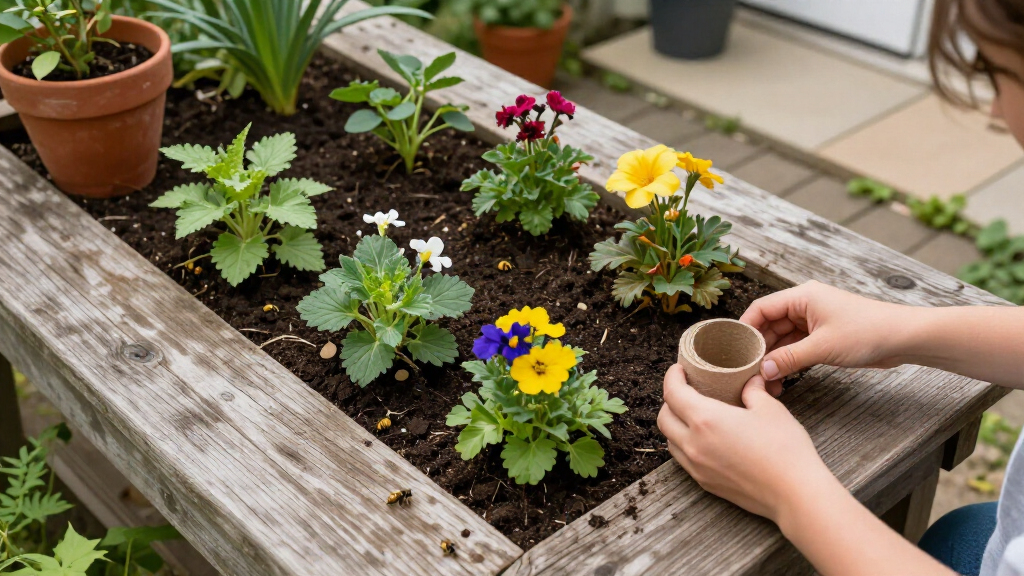
A Hunker report describes reusing empty toilet paper tubes as biodegradable seed-starting cups for flowers that attract bees and other pollinators. The method offers a small-scale way to reuse cardboard, but flower choice, sowing time and local growing conditions still matter.
Hunker has published a gardening guide showing how to reuse empty toilet paper tubes as seed-starting cups for flowers that attract bees and other pollinators. The approach gives gardeners a use for household cardboard while starting plants such as cosmos, calendula and daisies, though the report is a how-to article, not evidence that the method alone increases bee populations.
The guide says one cardboard tube can be cut in half to make two starter cups. Gardeners cut short vertical slits around the bottom of each half and fold the resulting tabs inward to form a base. The cups are filled with seed-starting mix, then planted with seeds according to the directions on the packet.
The cups can be arranged in a shallow tray, watered to moisten the mix and kept on a sunny windowsill or under a grow light. Hunker recommends transplanting seedlings outdoors when they are a few inches tall and have developed their first set of true leaves, after the last frost has passed. The tube can be planted with the seedling, in a hole about as deep as the tube and twice as wide.
In a YouTube video by LifesFood creator Charlotte, the demonstration uses cosmos, calendula, daisies and hollyhocks. Hunker also lists zinnias, black-eyed Susans and garden phlox as other pollinator-friendly choices. Its guide says many such flowers can be planted in spring after frost danger, while others are better sown in fall; gardeners should follow seed-packet instructions for the selected varieties.
A Small Reuse for Pollinator Gardens
The method combines two practical aims: reusing cardboard that might otherwise be discarded and raising flowers that provide food for pollinators. The tubes are made of untreated cardboard, according to the report, and can break down in soil when planted with seedlings. That may reduce the need to remove a plastic starter pot, although the article does not quantify waste saved or compare growing results with other containers.
For readers with limited gardening space, the cups can be set in a tray and seedlings later moved to a garden bed or container. The wider value depends on what is planted and whether the flowers grow successfully. Hunker’s suggestions offer a starting point, not a guarantee of blooms or a measured benefit to local bee numbers.
As an affiliate, we earn on qualifying purchases.
How the Seed-Cup Method Works
The report frames the project around bees’ role in pollinating plants and the value of growing flowers that support pollinators. Its central idea is to use the cardboard tube as a temporary container: prepare the folded base, add seed-starting mix and seeds, provide light and water, then transplant the young plant with the cardboard still around it.
Flower selection and timing are central to the instructions. The source names several familiar garden flowers and advises choosing plants that help pollinators. It mentions yellow, blue, purple and white blooms as colors bees are attracted to, but gardeners should check whether a particular flower suits their climate and conditions. The guide also identifies a bee hotel as another possible use for leftover tubes, but provides no construction details or assessment of its suitability.
“Toilet paper tubes make ideal seed starters, as they are the perfect width and height, especially after being cut in two.”
— Hunker report
Growing Results Depend on Conditions
The source does not report controlled comparisons showing how well seedlings grow in toilet paper tubes versus other starter pots. It also gives no data on how many bees a garden created with this method might attract, or whether using the tubes produces a measurable conservation benefit. The advice is presented as a practical gardening idea rather than a tested intervention.
Success will depend on factors the report does not specify, including local climate, soil, watering, light and the needs of each flower variety. The exact best sowing date varies by plant and location, so the broad spring and fall guidance should not replace instructions on seed packets or local gardening advice. The source also does not explain how to make or maintain the suggested bee hotel.
Check Seeds Before Planting
Anyone trying the method can begin by choosing flowers suited to their region and checking each seed packet for sowing depth, light needs and timing. The steps described by Hunker then provide a straightforward route from tube to garden: cut and fold the cardboard, add seed-starting mix, sow and water the seeds, and give the seedlings adequate light.
Before moving plants outdoors, gardeners should account for local frost dates and the maturity guidance on the packet. The article does not announce a follow-up study or a scheduled next development; its advice remains a household gardening project whose results can be judged as the seedlings grow and flower.
Key Questions
How many seed cups can one toilet paper tube make?
Two cups, according to Hunker: cut the tube in half, then make and fold short slits at the bottom of each piece to form a base.
Which flowers does the guide suggest?
The demonstration uses cosmos, calendula, daisies and hollyhocks. Hunker also names zinnias, black-eyed Susans and garden phlox as options for pollinator-friendly planting.
When should seedlings be planted outdoors?
The report says to transplant seedlings when they are a few inches tall and have their first set of true leaves, after the last frost has passed. Check the seed packet and local conditions for the appropriate timing.
Can the cardboard tube go into the ground with the plant?
Yes. Hunker’s instructions say to place the seedling in its tube in a prepared hole, then fill around it with soil or potting mix and water. The tube is described as untreated cardboard that will break down in soil.
Does this method prove a garden will attract more bees?
No such result is established in the report. It offers a way to start flowers associated with pollinators, but provides no measured data on bee visits or population effects.
Source: rss
Fall Picks
fall essentials
As an affiliate, we earn on qualifying purchases.