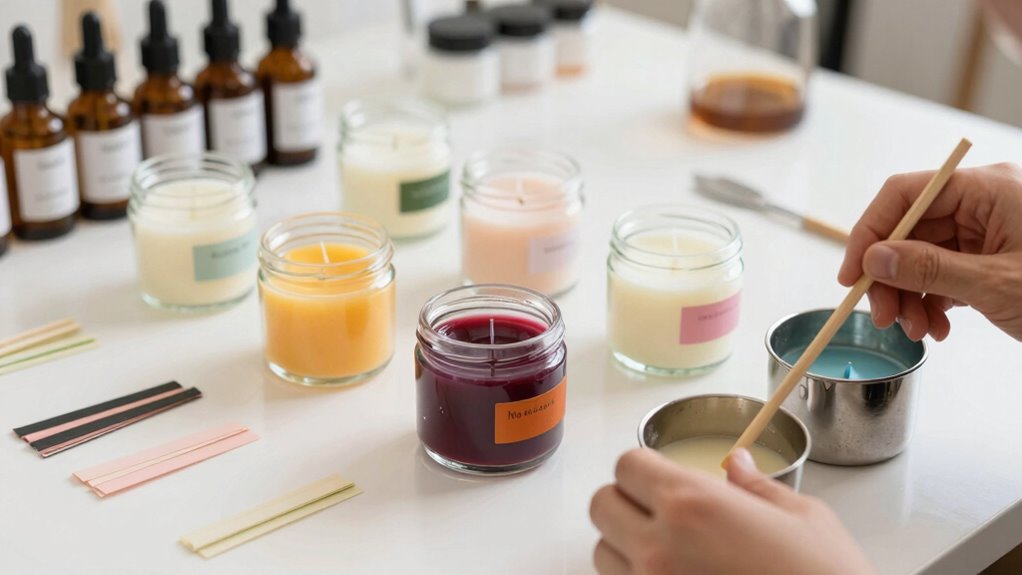
Start by selecting a few fragrance oils that complement each other across top, middle, and base notes. Use about 50 grams of wax and add 5 grams of fragrance oil (around 10%) for each test. Mix thoroughly and note ratios and oils used. Pour into small containers, allow curing, and evaluate the scent over time. Keep detailed records of each blend so you can refine your formula. If you want more tips, keep exploring this process.

Get decor and gifts delivered free with Prime
- Fast, free delivery on millions of items
- Prime Video, Amazon Music and more included
- Member-only deals all year
Key Takeaways
- Select a variety of fragrance oils covering top, middle, and base notes for balanced blending.
- Use small test batches (around 50 grams wax) with 6-10% fragrance oil to evaluate scent strength.
- Record precise ratios and combinations to track successful blends and refine future formulas.
- Mix fragrance oils thoroughly into melted wax at recommended temperature before pouring.
- Cure candles and evaluate scent development over time to determine optimal fragrance ratios.
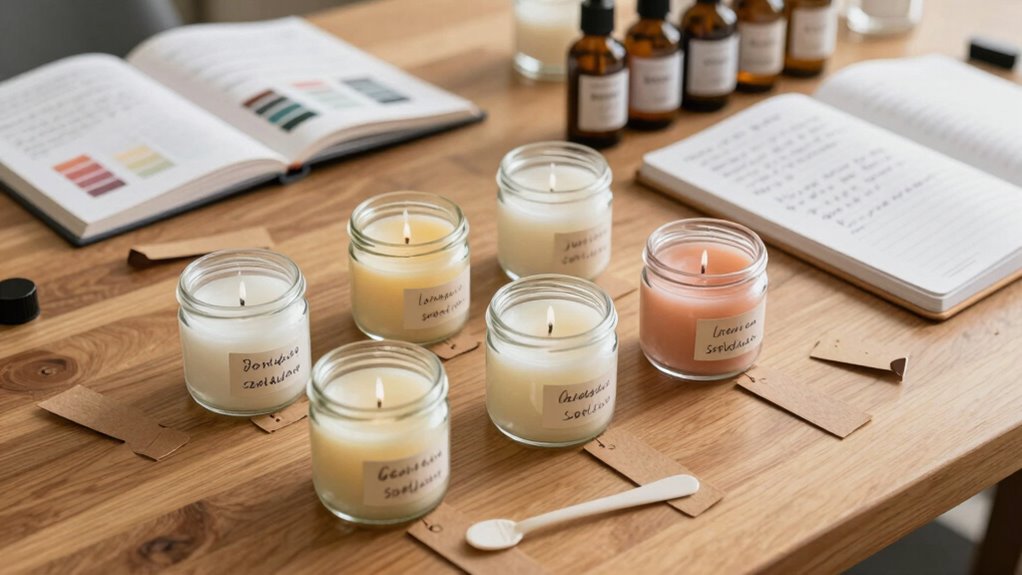
Creating your own candle scents allows you to personalize your home ambiance and experiment with different fragrances. When planning a test batch, your goal is to explore various scent combinations without wasting too much material. This is where candle scent blending and careful attention to fragrance oil ratios come into play. By starting small, you can fine-tune your formulas and discover what works best before committing to larger batches.
Begin by selecting a few fragrance oils that appeal to you. Keep in mind that successful scent blending often involves balancing top, middle, and base notes to create harmony. Once you’ve chosen your fragrances, decide on the fragrance oil ratios. A common starting point is around 6-10% fragrance oil relative to the wax weight. For your test batch, use a smaller quantity—say, 50 grams of wax—so you can experiment with different ratios without excess waste. For example, if you want a 10% fragrance load, add about 5 grams of fragrance oil. Adjust the ratios for subsequent tests to see how the scent strength and profile change.
Start with 6-10% fragrance oils, experimenting with small batches to perfect your scent balance and harmony.
When blending your fragrances, add the oils to a small container first, mixing them thoroughly. This allows you to gauge how the scents interact before incorporating them into your main wax batch. Keep detailed notes on each blend, including the fragrance oil ratios and the specific oils used. This record-keeping is vital for comparing results and refining your formulas. Proper documentation helps you track what combinations work best and prevents repeating unsuccessful blends.
Once you’re satisfied with your scent blend, melt your wax and add the fragrance oil mixture at the recommended temperature—usually around 185°F (85°C). Stir well to ensure even distribution. Pour the wax into your prepared containers and let the candles cure. Testing the scent after curing is essential because some fragrances develop or change over time. Additionally, understanding fragrance oil ratios helps you control the scent intensity and complexity in your final product.
Throughout this process, remember that candle scent blending is both an art and a science. Adjust fragrance oil ratios based on the strength and complexity you desire. Don’t hesitate to tweak your blends or try new combinations in your next test batch. Patience and meticulous record-keeping will help you perfect your signature scents. With each batch, you’ll gain better insight into how different fragrance oils interact and how to achieve the perfect aroma for your home.
As an affiliate, we earn on qualifying purchases.
Frequently Asked Questions
How Do I Prevent Scent Contamination Between Batches?
To prevent scent contamination between batches, you should thoroughly clean all equipment and containers after each use, avoiding cross-contact. Store fragrances separately in airtight containers to maintain fragrance stability and prevent scent layering issues. When testing new scents, label batches clearly and dedicate specific tools to each scent. This careful process guarantees each batch remains pure, avoiding unwanted scent blending or contamination, and preserves the integrity of your candle fragrances.
What Equipment Is Essential for Small-Scale Testing?
You’ll need a digital scale for precise fragrance blending, ensuring consistent scent strength. A thermometer helps monitor melt temperatures, essential for maximum fragrance throw. Use a wick selection guide to choose the right size and type, preventing tunneling or uneven burning. Small, heat-resistant containers or jars, a stirring tool, and a pour pitcher round out your essential equipment. These tools help you test scents accurately, making your candle creation process smooth and successful.
How Long Should Each Test Burn Last?
You should aim for each test burn to last about 2 to 4 hours. This duration helps you accurately assess scent longevity and burn consistency without causing tunneling or uneven melting. Longer burns can skew results, so keep it consistent across tests. Monitoring how the scent persists and the wax burns evenly will give you a clear idea of your candle’s performance and help you refine your recipe effectively.
How Many Variations Should I Test for Each Scent?
Imagine each scent as a unique melody waiting to be played. For fragrance combinations, test at least 3-5 variations to capture the full harmony. Testing frequency should be consistent, like the steady beat of a drum, ensuring reliable results. This approach helps you identify the best scent blend, refine your formula, and create candles that truly resonate with your audience. More variations may lead to a richer, more balanced final product.
How Do I Record and Analyze Test Results Effectively?
To record and analyze test results effectively, you should keep detailed logs of each fragrance batch, noting variables like fragrance stability and testing frequency. Use a consistent format, including scent descriptions, burn times, and customer feedback. Regularly review your notes to identify patterns or issues. This approach helps you refine your scents, ensuring stability over time, and guides improvements based on thorough, organized data analysis.
Conclusion
Now that you’ve planned your test batches, you’re like a chef preparing a new recipe—carefully measuring and mixing each ingredient. Trust your process, note every detail, and stay open to adjustments. Your patience and creativity will turn these small experiments into the perfect new candle scents. Just like a painter stepping back to admire their work, you’ll see your vision come to life, one test batch at a time. Happy scent crafting!
Halloween Picks
halloween
As an affiliate, we earn on qualifying purchases.