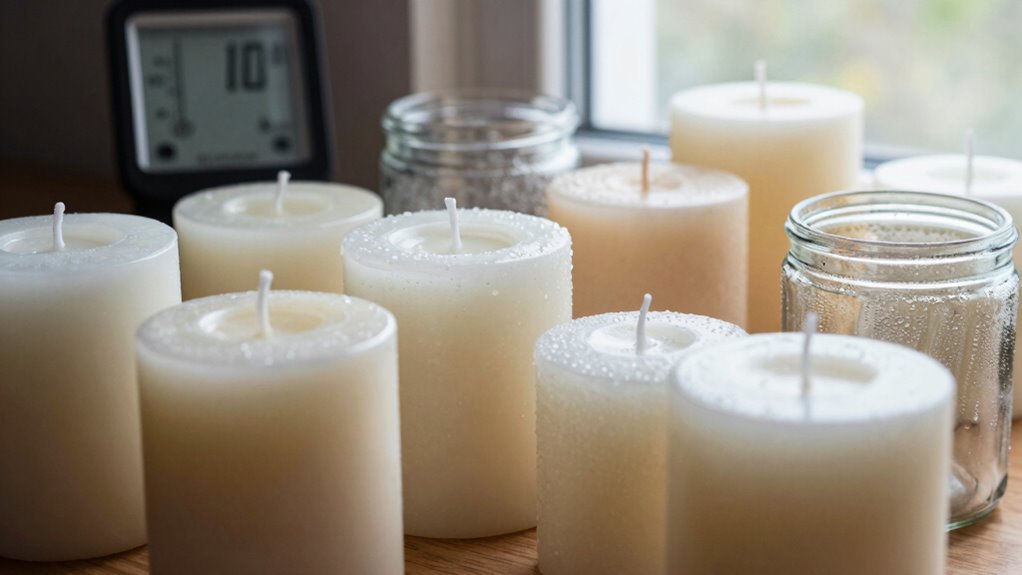

Humidity impacts your candle making by affecting how the wax sets, melts, and retains scent. High humidity can cause surface imperfections, sinkholes, and weak scent throw, while low humidity helps create a cleaner finish and stronger fragrances. It can also change the melting point of the wax, leading to uneven surfaces if not managed properly. Maintaining humidity levels stable ensures better results, so if you want to improve your candles, there’s more you can do to control the environment.

Get decor and gifts delivered free — and shop member deals
- Fast, free delivery on millions of items
- Access to Prime Big Deal Days deals on October 6–7
- Prime Video, Amazon Music and more included
Key Takeaways
- High humidity causes surface imperfections, sinkholes, and cracks in candles, affecting their appearance.
- Increased moisture weakens fragrance retention, resulting in a faint or short-lived scent.
- Humidity alters wax melting points, leading to uneven melting and poor adhesion to containers.
- Controlling humidity with dehumidifiers or sealed spaces improves candle quality and consistency.
- Proper environment management ensures better candle appearance, scent, and burning performance at home.
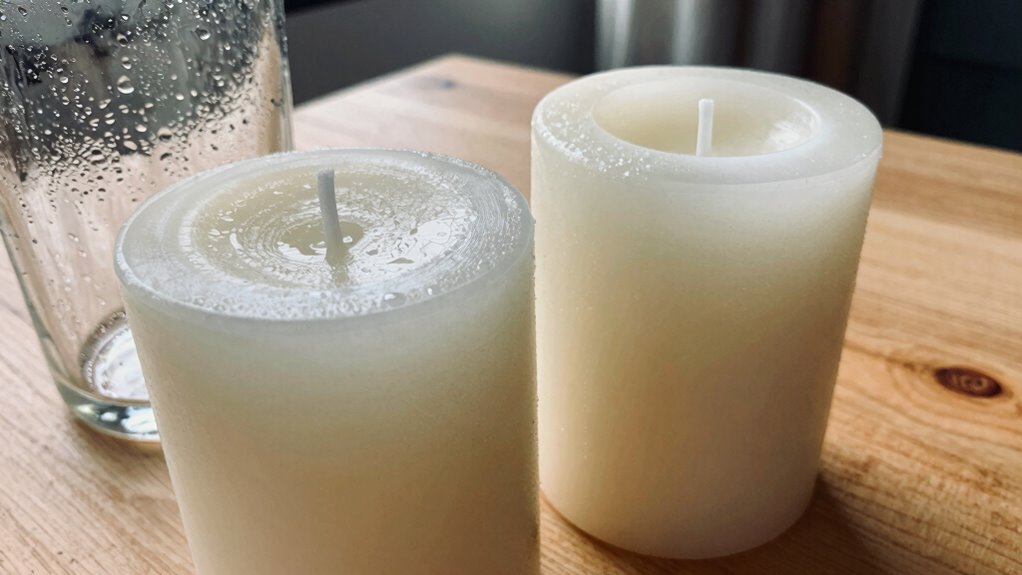
Humidity plays a crucial role in candle making because it directly affects how your candles turn out. When humidity levels are high, moisture in the air can interfere with the way wax and fragrances behave during the process. For example, excess humidity can cause your candles to develop surface imperfections or sinkholes because the moisture disrupts the wax’s ability to set evenly. It also impacts fragrance retention, making it more difficult for your candles to hold onto their scent. When the air is humid, the fragrance oils can struggle to properly bind with the wax, leading to a weaker scent throw both when burning and when unlit. If you notice that your candles smell faint or lose their fragrance quickly, humidity might be the culprit.
One of the most essential factors influenced by humidity is the wax melting point. Humidity can subtly alter the temperature at which your wax melts, especially if you’re working with a specific type like soy or beeswax. High moisture levels can cause the wax to melt unevenly or require a slightly different temperature to achieve a smooth, consistent pour. If you don’t account for this, your candles may suffer from poor adhesion, surface cracks, or an inconsistent appearance. On the other hand, low humidity makes it easier to control the melting point, resulting in a cleaner, more professional finish. It’s critical to monitor your environment’s humidity because even a small change can impact how your wax melts, how well it adheres to the container, and how it retains fragrance. Controlling environmental factors can help prevent moisture-related issues that compromise your candle quality.
Managing humidity during candle making means paying attention to your workspace. Using a dehumidifier or air conditioner can help reduce moisture in the air and create more stable conditions for your craft. If you’re in a very humid climate, consider using a sealed workspace or working in shorter sessions to prevent moisture buildup. Conversely, if your environment is too dry, adding a little humidity with a humidifier or simply working in a more controlled space can help improve fragrance retention and wax melting consistency. Ultimately, understanding and controlling humidity ensures your candles will look better, smell stronger, and burn more evenly. By adjusting your process based on the humidity levels, you’ll achieve professional-quality results right at home, making your candle making experience more successful and enjoyable.
As an affiliate, we earn on qualifying purchases.
Frequently Asked Questions
Can Humidity Cause Candles to Crack or Sink?
Yes, humidity can cause candles to crack or sink. High humidity affects wax compatibility and can lead to uneven surfaces, especially if you don’t control the temperature properly. When you manage temperature control in candle making and keep humidity levels in check, you minimize these issues. Properly drying your workspace and using the right wax blend also helps prevent cracking and sinking caused by humidity fluctuations.
Does Humidity Affect the Scent Throw of Candles?
Yes, humidity can affect the scent throw of your candles. High humidity may hinder fragrance retention, making the scent less potent when burned. It can also interfere with scent dispersal, causing the fragrance to dissipate more quickly or unevenly. To guarantee ideal scent throw, keep your candles in a cool, dry environment and avoid areas with excessive moisture, which can compromise both fragrance retention and scent dispersal.
How Quickly Does Humidity Change Impact Candle Curing?
They say “a stitch in time saves nine,” and the same applies to humidity’s impact on your candle curing process. When humidity levels change rapidly, it can affect how quickly your candles cure, often taking longer or causing uneven curing. Usually, within a day or two of fluctuating humidity, you’ll notice differences in how your candles set. Keep an eye on humidity to guarantee a smooth curing process for the best results.
Are Certain Candle Waxes More Sensitive to Humidity?
Yes, some candle waxes are more sensitive to humidity, especially soy and beeswax, which can easily absorb moisture. Temperature fluctuations can worsen this effect, causing uneven surfaces or poor burn quality. To minimize issues, store your candles in a cool, dry place, and follow proper candle storage tips. Keeping humidity levels steady helps guarantee your candles look and burn beautifully, no matter the weather.
Can Humidity Cause Candles to Develop Mold or Mildew?
Did you know high humidity levels can increase mold growth and mildew formation on candles? When moisture lingers in the air, it creates an ideal environment for mold spores to settle and thrive on candle surfaces. This can cause unsightly spots and compromise the candle’s quality. So, if you’re storing candles in a humid space, you’re more likely to see mold growth and mildew formation, damaging their appearance and scent.
Conclusion
Understanding humidity’s impact on candle making is like tending a delicate garden—too much moisture can drown your efforts, while too little leaves your creations brittle. By monitoring and adjusting your environment, you control the weather within your home, ensuring your candles turn out just right. Think of it as conducting an orchestra, where each element harmonizes to produce a beautiful final piece. Master this balance, and your candles will shine perfectly, no matter what the weather outside.
Fall Picks
fall essentials
As an affiliate, we earn on qualifying purchases.