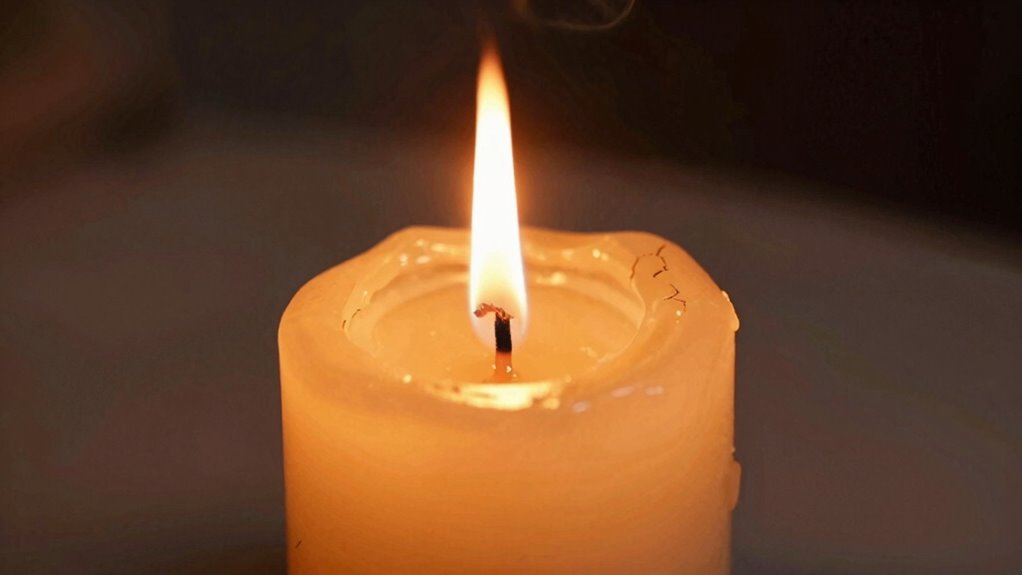

You can tell your candle is burning too hot if you notice an uneven wax melt, a flame that’s excessively tall or flickers erratically, and black soot on the container. Look for signs like mushrooming wicks, rapid wax consumption, or a flame that produces more smoke. If these indicators appear, your candle is overheating, which can be unsafe. Keep these tips in mind, and you’ll discover even more ways to guarantee safe, enjoyable burns.

Get decor and gifts delivered free with Prime
- Fast, free delivery on millions of items
- Prime Video, Amazon Music and more included
- Member-only deals all year
Key Takeaways
- The flame flickers erratically, becomes excessively tall, or produces black soot on the container surface.
- Wax pools unevenly, forming tunnels or hollows, indicating uneven heat distribution.
- The wick mushrooms or becomes too long, increasing the risk of flare-ups and soot.
- Fragrance becomes overpowering, distorted, or diminishes quickly, signaling excessive heat.
- The candle produces excessive smoke or soot, suggesting it’s burning hotter than safe levels.
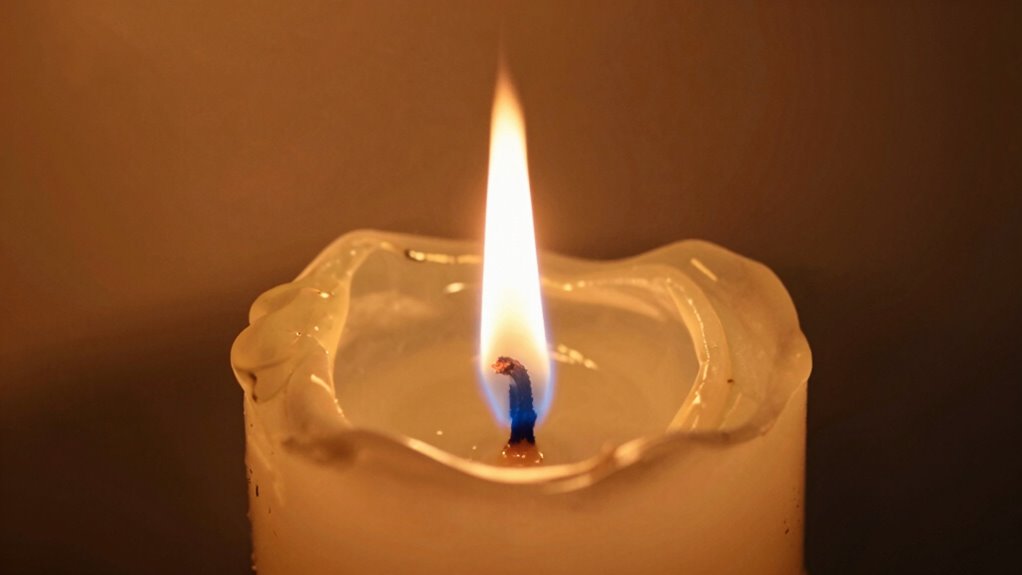
When a candle burns too hot, it can become unsafe and affect the quality of the flame. You might notice that the flame flickers erratically or becomes unusually tall, which indicates it’s burning at a higher temperature than it should. This excessive heat can cause the wax to melt unevenly, leading to issues like wax pooling—where melted wax gathers unevenly around the wick. When wax pools excessively, it can cause the flame to become unstable and produce soot or smoke, increasing the risk of fire hazards.
One of the first signs you’ll notice when a candle is burning too hot is a change in fragrance dispersion. Normally, a well-burning candle releases its scent smoothly and consistently. But if it’s burning too hot, the scent may become overpowering or distorted because the heat is causing the fragrance oils to evaporate too quickly. Conversely, you might find that the fragrance diminishes faster than it should, giving you less enjoyment from your candle. This imbalance in fragrance dispersion is a clear indicator that the candle’s flame is too intense.
Wax pooling is another telltale sign. If you see a large, uneven pool of melted wax around the wick—especially if it extends close to the edges of the container—it means the flame is generating more heat than intended. This rapid melting can cause the wax to burn hotter and faster, leading to a shorter candle life and increased soot. You might also notice that the wax melts unevenly, creating a tunnel or hollow in the center while the edges remain solid, further indicating that the candle is burning hotter than it should. Additionally, proper candle safety emphasizes the importance of monitoring flame temperature to prevent hazards. Overheating can also result in wick mushrooming, which is a sign that the flame is too intense and can lead to further safety issues. An excessively hot flame can also cause the wick to become too long, which can further increase the risk of flare-ups and soot production.
Furthermore, flame height can be an important visual cue, as a flame that is excessively tall often signifies overly hot burning. You should also be attentive to the smell of soot or smoke, which often accompanies a candle burning too hot. If you see black soot on the container or smell smoke, it’s a sign the flame is too intense or unstable. Additionally, if the wick starts to mushroom—forming a black cap at the top—it’s burning at an excessively high temperature, which can produce more soot and potentially lead to dangerous flare-ups. Properly managing candle wick trimming can help prevent such issues and maintain a safer, cleaner burn.
As an affiliate, we earn on qualifying purchases.
Frequently Asked Questions
Can a Candle Burn Too Hot Without Visible Signs?
Yes, your candle can burn too hot without visible signs. When it does, you might notice the fragrance intensity diminishes quickly, indicating overheating. Additionally, if the wick size is too large for the candle, it can cause excessive heat buildup. Keep an eye on these signs, and modify your candle’s environment or wick size accordingly. Proper burning ensures a safer, longer-lasting candle experience.
How Does Candle Wax Type Affect Burning Temperature?
Candle wax type notably influences the burn temperature because of its wax composition and burn point. For example, paraffin wax has a higher burn point, meaning it burns hotter and faster, while soy wax has a lower burn point, leading to a cooler, slower burn. Knowing your wax’s composition helps you predict how hot it will get, so you can prevent overheating and guarantee a safe, even burn.
Is It Safe to Extinguish a Candle if It’s Burning Too Hot?
It’s safe to extinguish your candle if it’s burning too hot, especially since studies show overheating can cause soot and uneven wax melting. When you notice the candle scent intensifies or the wax color darkens, it’s a sign it’s running too hot. Extinguishing the flame helps prevent potential hazards, like wax spills or fires. Always prioritize safety, and let the candle cool before relighting.
What Tools Can Help Monitor Candle Temperature?
To monitor candle temperature, you can use tools like a laser thermometer, which measures the flame height and surface temperature accurately. Keep an eye on the candle wick; if it’s too long or flickering excessively, the candle might be burning too hot. A consistent flame height indicates safe burning, but if it’s unusually high, it’s time to extinguish the candle to prevent overheating and potential hazards.
How Long Should a Candle Burn to Avoid Overheating?
You should keep your candle burning for about 3-4 hours at a time to prevent overheating. As the candle burns, watch the candle wick, ensuring it stays centered and trimmed. Pay attention to the flame color; a steady, blue-tinted flame indicates safe burning, while a flickering or yellow flame suggests overheating. Allow the candle to cool before relighting, helping maintain a balanced and safe burn.
Conclusion
In the end, keeping an eye on your candle’s flame helps prevent it from burning too hot and causing trouble. If you notice a flickering, a high, unstable flame, or excessive soot, it’s time to take action. Remember, a burning candle should burn steady and calm—like a well-oiled machine. Don’t let it get out of hand; after all, better safe than sorry, especially when it comes to fire.
Halloween Picks
halloween
As an affiliate, we earn on qualifying purchases.