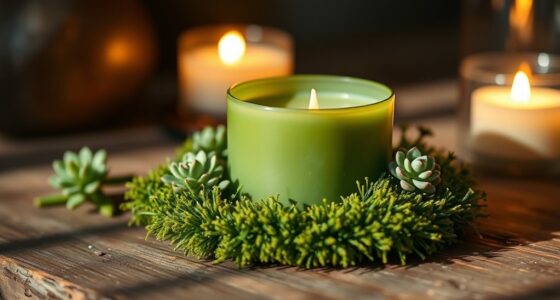
To create eco-friendly, biodegradable candles, choose plant-based waxes like soy, beeswax, or coconut oil, which burn clean and are sustainably sourced. Use reclaimed or natural wicks such as organic cotton, bamboo, or wood for an environmentally conscious touch. Incorporate natural dyes like turmeric and beetroot for vibrant colors, and add pure essential oils for fragrance. Embracing organic, fair-trade materials helps you craft beautiful, eco-friendly candles that support sustainability; explore further to discover how to perfect your candle-making process.
Key Takeaways
- Use plant-based waxes like soy, beeswax, and coconut oil for biodegradable, eco-friendly candles.
- Incorporate natural colorants from plant pigments or mineral sources to ensure vivid, long-lasting hues.
- Select sustainable wicks such as organic cotton, bamboo, or reclaimed wood for a clean, biodegradable burn.
- Add natural fragrances using essential oils and plant extracts to enhance scent without synthetic chemicals.
- Prioritize eco-conscious packaging and minimal additives to support overall candle sustainability and environmental health.
Common Plant-Based Candle Waxes
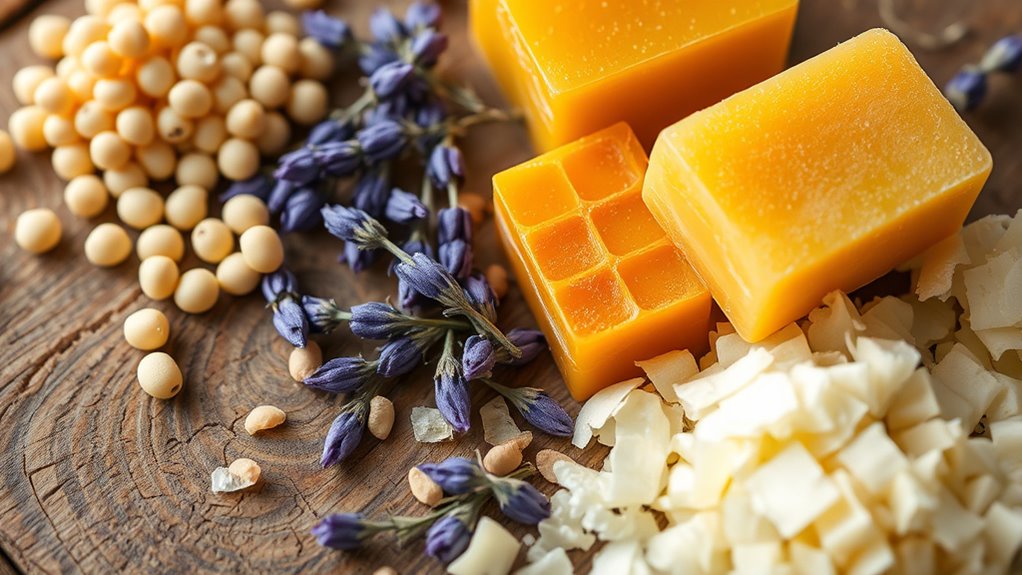
Have you ever wondered what makes plant-based candle waxes an eco-friendly choice? Unlike traditional paraffin wax, which is derived from petroleum, plant-based waxes come from natural sources like soy, beeswax, and coconut oil. These waxes are biodegradable, reducing environmental impact. They typically don’t require synthetic fragrances, which often contain chemicals that can harm ecosystems. Instead, you can opt for candles scented with natural essential oils, further supporting sustainability. Using plant-based waxes means you avoid the pollutants released by paraffin wax during burning. Plus, these waxes are renewable, ensuring a smaller carbon footprint. By choosing candles made from soy, beeswax, or coconut wax, you’re making a conscious decision to support eco-friendly materials that blend sustainability with beautiful, clean-burning candles.
Sustainable and Reclaimed Wicks

Reclaimed wood wicks offer a sustainable alternative to traditional options, reducing waste and resource use. You can choose eco-friendly wick materials that burn cleanly while supporting environmental conservation. Incorporating reclaimed and sustainable wicks helps make your candles more eco-conscious and biodegradable. Using biodegradable materials ensures that your candles have a minimal environmental footprint and decompose naturally after disposal. Considering renewable resources in your candle-making process further enhances your eco-friendly efforts. Self Watering Plant Pots utilize a reservoir system that allows plants to absorb water as needed, demonstrating efficient resource management. Embracing sustainable candle-making practices further enhances your efforts toward environmental responsibility.
Reclaimed Wood Wicks
Choosing reclaimed wood for candle wicks offers a sustainable alternative that reduces waste and conserves natural resources. Reclaimed wood wicks bring a unique touch, highlighting the natural wood grain and adding rustic charm to your candles. These wicks are often sourced from old furniture or discarded wood, giving them a second life. Their natural composition provides a clean burn with minimal additives. Plus, using reclaimed wood supports eco-friendly practices and minimizes environmental impact. Incorporating sustainable materials can further enhance the eco-consciousness of your candles. You’ll appreciate the distinctive look and warmth they bring to your creations. To make the most of reclaimed wood wicks, consider these points:
- Embrace the wood grain’s natural beauty
- Highlight the rustic charm in your candle design
- Ensure proper preparation for consistent burning
- Combine with biodegradable materials for a fully eco-conscious candle
- Remember that building resilience and empathy can help you navigate challenges in sustainable crafting.
Eco-Friendly Wick Choices
Eco-friendly wick choices focus on sustainable and reclaimed materials that minimize environmental impact. You can explore wick material innovations like organic cotton, bamboo, and hemp, which are renewable and biodegradable. These options support an eco conscious wick design by reducing reliance on non-renewable resources and avoiding synthetic materials. Reclaimed materials, such as recycled metal cores or repurposed natural fibers, also contribute to sustainable candle making. When selecting wicks, look for those that are free from heavy metals and chemical treatments to guarantee they’re truly biodegradable. Incorporating these eco-friendly options not only enhances your candle’s sustainability but also aligns with environmentally conscious values. By choosing sustainable and reclaimed wicks, you make a positive impact while crafting beautiful, eco-friendly candles. Additionally, understanding AI in Business can inspire innovative approaches to sustainable product development and marketing strategies. To further ensure eco-friendliness, consider the biodegradability of all candle components used in your craft. Incorporating biodegradable materials into your candle-making process helps reduce waste and supports environmental health.
Natural Dyes and Colorants

You can achieve vibrant candle colors using plant-based pigments like beetroot or turmeric, which are eco-friendly and biodegradable. Mineral color sources, such as clay or ochre, also provide natural hues without synthetic chemicals. By applying natural dye techniques, you guarantee your candles stay beautiful while remaining environmentally responsible. Additionally, biotin bioavailability can be enhanced by choosing certain natural colorants that contain beneficial nutrients. Incorporating natural colorant stability ensures that the hues remain vivid over time without fading. To improve the drift resistance of your candles, selecting stable natural dyes helps prevent color bleeding or bleeding during burning.
Plant-Based Pigments
Plant-based pigments, also known as natural dyes and colorants, offer a sustainable alternative to synthetic coloring agents in candle making. By using plant based pigments, you can achieve vibrant hues while maintaining eco-friendly practices. The process involves natural dye extraction, where you carefully harvest and prepare plants to release their colors. These pigments are biodegradable and free from harmful chemicals, making your candles safer for the environment and your home. You can experiment with a variety of plants for diverse shades, from deep reds to earthy greens. Incorporating plant-based pigments not only enhances your candles’ aesthetic appeal but also aligns with eco-conscious values. This approach guarantees your candles are both beautiful and biodegradable, reducing your ecological footprint effectively. Additionally, understanding the biodegradable nature of these pigments helps ensure that your candles break down naturally without harming the environment. Exploring natural dye extraction methods can further optimize your process for vibrant and lasting colors, and using eco-friendly materials supports sustainable crafting practices.
Mineral Color Sources
Building on the use of natural dyes from plants, mineral color sources offer a durable and vivid alternative for candle coloring. These mineral color sources come from naturally occurring earth minerals, providing rich, long-lasting hues. To achieve vibrant colors, you focus on natural pigment extraction, where you carefully process minerals like ochre, malachite, and hematite. This method ensures your candle colors are stable and resistant to fading over time. Unlike plant-based dyes, mineral color sources are less prone to bleeding and can produce more intense shades. You simply grind the minerals into a fine powder and incorporate them into your wax. This approach gives your candles an earthy, authentic look while maintaining an eco-friendly, biodegradable profile. Proper processing methods ensure the mineral pigments remain stable and colorfast in your candles.
Natural Dye Techniques
Have you ever wondered how to achieve rich, natural hues in your candles without synthetic dyes? Natural dye techniques let you do just that, using plant-based sources to add color. You can explore various dye application methods, such as simmering plant materials to extract vibrant pigments or soaking your wax in natural infusions. To get unique shades, experiment with natural color blending—mixing different plant dyes creates custom hues. Keep in mind, the intensity of colors can vary based on temperature and dye concentration. Here are some tips to contemplate:
- Use fresh or dried plant materials for stronger colors
- Strain dyes thoroughly before application
- Test small batches to perfect your shade
- Combine dyes for subtle or bold effects
Natural dye techniques add beauty and eco-friendliness to your candles, and incorporating color coordination can enhance the visual harmony of your finished product. Additionally, understanding plant-based dyes can help you select the best sources for your desired hues. Exploring dye fixatives can also improve color fastness and longevity in your candles.
Eco-Friendly Additives and Fragrances
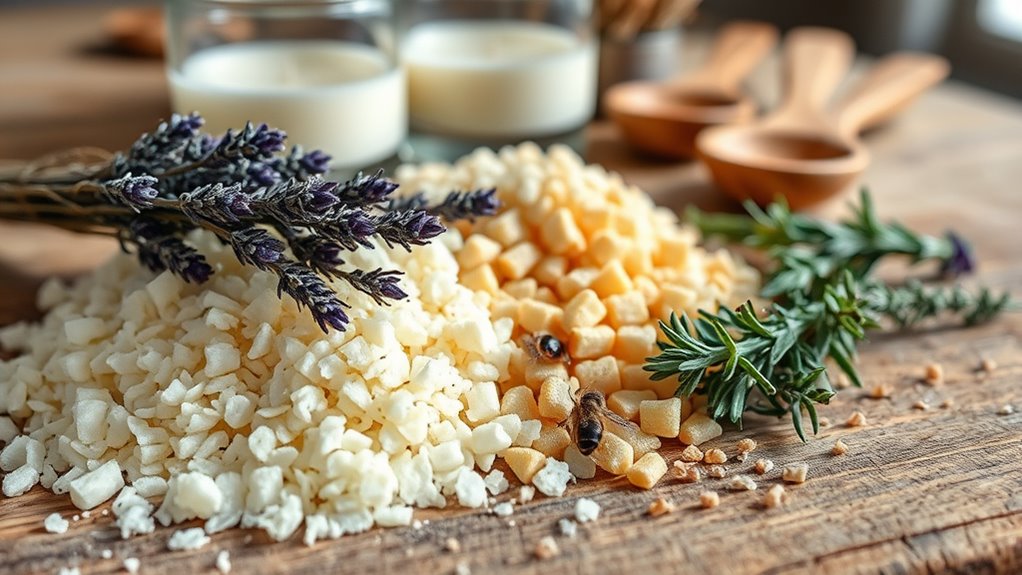
Eco-friendly additives and fragrances play a crucial role in creating sustainable candles that are safe for both the environment and your home. To achieve this, focus on using sustainable fragrance blends made from natural essential oils or plant extracts, which emit fewer toxins and are biodegradable. These blends help create appealing scents without relying on synthetic chemicals. Additionally, choosing biodegradable packaging options ensures your candles stay eco-friendly from start to finish, reducing waste and pollution. When selecting fragrances and additives, verify they are free from harmful phthalates and synthetic dyes. Incorporating Victorian-inspired design elements into your candle packaging can also enhance their aesthetic appeal and complement eco-conscious branding. By prioritizing these eco-conscious choices, you enhance your candles’ sustainability, supporting a healthier planet while delivering delightful aromas that enhance your space naturally. Using essential oils as fragrances can further boost the natural appeal of your candles and promote overall wellness. Furthermore, adopting innovative sustainable materials in production can significantly reduce environmental impact and appeal to eco-aware consumers.
Benefits of Organic Candle Materials

Choosing organic candle materials offers numerous benefits that enhance both your home environment and the planet. Organic ingredients are naturally cleaner-burning, reducing indoor pollution and allergens. Plus, they’re sourced ethically, supporting fair labor practices and sustainable farming. When you select organic candles, you often benefit from eco-conscious packaging, which minimizes waste and environmental impact. These materials are biodegradable, meaning they break down naturally without harming ecosystems. Additionally, supporting organic and ethical sourcing practices encourages responsible agriculture and fair trade, helping to protect ecosystems and communities. Biodegradable materials are especially important because they break down naturally without polluting the environment. Overall, using organic candle materials promotes a healthier living space and a more sustainable world.
Tips for Choosing and Maintaining Eco-Friendly Candles
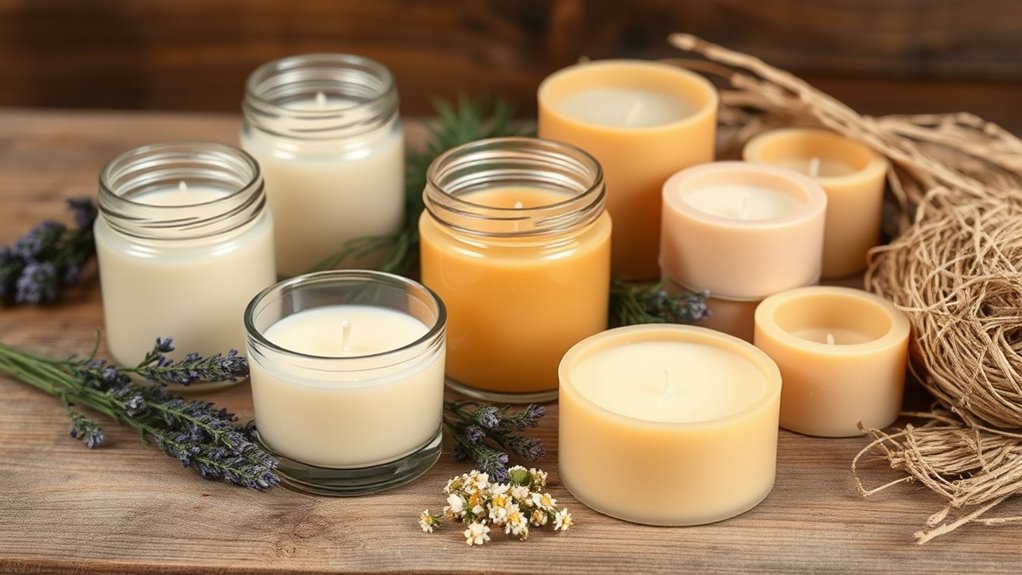
Selecting high-quality, eco-friendly candles starts with understanding how to choose the right materials and maintain their longevity. When shopping, look for candles made from natural waxes like soy, beeswax, or coconut oil, and check for lead-free wicks to ensure candle safety. Proper storage tips are essential to preserve their quality; keep candles in a cool, dry place away from direct sunlight to prevent melting or discoloration. Always trim the wick to about a quarter inch before each use to prevent soot and uneven burning. Be mindful of candle safety by never leaving a burning candle unattended and placing it on a heat-resistant surface. These simple tips help you enjoy eco-friendly candles safely and extend their lifespan while reducing environmental impact.
Frequently Asked Questions
How Long Do Biodegradable Candles Typically Last?
Biodegradable candles typically last between 20 to 40 hours, depending on their size and wax type. You can expect a good candle to offer consistent burning duration and extended candle longevity if you keep the wick trimmed and avoid drafts. Smaller candles burn faster, while larger ones tend to last longer. Proper care maximizes burning duration, ensuring you get the most out of your eco-friendly candle.
Are There Any Health Risks With Natural Candle Additives?
You might be glad to know that natural candle additives generally pose minimal health risks. However, studies show that around 10% of people with allergies could react to certain natural ingredients. While natural additives often have better chemical safety profiles, allergen concerns still exist, especially for sensitive individuals. Always check ingredient lists, and opt for candles with clearly labeled, natural components to reduce potential health risks.
Can Biodegradable Candles Be Used Outdoors Safely?
Yes, you can use biodegradable candles outdoors safely if you abide by proper outdoor flame safety. Always place them on stable, non-flammable surfaces and keep them away from wind to prevent tipping or accidental fires. Choose eco-friendly packaging that resists weather, and never leave a burning candle unattended. These precautions help guarantee your outdoor candle experience is both enjoyable and safe.
How Do I Properly Dispose of Used Biodegradable Candles?
Properly disposing of used biodegradable candles is simple and eco-friendly. You should start by checking local recycling programs to see if they accept candle containers. If not, follow composting guidelines by removing any leftover wax and wicks, then compost the remaining biodegradable materials in a compost bin. This thoughtful process transforms trash into treasure, turning waste into wonderful, eco-conscious waste that nurtures nature rather than nefaries it.
Are Natural Dyes Heat-Resistant and Fade-Proof?
Natural dyes aren’t always heat-resistant or fade-proof, so dye colorfastness and natural dye stability can vary. When you use natural dyes in candles, expect some fading over time or with exposure to heat. To improve dye durability, choose dyes known for better stability and apply proper sealing techniques. Keep in mind, natural dyes generally offer a softer, more muted look, which many find appealing despite their lower colorfastness.
Conclusion
By choosing biodegradable and natural candle materials, you’re making a positive impact on the environment. From plant-based waxes to sustainable wicks, every choice supports a greener future. Remember, can your home truly be cozy without considering eco-friendly options? Embrace these natural materials, and you’ll enjoy beautiful, clean-burning candles that align with your values. Isn’t it time to switch to more sustainable candles and light up your space responsibly?