
When choosing candle containers, make certain they’re made from heat-resistant materials like tempered glass, ceramic, or sturdy metal to prevent cracking or toxins. Avoid plastics or thin glass that can melt or discolor with fragrance oils. Check for cracks, chips, or residual coatings that could cause safety issues. Guarantee the container is the right size for your wax and wick to promote even burning and safety. Keep these tips in mind to make your candles safe and enjoyable—there’s more to learn!

Get decor and gifts delivered free with Prime
- Fast, free delivery on millions of items
- Prime Video, Amazon Music and more included
- Member-only deals all year
Key Takeaways
- Choose heat-resistant containers like tempered glass, ceramic, or metal tins to ensure safety during burning.
- Verify containers are free of cracks, chips, and residues to prevent accidents and chemical reactions.
- Ensure containers are appropriately sized for the wick and wax to promote even burning and prevent overheating.
- Confirm that containers are compatible with fragrance oils to avoid discoloration, smoke, or damage.
- Thoroughly clean and remove labels or adhesives to eliminate safety hazards and ensure proper burn quality.

Candle containers and vessels play an essential role in creating a safe and enjoyable candle experience, especially if you’re just starting out. Choosing the right container isn’t just about aesthetics; it’s about safety, functionality, and guaranteeing your candle burns properly. One key aspect to ponder is fragrance compatibility. Not all containers are suitable for scented candles, as some materials may react negatively with fragrance oils. For example, containers made from certain plastics or thin glass might degrade or discolor when exposed to the heat and essential oils used in scented candles. To avoid issues like discoloration, smoke, or uneven burning, pick containers that are compatible with the fragrances you plan to use. Typically, high-quality glass or metal containers work best for fragrance compatibility, as they handle scent oils without adverse reactions.
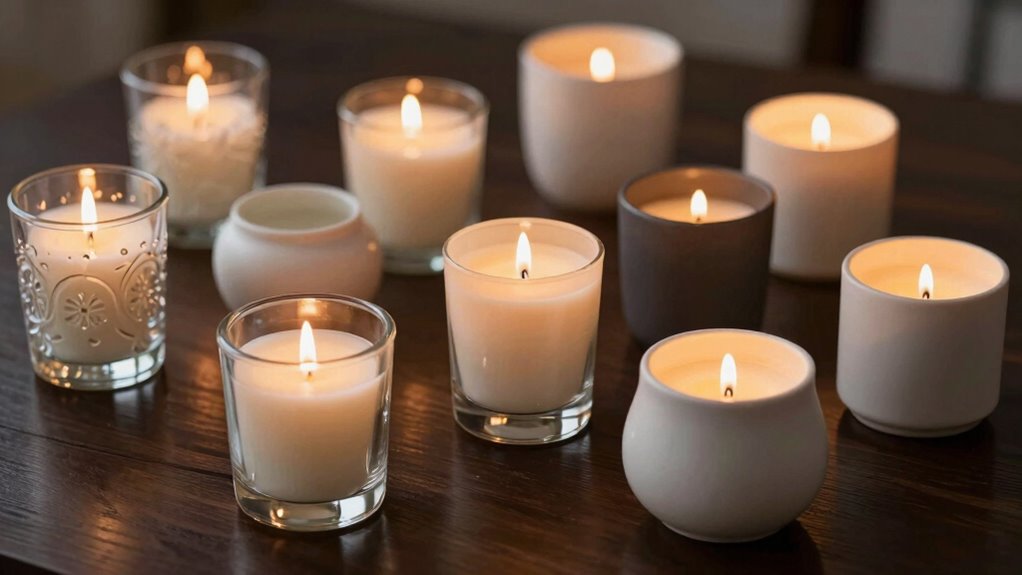
Container material safety is equally critical. You need to guarantee that the material can withstand the heat generated by the candle flame without cracking, warping, or releasing harmful substances. For instance, some plastics may melt or emit toxic fumes when heated, which can be dangerous. Always opt for containers explicitly designed for candle making, such as tempered glass, ceramic, or sturdy metal tins. These materials are not only safer but also more durable, reducing the risk of accidents or messes. When selecting a container, check that it has a stable base and is free from cracks or chips, which could compromise safety during burning. Additionally, selecting containers with heat-resistant properties helps ensure safe usage over time. Ensuring the material’s heat resistance is tested and certified can further enhance safety and confidence in your candle-making process.
Another important aspect of vessel safety is size and shape. A container that’s too small for the wax volume can lead to overheating and uneven burning, while a container that’s too large might cause excessive wax pooling. Make sure your chosen vessel has enough space around the wick to allow proper airflow and prevent overheating. Proper sizing also aids in preventing thermal runaway, which can occur if a candle gets too hot. Additionally, always use a wick that’s appropriate for the container’s size to guarantee a steady, safe flame. Proper sizing ensures your candle burns evenly and safely, avoiding potential hazards.
Lastly, always think about the finish and cleanliness of your container. Residual chemicals or coatings from manufacturing can pose safety risks once the candle is lit. Clean the container thoroughly before pouring your wax and ensure it’s free from any labels or adhesives that could emit fumes when heated. Pay attention to container safety standards and the finish of your vessel to ensure it’s suitable for candle making. By paying close attention to fragrance compatibility and container material safety, you set yourself up for a safer, more successful candle-making experience.
heat resistant candle containers
As an affiliate, we earn on qualifying purchases.
As an affiliate, we earn on qualifying purchases.
Frequently Asked Questions
Can I Reuse Candle Containers After the Wax Melts Completely?
Yes, you can reuse candle containers after the wax melts completely. Start by container cleaning to remove any residual wax and labels. Once clean and dry, you can explore wax recycling by melting down leftover wax or using it for new candles. Reusing containers is eco-friendly and saves money. Just make certain the container’s material is heat-safe and free of cracks to keep your DIY candle safe and effective.
What Materials Are Unsafe for Candle Containers?
Unsafe container materials include anything that can crack, break, or release toxins when heated. Avoid containers made of plastic, painted or coated metals, or anything with combustible or non-heat-resistant materials. Glass, metal, and ceramic are generally safe, but always check for heat resistance and safety considerations before use. Steer clear of materials that may shatter or emit fumes, ensuring your candle burning remains safe and enjoyable.
How Do I Prevent Containers From Cracking When Heating?
You can prevent containers from cracking by practicing temperature control and reinforcing the vessel. Start by gradually heating your container to avoid thermal shock, which often causes cracks. Use a double boiler or heat the wax slowly. Reinforce your container with heat-resistant materials or thicker glass to withstand temperature changes. Always monitor the heat and avoid rapid temperature shifts, ensuring your container stays intact and safe during use.
Are There Specific Container Shapes That Are Safer for Candles?
Yes, certain container shapes enhance safety. Opt for wide, open designs like tins or jars because they provide better heat dissipation and reduce the risk of cracking. Avoid tall, narrow containers that can trap heat and stress the glass. Container design matters—rounded edges are safer than sharp corners, which are prone to cracking. Overall, choose shapes that allow even heat distribution and proper airflow to guarantee candle safety.
How Should I Store Candles in Their Containers Long-Term?
Imagine you’ve crafted a beautiful, scented candle, and now you want to store it safely. To do this long-term, keep the container in a cool, dark place away from direct sunlight, which can damage scents and containers. For container decorating, make certain it’s clean and dry before storage. Proper scented candle safety means avoiding extreme temperatures and humidity, which could cause cracks or fumes. Store upright to prevent wax damage or leaks.
Conclusion
Remember, choosing the right container isn’t just about style—it’s about safety, too. When you pick the perfect vessel, you set the stage for cozy, safe moments, whether it’s a quiet night or a lively gathering. The right container can turn a simple candle into a shining centerpiece, connecting your space with warmth and light. In the end, a well-chosen vessel isn’t just a coincidence—it’s the key to enjoying your candles safely and beautifully.
Fall Picks
fall essentials
As an affiliate, we earn on qualifying purchases.