
TL;DR

Get decor and gifts delivered free — and shop member deals
- Fast, free delivery on millions of items
- Access to Prime Big Deal Days deals on October 6–7
- Prime Video, Amazon Music and more included
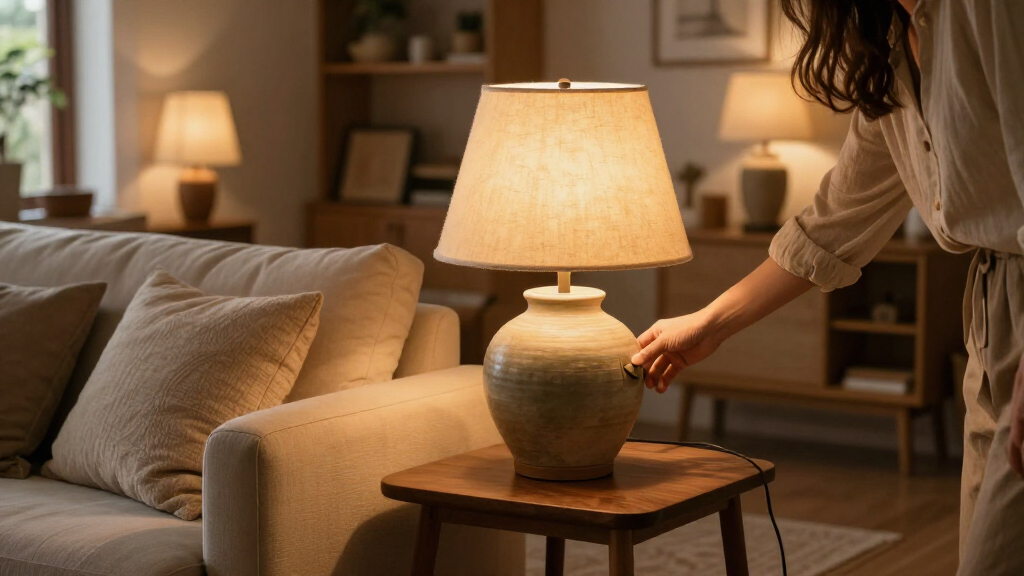
Designer Fatih Arslan has published a tour of lamps in his home, describing pieces by Artemide, Louis Poulsen and Isamu Noguchi’s Akari series. The report combines personal preferences with design history and notes that collectors can also find well-designed, lower-cost lamps or shop for vintage pieces.
Designer Fatih Arslan published a tour of the lamps in his home on October 5, describing pieces by Artemide, Louis Poulsen and Isamu Noguchi alongside the design histories that made them collectible. The report offers readers a view of how he uses the lamps and acknowledges that their high prices reflect collecting as much as the practical need for household lighting.
Arslan presents the lamps in no particular order and says the accompanying photographs were taken in his house. His collection includes an Artemide Tolomeo Mini, a Tizio Micro, several Akari paper lanterns, two Louis Poulsen lamps and an AJ wall lamp. He writes that none are inexpensive, and that he considers them worth the cost personally, while noting that similarly styled, lower-priced options are available from retailers such as IKEA. He also says vintage shops and fairs can offer the featured designs at lower prices.
The Tolomeo was designed by Michele De Lucchi and Giancarlo Fassina in 1987 and won the Compasso d’Oro in 1989, according to Arslan. He values its adjustability on a work desk and says he made an adaptor to attach his lamp to a USM Haller desk. The Tizio, designed by Richard Sapper in 1972, uses its arms to carry electricity rather than running wires along them; counterweights let the user reposition it while keeping it balanced.
Several of the lamps are from Noguchi’s Akari series, which Arslan says began in 1951 after the designer visited Gifu, Japan. The paper lanterns use washi to soften light, and the writer describes the 1A, 3A, 16A and large 75A models in different rooms. He says the Akari lamps are still handmade at Ozeki, a family-run workshop in Gifu, using traditional methods. His other examples include the PH 5 and PH 3/2, designed by Poul Henningsen, and an AJ wall lamp by Arne Jacobsen.
Design Icons in Everyday Rooms
Arslan’s account links famous design objects to their ordinary domestic uses: a task lamp at a desk, a paper lantern in a bedroom and a pendant above a dining table. It also shows why a lamp’s appeal can extend beyond brightness. Its form, materials, maker and place in design history may matter to a collector even when less expensive lighting can serve a similar practical purpose.
That distinction is useful to readers weighing a purchase. Arslan does not argue that the listed lamps are objectively worth their prices; he says the value is personal and tied to collecting. His mention of vintage shops and fairs also points to a way prospective buyers might look for the designs without assuming they must pay full retail prices. The article does not provide prices or compare specific models, so it is a personal tour rather than a buying guide.
As an affiliate, we earn on qualifying purchases.
From Desk Lamps to Akari Lanterns
The designs span several decades. Arslan dates Poul Henningsen’s three-shade system to 1925 and says the PH 3/2 was the first lamp to use it. The later PH 5 dates to 1958; its layered shades are intended to keep the bulb from being directly visible and produce softer light. Jacobsen designed the AJ lamp in 1957 for Copenhagen’s SAS Royal Hotel, where, Arslan writes, he designed elements from the furniture to the cutlery.
The Akari lamps have a different origin and construction. Noguchi began the series in 1951, drawing on Gifu’s paper-lantern tradition and using washi paper to shape and soften light. Arslan describes the models as sculptural objects as well as lamps. He says authentic Akari pieces carry a small red sun-and-moon stamp; the series includes more than 100 designs by Noguchi.
Arslan frames the collection through his own preferences, not as a ranking or a complete account of the lamps’ histories. He says he has shared lamp photographs on social media and that people often ask him about their brands and models. He has also designed a lamp himself, though the report does not provide details about that design.
“At a certain point, it becomes more like collecting, and collecting things is very different from just having a lamp to illuminate a room.”
— Fatih Arslan
Prices and Availability Are Unspecified
The report does not list purchase prices, current retail availability or the condition of each lamp. Arslan says some designs can be found at vintage shops and fairs for good prices, but gives no examples or comparison with new products. It is also unclear which versions, finishes or light sources his lamps use beyond the model names he provides.
The article is a first-person account, so its judgments about comfort, scale and value are Arslan’s opinions. For example, he says the 56-centimeter Akari 3A feels too short for the floor and somewhat large for an ordinary desk, and suggests it works best on a low table or cabinet. The report does not test the lamps’ light output, energy use or durability.
No Further Update Announced
Arslan’s October 5 report is a completed personal tour, and the source material identifies no scheduled follow-up. Readers seeking more detail about a particular model would need to consult its maker or a retailer for current specifications, prices and availability; those details are not established by this account.
The article’s practical next step for readers is to treat the collection as inspiration rather than a price list: identify the design and function they want, then compare new and secondhand options. Arslan’s own account does not endorse a particular seller or claim that any one lamp is the best choice for every home.
Key Questions
Who wrote the lamp tour?
Fatih Arslan wrote the first-person report, published October 5, 2026. He describes the lamps in his home and explains why he chose them.
Which lamp designs are featured?
The tour includes an Artemide Tolomeo Mini, a Tizio Micro, four Akari models, Louis Poulsen PH 5 and PH 3/2 lamps, and an AJ wall lamp.
Does Arslan say the lamps are worth their prices?
He says they are worth the money for him personally, while acknowledging that their prices may not be justified purely as practical lighting purchases. He also points to lower-cost designs and secondhand shopping.
Where are the Akari lamps made?
Arslan says the Akari lamps are still handmade at Ozeki in Gifu, Japan, using traditional methods. He says authentic examples carry a small red sun-and-moon stamp.
Does the report compare prices or recommend a specific lamp?
No. It provides no price list or head-to-head comparison. It is a personal account of the writer’s collection, not a consumer testing report or buying guide.
Source: hn
Halloween Picks
halloween
As an affiliate, we earn on qualifying purchases.