
To avoid common beginner mistakes, start by researching essential oil properties and compatibility to prevent overpowering or sensitive blends. Practice layering from top to base notes, adding lighter oils first and gradually building complexity. Test your blends carefully, adjusting proportions for balance and longevity. Avoid rushing, overloading ingredients, or ignoring how oils interact. Staying mindful of these tips helps you craft harmonious fragrances; if you explore further, you’ll discover even more ways to refine your skills.
Listen free for 30 days with Audible
Thousands of audiobooks and originals — cancel anytime.
As an affiliate, we earn on qualifying purchases.
Key Takeaways
- Research essential oil properties and interactions to ensure compatibility before blending.
- Layer fragrances from top to base notes gradually, testing and adjusting each layer.
- Avoid overloading ingredients to prevent overwhelming the scent and maintain balance.
- Be mindful of oil volatility to prevent quick fading and ensure scent longevity.
- Practice consistently and utilize resources to develop skills and improve blending techniques.
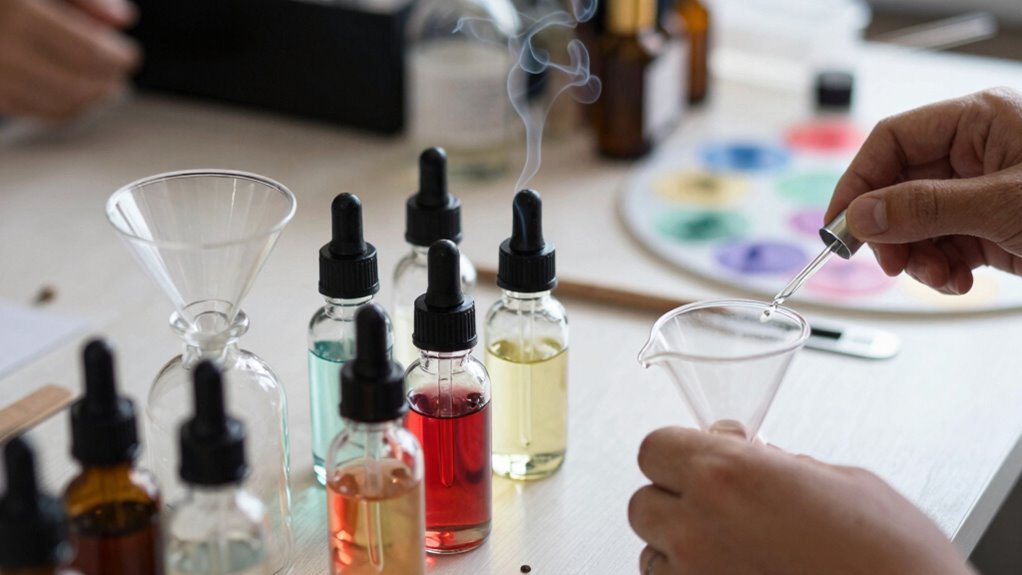
Starting with fragrance blending can be exciting, but it’s easy to make mistakes that can spoil your creations. One of the most common pitfalls beginners face is neglecting essential oil compatibility. Not all oils mix well, and some can overpower others or cause skin sensitivities. Before blending, research each essential oil’s properties and note how they interact with others. For example, citrus oils like bergamot or grapefruit tend to be bright and fresh, but they can also be volatile and fade quickly, so pairing them with more stable base or middle notes is wise. Similarly, floral and woody oils often blend harmoniously, but combining incompatible scents can lead to a muddled or unpleasant aroma. Ensuring essential oil compatibility helps you craft balanced, pleasing fragrances and avoids the disappointment of wasted ingredients.
Another common mistake is poor fragrance layering techniques. Effective layering involves understanding how to build a scent profile from top to base notes, creating a harmonious progression. When you start, apply the lighter, more volatile top notes first—think citrus, herbs, or light fruits—then move to the heart or middle notes like florals or spices, and finally anchor your blend with rich base notes such as woods or resins. This approach not only enhances the scent’s complexity but also helps the fragrance last longer on the skin. Many beginners rush this process, resulting in a flat or unbalanced aroma that loses its appeal quickly. Take your time in testing and adjusting the proportions of each layer, and always keep in mind that less is often more. A well-layered fragrance is the result of careful, deliberate blending rather than overwhelming the senses with too many ingredients at once. Additionally, understanding essential oil compatibility can greatly improve your blending success and ensure a harmonious final product. Developing an awareness of blending techniques can further refine your skills and lead to more sophisticated creations.
essential oil blending kit for beginners
As an affiliate, we earn on qualifying purchases.
As an affiliate, we earn on qualifying purchases.
Frequently Asked Questions
Can I Mix Different Fragrance Types Together?
Yes, you can mix different fragrance types together, but you need to think about fragrance compatibility first. Use scent layering techniques to create harmonious blends, starting with lighter scents and gradually adding more intense ones. Always test small amounts to see how the fragrances interact. By understanding which notes complement each other, you’ll craft unique, balanced scents that suit your style without clashing or overwhelming your senses.
How Long Should I Let Blended Fragrances Mature?
You should let your blended fragrances mature for at least two weeks, but ideally four to six weeks. This fragrance aging process allows the scents to harmonize and develop fully, revealing their true character. During this maturation process, the complex interplay of notes settles, creating a balanced, refined fragrance. Don’t rush it—patience is key to achieving a beautifully blended scent that truly resonates with your personal style.
Is It Necessary to Use Carrier Oils?
No, using carrier oils isn’t necessary for all fragrance blends, but they’re highly recommended, especially with essential oils. Carrier oils help dilute potent essential oils, making blending safer and more manageable. They also improve blending techniques by creating a smoother, more balanced fragrance. If you’re working with pure essential oils, a carrier oil can prevent skin irritation and help your scent last longer. So, consider using a carrier oil to achieve better results.
What Are Common Signs of a Bad Fragrance Blend?
You’ll notice a bad fragrance blend when the scent lacks harmony or feels overwhelming. If the layers clash or one note dominates, it disrupts the scent layering and creates disharmony. A poorly balanced blend might smell off or fade quickly. Trust your senses — if the fragrance doesn’t blend smoothly or feels uneven, it’s a sign to refine your ingredients. Achieving fragrance harmony guarantees your scent feels cohesive and pleasing.
Can I Fix a Fragrance That Doesn’T Smell Right?
Yes, you can fix a fragrance that doesn’t smell right. First, assess its fragrance shelf life—if it’s expired, it may be beyond repair. To improve it, try adding small amounts of complementary essential oils or carrier oils. Store your blend properly with good storage tips—keep it in a cool, dark place. Sometimes, patience helps, as blending and aging can enhance the scent over time.
Conclusion
As you weave your fragrance tapestry, remember that patience is your guiding star. Every drop you blend is like a note in a symphony, each one adding depth and harmony. Avoid rushing, and trust your nose to lead the way. With practice, your scent creations will dance effortlessly, like a well-choreographed ballet. Keep experimenting, stay curious, and let your passion be the compass—soon, you’ll craft aromas that sing your unique story.
Flea & tick season Picks
flea and tick prevention
As an affiliate, we earn on qualifying purchases.