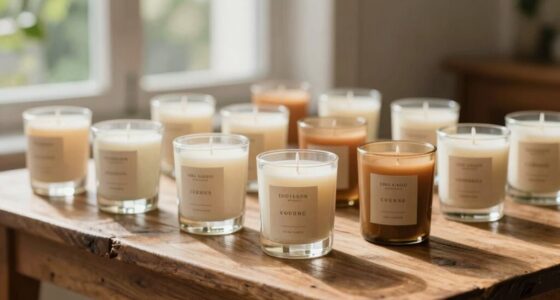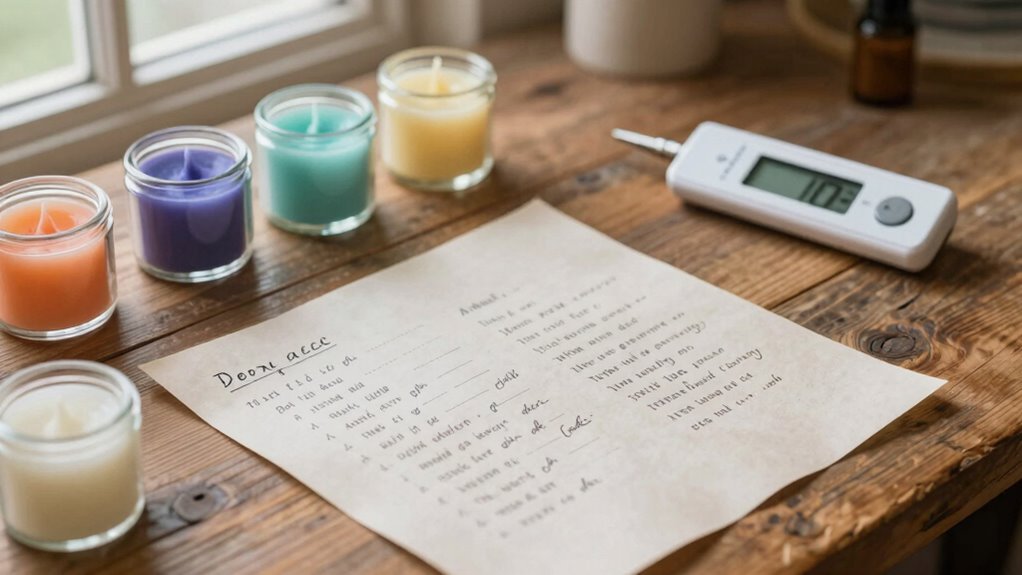

To keep candle making notes that actually help, you should record detailed details of each batch, including wax type, scent combinations, wick choice, pouring and curing temperatures, and environmental conditions. Use organized spreadsheets or notebooks to track what works and what doesn’t, noting any issues like tunneling or scent throw changes. Consistently review and analyze your notes to spot patterns and refine your process, so your improvements naturally follow. Keep going to discover even more tips for successful candle making.
Key Takeaways
- Use detailed, standardized templates to record every variable, including wax type, fragrance load, wick, and temperature.
- Document observations systematically during each batch, noting scent interactions, burn quality, and environmental conditions.
- Incorporate consistent testing and curing procedures to ensure comparable results over time.
- Organize notes digitally for easy access, searchability, and pattern recognition.
- Review and analyze past notes regularly to identify trends and inform future candle-making adjustments.
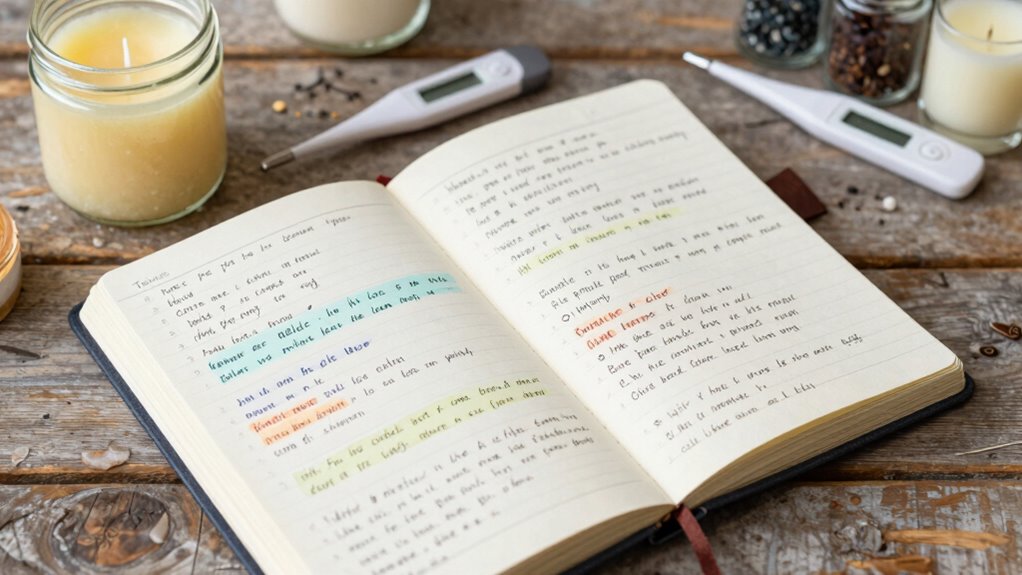
Keeping detailed notes when making candles is essential for replicating successful batches and improving your craft over time. When you document your process carefully, you can identify what works best and refine your techniques with confidence. One critical aspect to note is candle fragrance blending. Record the types of scents you use, their proportions, and how they interact during the melt and pour process. For example, note if a particular combination of lavender and vanilla creates a more balanced scent or if certain essential oils overpower others. This way, you can recreate your favorite blends consistently and experiment with new combinations systematically.
Track scent combinations and proportions to replicate and refine your favorite candle blends with confidence.
Another important detail to track is your wick selection techniques. The type of wick you choose influences how the candle burns, so it’s crucial to document the wick size, material, and brand for each batch. If you notice a wick that causes excessive tunneling or uneven burning, make a note of that along with the wick’s specifications. When trying a new wick, record how it affects the flame height, melt pool, and overall burn quality. Over time, these notes will help you determine the ideal wick for different container sizes and wax types, saving you frustration and wasted materials.
Your notes should also include temperature details during pouring and cooling, as well as any additives or dyes used. For candle fragrance blending, pay attention to when you add scents—whether at a certain temperature or stage of the process—and how that impacts scent throw. For wick selection, note the pour temperature and wick placement, as these can influence burn performance. Keep track of environmental conditions like room temperature and humidity, since they can affect your results and help you troubleshoot issues later. Additionally, understanding how wax properties influence your results can be invaluable for achieving consistent quality. Recognizing the effects of additives can further help you refine your formulas and improve scent throw or appearance. Incorporating standardized testing methods can also enhance the reliability of your notes, leading to better results over time. Developing a testing protocol ensures that your observations are consistent and comparable across batches, aiding in more accurate adjustments.
Consistency is key, so develop a system for recording each batch, whether you use a digital spreadsheet or a dedicated notebook. Include specifics like wax type, fragrance load percentage, wick size, pouring temperature, curing time, and burn test results. Over time, this organized approach allows you to spot patterns and make data-driven adjustments to improve your candles. Remember, the goal is to create a reliable reference that guides your future projects, making candle making more predictable and enjoyable. With thorough notes on candle fragrance blending and wick selection techniques, you’ll elevate your craft and produce beautiful, well-burning candles every time.
As an affiliate, we earn on qualifying purchases.
Frequently Asked Questions
How Detailed Should My Candle Making Notes Be?
You should make your candle making notes as detailed as necessary to replicate your success, including measurements, ingredient sourcing, and safety precautions like candle safety tips. Record temperatures, wick types, and fragrance amounts for consistency. Be specific about your process, noting any adjustments. Detailed notes help you troubleshoot, improve, and guarantee safety in future projects, making your candle making both enjoyable and safe.
What’s the Best Way to Organize My Candle Making Notes?
Imagine your notes as a well-organized map, guiding your candle craft. Use digital folders or physical binders labeled with categories like safety precautions, equipment maintenance, and recipes. Keep detailed entries, but concise, noting changes and results. Regularly update and review your notes to spot patterns. This structure helps you quickly locate safety tips, troubleshoot equipment issues, and refine your techniques—making your candle-making process safer and more efficient.
How Can I Track Scent and Color Combinations Effectively?
To track scent and color combinations effectively, you should create a dedicated section in your notes for each experiment. Record details like scent layering techniques and color matching methods used for each candle. Use clear, consistent labels and include swatch photos or color codes. This way, you can easily compare results, refine your blends, and replicate successful combinations in future projects.
Should I Include Troubleshooting Tips in My Notes?
Yes, including troubleshooting tips in your notes helps you navigate ingredient variations and safety precautions. Imagine your candle-making journey as a roadmap—troubleshooting tips act like signposts guiding you past potential pitfalls. When you face issues, jot down solutions, noting how ingredient variations affected your results and any safety precautions you took. This way, your notes become a reliable resource, saving you time and ensuring safer, more successful candle creations.
How Do I Maintain Consistency in My Candle Recipes?
To maintain consistency in your candle recipes, you should carefully record your measurements, ingredients, and processes each time you make a candle. Keep detailed notes on candle safety procedures and observe market trends to adapt your recipes accordingly. Regularly compare your results, make small adjustments, and document them. This steady approach helps guarantee your candles remain consistent in quality while staying aligned with current market demands.
Conclusion
Keeping detailed candle making notes isn’t just about organization; it’s your secret weapon for perfecting every batch. But what if the key detail you overlook could be the breakthrough you’ve been searching for? Don’t underestimate the power of those scribbled observations—sometimes, a small note could lead to your next best-seller. Stay meticulous, stay curious, and keep your notes close. The next big candle innovation might just be one note away—and you don’t want to miss it.