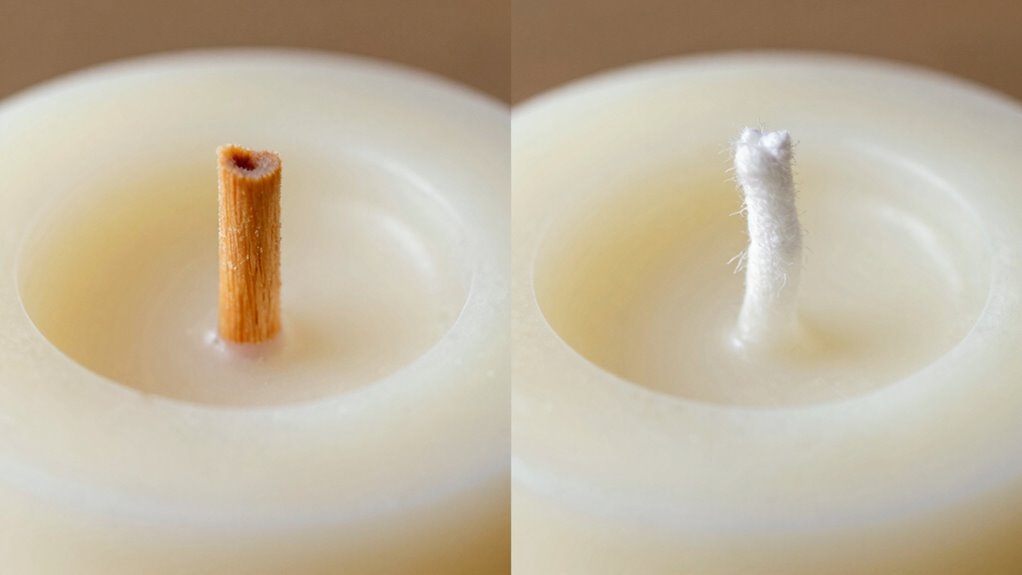

Wooden wicks are more sustainable than cotton wicks because they come from renewable, responsibly managed forests and biodegrade naturally without leaving harmful residues. In contrast, cotton cultivation consumes a lot of water, pesticides, and energy, which increases its environmental impact. Wooden wicks also involve fewer chemicals in their production, making them a greener choice overall. If you want to discover more about why they are better for the environment, keep exploring the details below.
Key Takeaways
- Wooden wicks are made from sustainably harvested, renewable resources with lower environmental impacts compared to cotton cultivation.
- They require fewer chemical treatments during manufacturing, reducing chemical runoff and pollution.
- Wooden wicks naturally biodegrade without leaving harmful residues, supporting eco-friendly disposal.
- Cotton wicks involve resource-intensive farming, water use, and chemical processing, increasing their environmental footprint.
- Overall, wooden wicks promote long-term sustainability through responsible sourcing and lower carbon emissions.
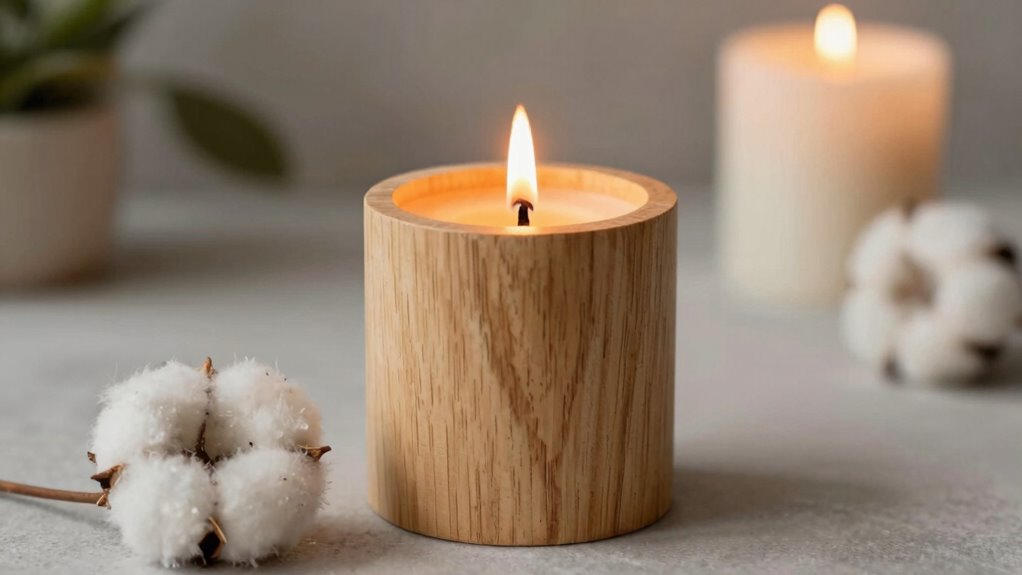
Many people are now questioning whether wooden wicks are more sustainable than cotton wicks when it comes to candle making. The debate largely centers on how each type of wick impacts the environment, particularly in terms of eco-friendly sourcing and carbon footprint. As you evaluate your options, it’s important to assess where the raw materials come from and how they’re processed. Wooden wicks are often made from sustainably harvested wood, which means they originate from forests managed with conservation in mind. This eco-friendly sourcing helps ensure that the harvesting process doesn’t deplete natural resources or harm ecosystems. Additionally, some wooden wick producers implement sustainable forestry practices to further minimize environmental impact.
Wooden wicks are sustainably sourced from managed forests, unlike cotton wicks that require resource-intensive cultivation.
Cotton wicks, on the other hand, are derived from cotton plants, which typically require large amounts of water, pesticides, and land. This cultivation can contribute to environmental degradation and increased carbon emissions, especially when grown in regions with less sustainable farming practices. Moreover, the resource-intensive nature of cotton cultivation means it often leaves a larger environmental footprint compared to wooden wicks. Implementing sustainable agriculture methods can help reduce some of these impacts, but they are not always standard practice. Furthermore, the use of chemical treatments in cotton processing can impact its overall environmental friendliness.
When you compare the carbon footprint of wooden and cotton wicks, the differences become more apparent. Wooden wicks tend to have a lower overall carbon footprint because they are often produced from fast-growing, renewable sources that require less intensive farming. The manufacturing process for wooden wicks is also generally more straightforward, involving fewer chemical treatments. Conversely, cotton wick production can involve significant water use, chemical treatments, and energy-intensive processes to clean, spin, and weave the fibers. These steps not only consume more resources but also generate more greenhouse gases, making cotton wicks potentially less eco-friendly overall. Additionally, the biodegradability of wooden wicks means they naturally break down in the environment without leaving harmful residues, making them a responsible choice if sustainability is your priority.
Another factor to explore is biodegradability. Wooden wicks naturally break down in the environment without leaving harmful residues, making them a responsible choice if sustainability is your priority. Cotton wicks are also biodegradable, but their environmental impact depends on the chemicals used during processing. If chemical treatments are involved, they may leave residues that slow decomposition or pose risks to soil and water quality. Properly processed organic cotton can enhance biodegradability, but this is not always the case across all products. Ensuring the use of organic cotton can further improve environmental outcomes, though it may come with higher costs.
Ultimately, your choice between wooden and cotton wicks hinges on understanding how each aligns with your values about sustainability. Wooden wicks, sourced responsibly and produced with minimal chemical treatments, tend to have a smaller carbon footprint and a more eco-friendly profile. They also support the preservation of forests when harvested sustainably, which is vital for maintaining ecological balance. They support sustainable forestry practices and biodegrade naturally, reducing long-term environmental impact. Cotton wicks, while biodegradable, often involve more resource-intensive cultivation and processing, which can offset some of their eco-friendly benefits. If sustainability is a core concern for your candle-making, opting for wooden wicks made from responsibly sourced wood might be the better choice.

MAQIHAN 100 Wood Wicks for Candles Making – Smokeless Wooden Candle Wicks Crackling Candle Wax Wood Wick mechas para velas de cera Candle Making Wicks for Paraffin Candle Soy Wax Candlemaking(50 Sets)
Wood Wicks for Candles Making: Made of renewable natural cherry wood, it releases relatively less smoke when burning,…
As an affiliate, we earn on qualifying purchases.
As an affiliate, we earn on qualifying purchases.
Frequently Asked Questions
Are Wooden Wicks More Affordable Than Cotton Wicks?
Wooden wicks are generally more affordable than cotton wicks, especially when considering the cost comparison for larger quantities. They often have better material durability, which means you’ll need fewer replacements over time. While the initial price might be slightly higher in some cases, their longevity and unique aesthetic can make them a cost-effective choice. You’ll find that wooden wicks offer a good balance between affordability and quality.
Do Wooden Wicks Produce More Soot Than Cotton Wicks?
Wooden wicks tend to produce more soot than cotton wicks, which can impact candle safety by increasing indoor air pollution and leaving residues on surfaces. This soot production happens because wooden wicks burn at a different rate and temperature, often leading to more incomplete combustion. To *guarantee* safety, you should trim your wooden wicks regularly and avoid burning candles for extended periods, reducing soot buildup and maintaining cleaner air.
How Long Do Wooden Wicks Typically Last?
Wooden wicks can last up to 50 hours, making them impressively durable for your candle experience. Their environmental impact is minimal, as they’re biodegradable and sustainably sourced, unlike some cotton options. Plus, their aesthetic appeal transforms your candle into a stunning centerpiece. With proper care, your wooden wick will burn steady and bright, providing a long-lasting, eco-friendly glow that elevates your space with natural elegance.
Are Wooden Wicks Suitable for All Candle Types?
Wooden wicks aren’t suitable for all candle types; they work best with candles that emphasize aesthetics and scent diffusion. You’ll find they add a rustic charm and create a crackling sound, enhancing the overall experience. However, for highly scented or delicate candles, cotton wicks might be better since they offer more control over burn and scent compatibility. Consider your candle’s design and scent profile to choose the best wick type.
Can Wooden Wicks Be Recycled or Composted Easily?
Wooden wicks are generally biodegradable, but recycling or composting them isn’t always straightforward due to biodegradability concerns and recycling challenges. You might find it difficult to compost wooden wicks because they often contain coatings or treatments that hinder natural decomposition. Recycling options are limited, as they usually aren’t accepted in curbside programs. To minimize waste, consider repurposing or reusing wooden wicks when possible, but disposal remains a challenge.

Candle Wicks,Candle Wicks for Candle Making,6 Inch 100 Piece DIY Pre-Waxed Cotton Wick with Tabs
Wicks Dimension – 6 inch length.Base dia:12.5mm.
As an affiliate, we earn on qualifying purchases.
As an affiliate, we earn on qualifying purchases.
Conclusion
So, when choosing between wooden and cotton wicks, think of the contrast: one type burns with a natural, renewable charm, while the other offers familiar, soft qualities. Wooden wicks, despite their sustainability, can be more fragile and louder, unlike the quiet, reliable cotton. Your decision hinges on what matters most—eco-friendliness or consistency. Ultimately, selecting the more sustainable option means embracing a choice that’s better for the planet, even if it means sacrificing a little comfort.
American Soy Organics Freedom Soy Wax Beads for Candle Making – Natural Candle Making Supplies – Paraffin-Free, Beeswax-Free Candle Wax for Container Candles, Tealights and Wax Melts, 10 lbs
NATURAL SOY WAX BEADS – Best candle making supplies make the best soy candles! These safe, ethically produced,…
As an affiliate, we earn on qualifying purchases.
As an affiliate, we earn on qualifying purchases.

WoodWick Cherry Blossom & Vanilla Gifts for Women and Men, 13 oz. WoodWick Renew Large Candle with Crackling Wick
Cherry Blossom & Vanilla: Drifting scents of cherry blossoms are intertwined with almond, orange, and Madagascar vanilla notes
As an affiliate, we earn on qualifying purchases.
As an affiliate, we earn on qualifying purchases.