
Homemade candles often look different each time because natural ingredients and small process changes influence their appearance and scent. Slight variations in dye amount, pouring temperature, or fragrance oil can alter the final look and smell. Different batches of wax also have unique properties. These factors give each candle a one-of-a-kind charm, highlighting the handcrafted process. If you’re curious about the details behind these differences, you’ll find more interesting insights ahead.

Get decor and gifts delivered free — and shop member deals
- Fast, free delivery on millions of items
- Access to Prime Big Deal Days deals on October 6–7
- Prime Video, Amazon Music and more included
Key Takeaways
- Natural ingredient variations cause differences in color, scent, and appearance between batches.
- Slight changes in pouring temperature and stirring affect the candle’s final look and consistency.
- Differences in dye concentration and mixing lead to hue variations in homemade candles.
- Variations in wax batches and cooling rates influence the candle’s texture and appearance.
- Handcrafted processes inherently produce unique candles, emphasizing their artisanal and one-of-a-kind nature.
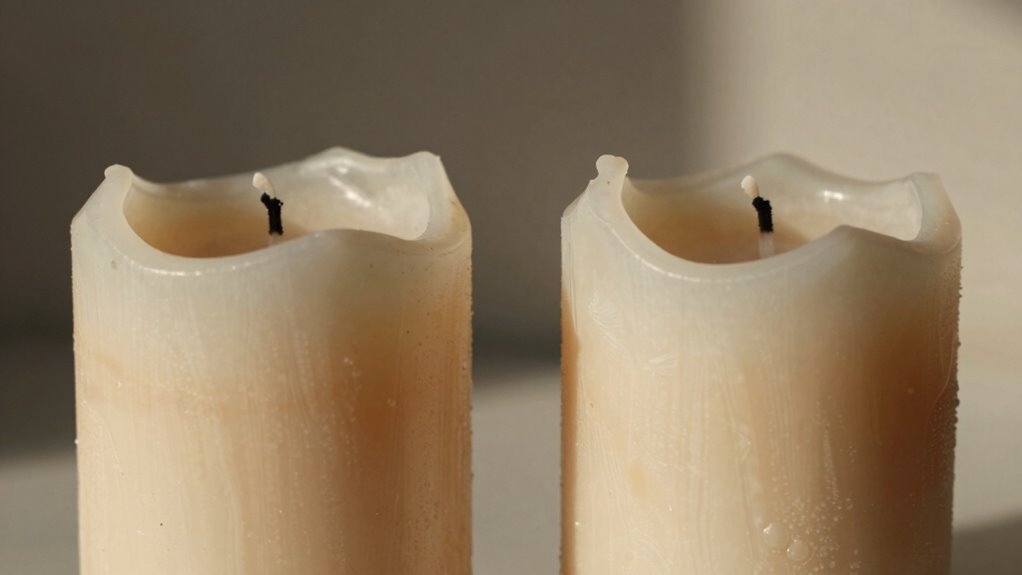
Ever wonder why homemade candles often look different from store-bought ones? It all comes down to the natural variability in the ingredients and the process you use. When you make candles at home, factors like scent variation and color inconsistency play a big role in how each candle turns out, often making every batch unique. Unlike commercial candles, which are produced with strict quality control to guarantee uniformity, homemade candles are influenced by small changes that can considerably alter their appearance.
Homemade candles are uniquely charming due to natural variations in ingredients and process.
Scent variation is one of the most noticeable differences. When you add fragrance oils, even slight differences in measurement or the temperature at which you pour your wax can change how scents develop. Some batches might smell more intense, while others seem milder. This is because fragrance oils can evaporate or disperse unevenly during cooling, especially if you don’t measure precisely or if the wax cools at different rates. As a result, your candles might have a slightly different aroma each time, which can be charming or frustrating, depending on your expectations. Over time, you might learn to adjust your technique to achieve more consistent scent strength, but some variability is inevitable.
Color inconsistency is another common trait of homemade candles. When mixing dyes or pigments into your wax, even tiny differences in color concentration can lead to variation in the final hue. Factors like the type of dye, the amount used, and how thoroughly you stir can all impact the shade. Furthermore, waxes from different batches or sources may have slightly different melting points and compositions, causing the color to appear different once poured and cooled. You might notice that one batch has a rich, deep tone, while another looks a little paler or more translucent. These differences can be charming, giving each candle a one-of-a-kind look, but they also make it tricky to produce perfectly uniform results every time. Additionally, the natural variability in ingredients can influence the final appearance and scent, making each candle a unique piece of art. Factors like temperature fluctuations during pouring also contribute to these differences, as they can affect how the dye and wax interact, leading to uneven color distribution.
Because of all these variables, no two homemade candles will look exactly alike, which can be part of their charm. Embracing these subtle differences allows you to appreciate the handcrafted quality of your creations, knowing that each candle has its own unique personality shaped by the natural variables of your process.
As an affiliate, we earn on qualifying purchases.
Frequently Asked Questions
Can the Type of Wax Affect Candle Appearance?
Yes, the type of wax can affect your candle’s appearance. Different waxes, like soy or beeswax, have unique melting points, which influence color consistency and surface texture. For instance, soy wax might produce a smoother surface, while beeswax can create a more textured look. Variations in wax quality or melting process can lead to slight differences each time you make a candle, impacting its overall look and feel.
Do Different Fragrances Impact the Candle’s Look?
The proof of the pudding is in the eating, and the same applies to candle fragrances. Different fragrances can impact your candle’s look because of variations in scent strength and fragrance oils. When you use inconsistent fragrance amounts, it can cause uneven melting or surface imperfections. To keep your candles looking uniform, maintain fragrance consistency and choose oils that blend well with your wax, ensuring both aroma and appearance stay consistent.
How Does Room Temperature Influence Candle Drying?
Room temperature substantially influences candle drying. If it’s too cold, wax cools slowly, causing uneven surfaces or cracks. Conversely, high temperatures can lead to rapid cooling, resulting in cracks or sinkholes. Humidity levels and air circulation also play roles; high humidity can delay drying, while good airflow helps the wax set evenly. Maintaining a consistent, moderate temperature with proper air circulation ensures your candles dry smoothly and look consistent each time.
Does the Size of the Wick Change the Candle’s Appearance?
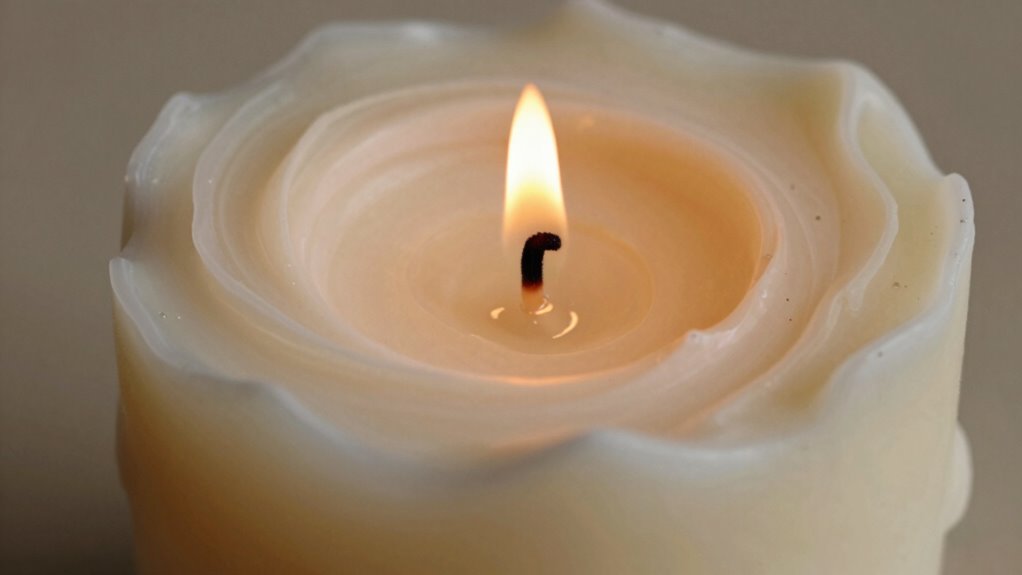
Your candle’s appearance is like a dance, and the wick size influences its moves. A thicker wick from a different wick material burns faster and creates a wider, more uneven melt pool, which can lead to a less uniform look. Conversely, a thinner wick produces a steadier, more even burn. So, changing the wick thickness or material directly affects how your candle looks as it burns, melts, and cools.
Can Storage Conditions Alter the Candle’s Look Over Time?
Yes, storage conditions can change your candle’s look over time. Poor storage stability, like exposure to direct sunlight, humidity, or temperature fluctuations, can cause color fading or uneven surface textures. To maintain your candle’s appearance, keep it in a cool, dark, and stable environment. Proper storage helps preserve color retention and prevents warping or cracking, ensuring your candle stays beautiful and consistent for as long as possible.
Conclusion
Just like no two snowflakes are exactly alike, your homemade candles will have unique qualities each time you make them. Embrace these differences as part of their charm—each one is a little work of art, like a snowflake’s intricate design. Variations in color, shape, or finish show your personal touch and the magic of crafting by hand. So, enjoy the process and celebrate each candle’s one-of-a-kind personality, just like a beautiful, unique snowflake in winter.
Halloween Picks
halloween
As an affiliate, we earn on qualifying purchases.