

If your candle tunnels, it’s often because the wax and wick aren’t balanced, or the fragrance isn’t evenly distributed. Hard or uneven wax, a wick that’s too small, or poor heat distribution from the container can cause uneven melting. Excess fragrance or uneven mixing can also disrupt how the wax melts during burning. By adjusting these factors, you can prevent tunneling. Keep exploring to discover ways to guarantee your candles burn smoothly every time.

Get decor and gifts delivered free with Prime
- Fast, free delivery on millions of items
- Prime Video, Amazon Music and more included
- Member-only deals all year
Key Takeaways
- Improper fragrance diffusion can disrupt wax melting, causing uneven heat distribution and tunneling.
- Using incorrect wick size or material affects flame stability, leading to uneven melting and tunnels.
- Hard or uneven wax blends resist uniform melting, promoting tunnel formation during burning.
- Poor container design or heat retention causes uneven heat, encouraging tunnels in the candle.
- Imbalance of factors like fragrance, wax hardness, wick, and container prevents a smooth, even burn.
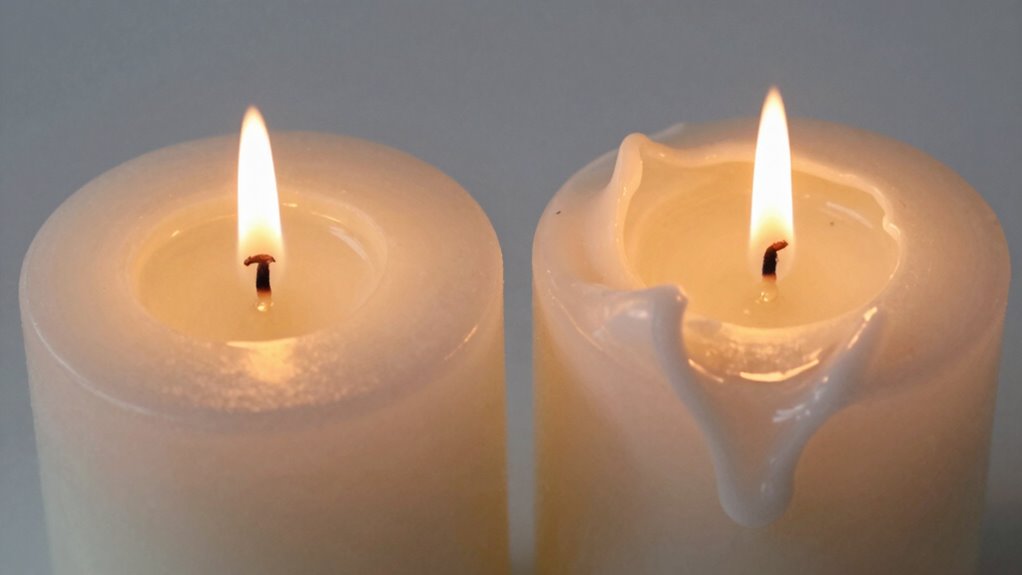
If your candle burns unevenly, creating a tunnel down the center, you’re not alone. Many candle lovers face this frustrating issue, wondering why some candles tunnel while others burn evenly. The problem often boils down to how the candle’s wax interacts with heat and how the fragrance is dispersed during burning. Fragrance diffusion plays a significant role here; if a candle’s scent isn’t well balanced or is infused unevenly, it can affect how the wax melts. When fragrance oils are added in excess or unevenly mixed, they can alter the wax’s consistency, leading to inconsistent burning. This inconsistency can cause the wax at the edges to melt at a different rate than the center, making a tunnel form.
Uneven wax interaction and improper fragrance diffusion can cause candles to tunnel during burning.
Another key factor is wax hardness. Softer waxes tend to melt more quickly and evenly, reducing the chance of tunneling. Harder waxes, on the other hand, may resist melting at the edges, causing the candle to burn straight down the middle instead. If your wax is too hard, it won’t create a wide, even melt pool, which is essential for a uniform burn. Conversely, wax that’s too soft might melt too fast, leading to mushrooming or excessive soot, but it can also help prevent tunneling if managed properly. Achieving the right wax hardness involves selecting the appropriate blend of waxes and additives to promote an even melt.
The wick size and type are also vital. A wick that’s too small won’t generate enough heat to melt the wax evenly across the surface, creating a tunnel. Conversely, a wick that’s too large might burn too quickly or cause excessive wax consumption, impacting fragrance diffusion. Proper wick selection ensures a consistent, steady flame that heats the wax uniformly, encouraging a wide melt pool from the start. Ensuring the wick is properly centered and trimmed can also significantly improve the burn quality. Using the correct wick material for your specific wax can also influence how evenly the candle burns and how well it disperses fragrance. Additionally, the wick type can influence the amount of heat generated, which affects how evenly the wax melts and how the fragrance is released. It’s also important to consider how the wick’s material composition interacts with the wax for optimal burning.
In addition to these factors, the candle’s container or the absence of a container can influence how it burns. A well-designed container retains heat evenly, promoting uniform melting, while an unlined or uneven surface can cause uneven heat distribution. Proper container design and understanding of heat transfer can greatly improve burn quality. Using heat-retentive containers can help maintain an even temperature across the candle’s surface, reducing the risk of tunneling. Overall, preventing tunneling involves balancing fragrance diffusion, wax hardness, wick size, and container design. By understanding these elements, you can choose or craft candles that burn smoothly and evenly, giving you a more satisfying and long-lasting experience with every lighting.
As an affiliate, we earn on qualifying purchases.
Frequently Asked Questions
Can Candle Tunneling Be Completely Prevented?
Yes, candle tunneling can be completely prevented by practicing proper candle safety and maintaining the wick. You should always trim the wick to about a quarter-inch before each burn to guarantee an even melt pool. Additionally, let the candle burn long enough for the wax to melt to the edges on the first use. These steps help promote an even burn, preventing tunneling and ensuring safer, longer-lasting candles.
Does Candle Size Affect Tunneling?
Yes, candle size affects tunneling. Larger candles with a proper wick length and darker candle colors tend to burn more evenly, reducing tunneling. If the candle is too small, the wax melts quickly and unevenly, causing tunneling. Make certain you select a candle with a wick that’s appropriate for its size and avoid overly dark colors, which can heat unevenly, leading to more tunneling. Proper trimming of the wick also helps.
Are Certain Wax Types More Prone to Tunneling?
You’ll find that soft waxes like soy are more prone to tunneling compared to harder waxes like beeswax. About 60% of candle tunneling issues relate to wax hardness, which affects how the wax melts. The wick design also plays a vital role; a poorly matched wick can cause uneven burning, increasing tunneling. To prevent this, choose a wax suited to your wick and guarantee proper wick sizing for a clean, even burn.
How Does the Wick Material Influence Tunneling?
Your wick material greatly influences tunneling because wick composition affects burn consistency. A wick made from cotton typically provides a steady, even burn, reducing the chance of tunneling. Conversely, a metal-core wick can cause uneven burning, leading to tunneling issues. When the wick burns consistently, it melts the wax evenly across the surface, preventing tunnels. Choosing the right wick material helps guarantee a smooth, uniform burn and prevents tunneling.
Can Fragrance Oils Cause Tunneling Issues?
Fragrance oils can indeed cause tunneling if they disrupt your candle’s harmony. When the scent load is too heavy or the fragrance isn’t compatible, it’s like adding a discordant note to a melody, preventing a full melt pool. This imbalance keeps the wax from melting evenly, creating a tunnel. To avoid this, choose fragrance oils that blend well with your wax and keep scent load within recommended limits for a smooth, even burn.
Conclusion
Understanding why some candles tunnel while others don’t is like revealing a secret dance—each candle has its own rhythm. When you choose the right wax, wick, and burn time, you’re guiding a gentle symphony, ensuring your candle’s glow spreads wide and even. So, pay attention and nurture your candles like a caring conductor. With patience and a little knowledge, you’ll keep their flame dancing beautifully, casting a warm, even light that lasts.
Halloween Picks
halloween
As an affiliate, we earn on qualifying purchases.