
Candles sweat because impurities, wax crystallization, and fragrance oils can cause oils and moisture to migrate to the surface, especially during temperature changes. When air around the candle cools or warms unexpectedly, moisture condenses on the surface, creating droplets. Fragrance oils often migrate and form droplets, making the surface look greasy or oily. Maintaining stable temperatures and proper wax composition helps prevent sweating — learn more about how to keep your candles looking their best.
Key Takeaways
- Surface sweating occurs when moisture in the air condenses onto the cool candle surface.
- Impurities and lower wax purity can increase surface oil buildup and uneven melting.
- Fragrance oils migrating to the surface during burning can create oily droplets or films.
- Temperature fluctuations cause condensation, leading to visible oil or sweat on the candle.
- Proper storage, stable environment, and compatible fragrances help prevent candle sweating.

P&J Trading Fragrance Oil Favorite Set | Candle Scents for Candle Making, Freshie Scents, Soap Making Supplies, Diffuser Oil Scents
OIL USES: Designed for but not limited to candle scents for candle making (especially works well with soy...
As an affiliate, we earn on qualifying purchases.
The Composition of Candle Waxes and Their Effects
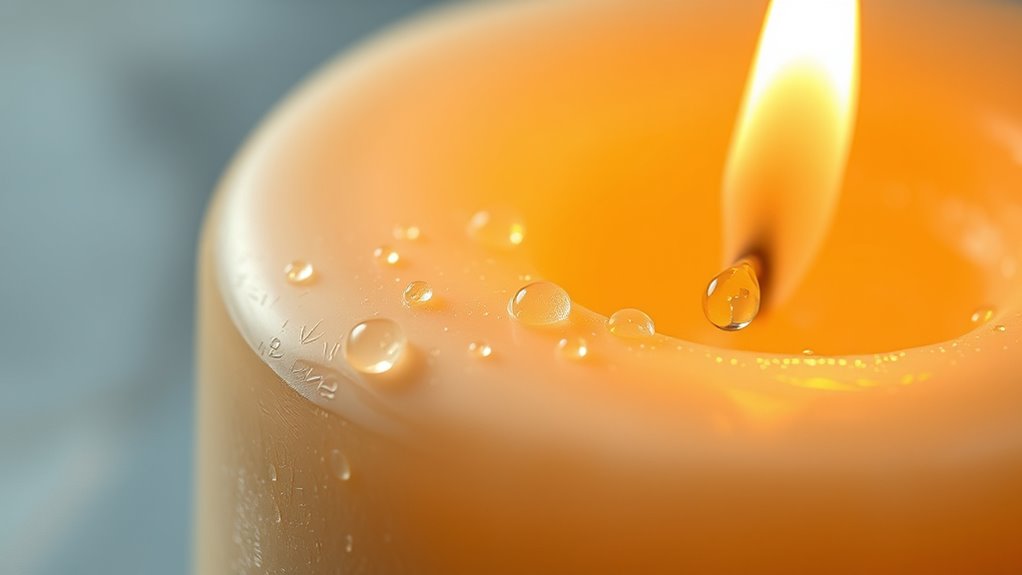
The composition of candle wax substantially influences how a candle burns and the overall ambiance it creates. When you consider paraffin purity, higher purity levels mean fewer impurities, resulting in a cleaner, steadier burn. Impurities can cause uneven melting and produce soot or surface imperfections. Wax crystallization also plays a crucial role; it affects how the wax solidifies and melts. Well-controlled crystallization leads to a smooth, even surface, while poor crystallization can create irregularities that trap oils or moisture on the surface. These surface issues can cause “sweating” or oil on candles, especially in environments with temperature fluctuations. Additionally, the presence of impurities can increase the likelihood of surface condensation and sweating. Understanding the wax’s composition helps you choose or craft candles that burn cleaner, more evenly, and with less surface condensation.

MAYJAM Fragrance Oil Gift Set, Top 20 Essential Oils Variety Pack for Diffusers for Home, Long Lasting Scented Oils for Soap Candle Making - 5ml/0.17fl.oz
Wonderful Scent: MAYJAM fragrance oils are highly concentrated and features a soothing and pleasant aroma. Fruity & floral...
As an affiliate, we earn on qualifying purchases.
How Temperature Fluctuations Cause Surface Condensation

Temperature fluctuations directly impact candle surfaces by causing moisture in the surrounding air to condense onto the wax. When the air’s humidity buildup increases or when there’s a significant temperature difference between indoor and outdoor environments, surfaces cool quickly. This cooling leads to condensation, as warm, moist air contacts the colder wax surface. As the wax cools, water vapor turns into tiny droplets, creating that sweaty appearance. Sudden temperature drops, especially at night or during seasonal changes, intensify this process. Understanding these temperature differences helps you predict when candles might sweat. Additionally, ambient temperature control can help maintain a consistent environment, reducing the likelihood of surface condensation. To minimize surface condensation, try to keep your environment stable and avoid rapid temperature shifts. This way, you reduce humidity buildup and prevent moisture from accumulating on your candles.
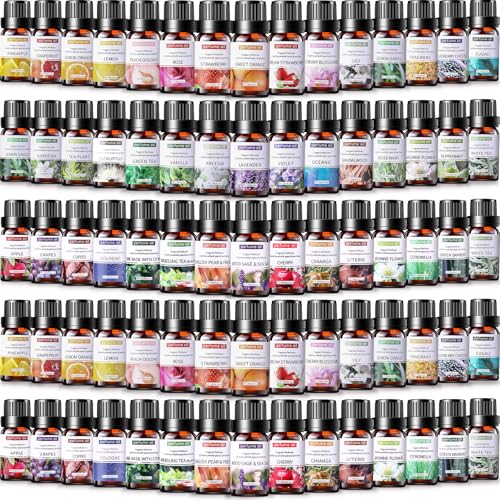
Dansib 42 Pcs Essential Oil Set for Diffuser 10ml Each Fragrance Oil for Candle Making, Soap Making, Aromatherapy, Humidifiers (Classic)
Valuable Package: you will receive 42 bottles essential oils, each 10ml/0.35oz, there are a total of 42 scents,...
As an affiliate, we earn on qualifying purchases.
The Role of Fragrance Oils and Additives in Candle Surface Behavior

Fragrance oils and additives can considerably influence how candle surfaces behave, especially in relation to sweating and surface residues. Fragrance migration occurs when these oils seep to the surface during burning or cooling, creating visible droplets or a greasy film. Additive effects, such as stabilizers or pouring agents, can alter the consistency of the wax, impacting how fragrance oils distribute and whether they migrate. Some fragrances are more prone to surface migration, leading to oil pooling or sweating, especially in temperature fluctuations. Understanding these interactions helps you choose the right fragrance oils and additives to minimize surface issues. By controlling additive effects and selecting compatible oils, you can reduce sweating and improve candle surface appearance. Additionally, selecting appropriate fragrance oils designed for candle making can help mitigate these problems and enhance product quality. Being aware of the wax composition and additives used can further influence the tendency for surface sweating and improve overall candle performance. Incorporating knowledge of sound design techniques can also inspire innovative ways to visualize or communicate these phenomena in educational or marketing materials. Moreover, experimenting with different cooling and storage conditions can significantly impact the extent of sweating and surface residue formation.

PHATOIL 9PCS Fruit Fragrance Oil Set for Soap Making Diffusers, 10ml/0.33fl.oz Cucumber Melon, Coconut & Vanilla, Peach, Pear, Green Apple, Blueberry, Apple, Fig, Lemon Fragrance Oil Essential Oils
Top 9 Fruity Fragrance Oils Set: This gift set includes 9 x 10ml bottles (Cucumber Melon, Coconut &...
As an affiliate, we earn on qualifying purchases.
Understanding the Process of Candle Melting and Re-Solidification
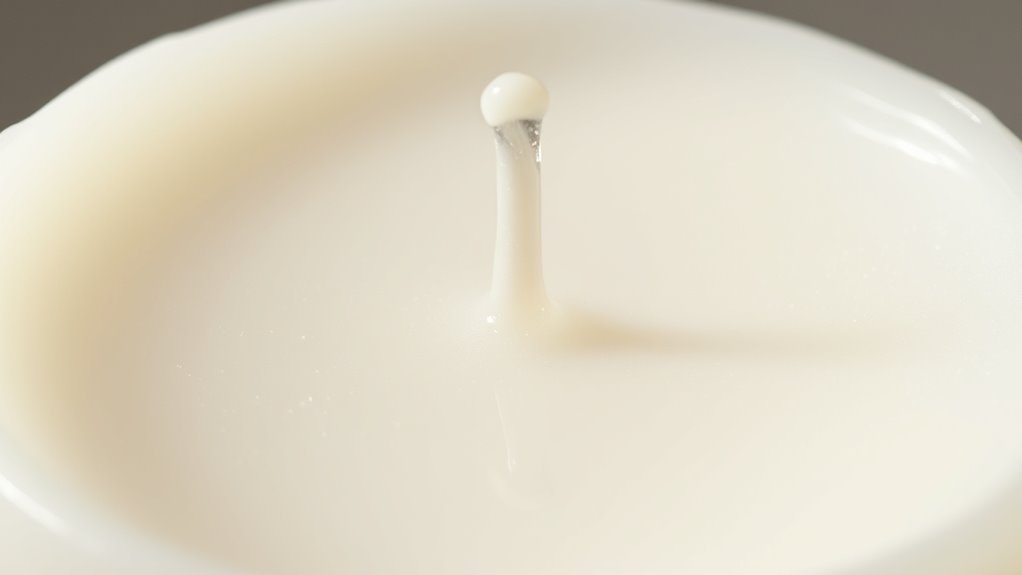
Understanding how candles melt and re-solidify is vital to mastering their overall performance. When you light a candle, the heat from the flame melts the wax near the wick, creating a pool that expands as surface tension pulls the liquid outward. Proper wick tension ensures a steady, even melt, preventing tunneling or uneven burning. As the heat continues, the wax vaporizes and then re-solidifies when the flame diminishes, forming a new solid surface. Surface tension plays an essential role, maintaining the shape of the melted wax and influencing how smoothly it spreads across the surface. If the wax cools too quickly or unevenly, re-solidification occurs unevenly, leading to surface imperfections. Understanding these processes helps you achieve a cleaner burn and minimize issues like candle sweating.
Tips to Minimize Candle Sweating and Maintain Candle Quality
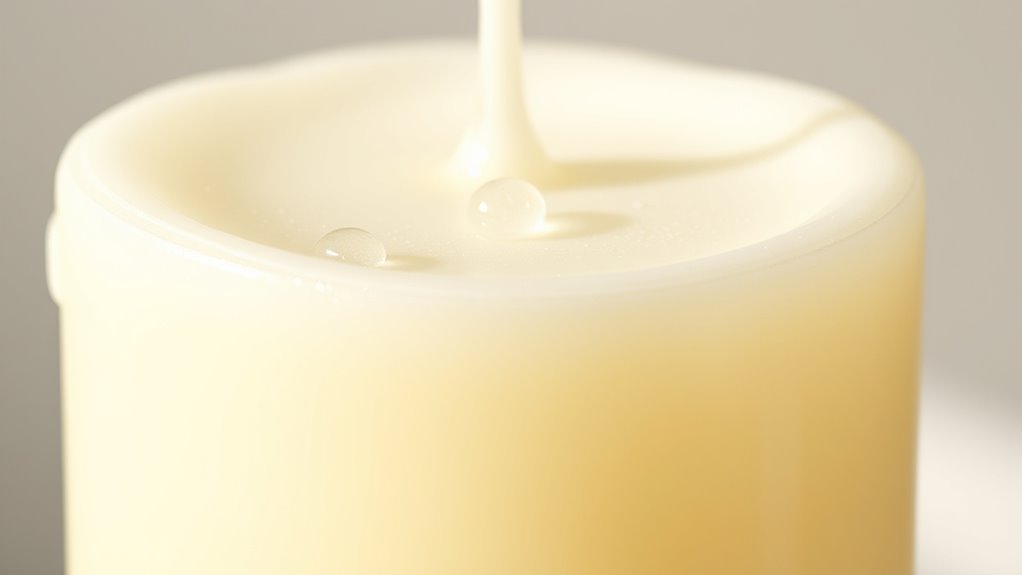
To minimize candle sweating and keep your candles looking their best, focus on controlling environmental factors and proper storage. Proper candle storage in a cool, dry place helps prevent excess surface oil and sweating. Humidity control is key—high humidity encourages sweating, so use dehumidifiers or silica packs to absorb moisture. Additionally, consider these tips:
- Store candles in airtight containers or sealed bags.
- Keep candles away from direct sunlight and heat sources.
- Maintain a stable room temperature to reduce temperature fluctuations.
- Understanding climate control can be essential for maintaining candle quality over time.
- Incorporating knowledge of humidity’s impact on candles can further assist in preventing sweating and preserving their appearance.
- Proper ventilation and consistent indoor conditions help regulate temperature fluctuations, further reducing the likelihood of candle sweating.
- Being aware of environmental factors that influence candle surfaces enables better preservation and aesthetic maintenance.
Frequently Asked Questions
Can Candle Sweating Occur With All Types of Wax?
Candle sweating can occur with all types of wax, including soy wax and paraffin wax. When temperatures fluctuate, the wax’s surface releases excess oil, causing it to sweat. Soy candles might sweat more in humid environments, while paraffin candles are also prone to this. To minimize sweating, keep your candles in cool, stable conditions, and avoid drafts that cause temperature changes.
Does Humidity Impact Candle Surface Sweating?
Did you know that humidity effects can cause up to 80% of surface condensation on candles? When humidity rises, moisture in the air creates surface condensation, making your candle appear sweaty. Higher humidity levels intensify this sweating, especially in warm environments. So, if your candle’s surface seems damp, it’s likely due to increased humidity effects, which cause moisture to gather on the wax, leading to that sweaty appearance.
Are Certain Candle Colors More Prone to Sweating?
Certain candle colors can influence sweating, as darker shades like black or deep reds tend to absorb more heat, making them more prone to surface sweating. This affects their visual appearance, as the melted or oily spots become more noticeable. You might notice that lighter or pastel-colored candles sweat less, maintaining a cleaner look longer. So, your choice of candle color can impact both the appearance and how much it sweats over time.
How Does Storage Duration Affect Candle Sweating?
Storing your candles for too long, especially in poor storage conditions, can increase sweating due to wax stability issues. Over time, temperature fluctuations cause the wax to release trapped oils, leading to surface sweating. To prevent this, keep candles in a cool, stable environment. Proper storage helps maintain wax stability, reducing the chances of sweating and ensuring your candles stay fresh and looking their best longer.
Can Candle Sweating Indicate a Manufacturing Defect?
Yes, candle sweating can indicate a manufacturing defect. Manufacturing inconsistency or surface contamination often cause uneven wax composition or impurities, leading to excess oil on the surface. This excess oil migrates to the surface, creating sweating when exposed to temperature changes. If your candle shows persistent sweating despite proper storage, it might be a sign of production issues like poor quality control or contamination, affecting its performance and appearance.
Conclusion
Just like dew forms on a cool morning, candles “sweat” when temperature changes cause moisture to gather on their surfaces. By understanding how wax composition, temperature shifts, and additives influence this process, you can better care for your candles. Keep them in a stable environment, trim the wick, and avoid drafts. With a little attention, you’ll enjoy your candles without the unwanted shine, illuminating your space just like a steady flame in calm waters.