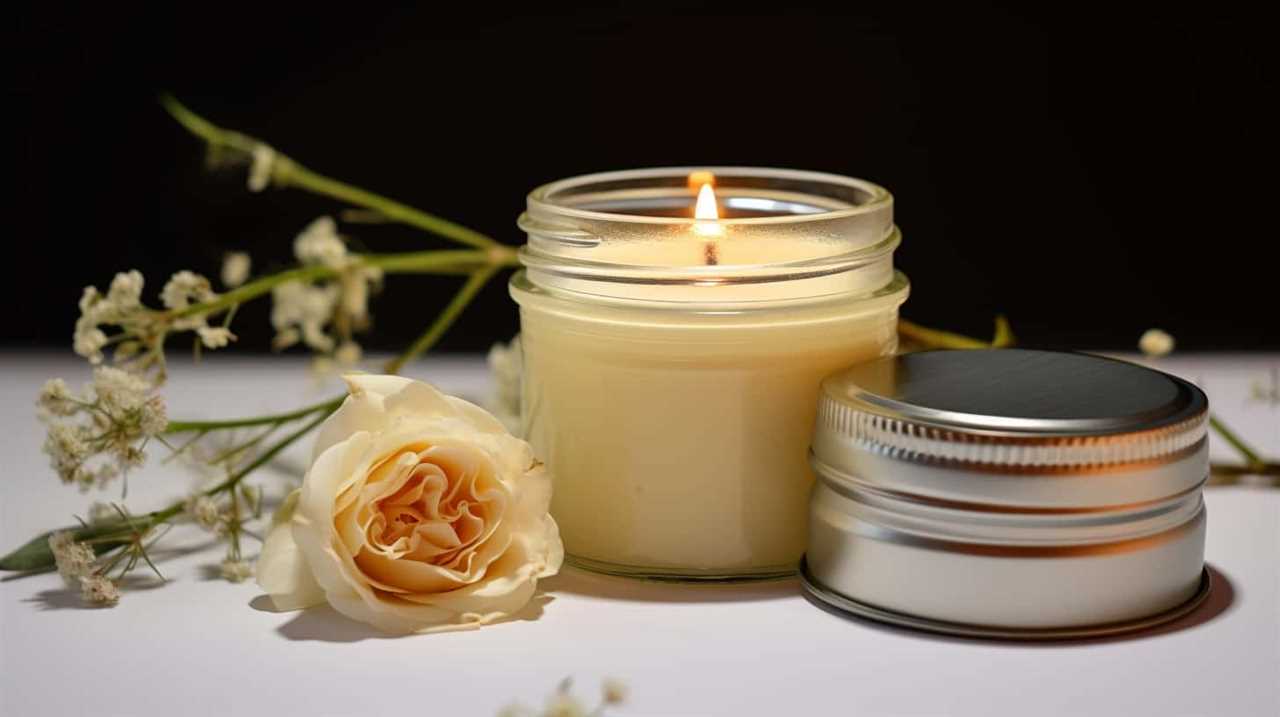

Candle frosting appears as a matte, frosted surface caused by crystallization of the wax, which can affect how it looks and burns. You can prevent frosting by controlling cooling temperatures, pouring at the right heat, and storing candles in a cool, dry place. Using high-quality wax and compatible fragrances also helps. To learn more about these techniques and how to keep your candles smooth and glossy, keep exploring further tips.
Key Takeaways
- Candle frosting is a matte, frosted surface appearance caused by wax crystallization during cooling.
- It results from uneven cooling, environmental factors, wax composition, and impurities.
- Using controlled cooling, proper storage, and compatible fragrance oils can reduce frosting.
- Employing smooth pouring techniques and additives can help achieve a glossy, smooth finish.
- Maintaining stable temperature and humidity during production and storage minimizes frosting and surface imperfections.
Understanding the Science Behind Candle Frosting

Candle frosting occurs when a wax surface develops a matte, frosted appearance, often after cooling. This natural process results from the crystallization of wax, which affects how the candle burns and releases scent. Frosting can influence candle scent dispersion, as the crystalline structure may trap fragrance oils, reducing scent throw. To minimize frosting, you need to understand how wick selection impacts the process. The wick’s size and material determine how the wax melts, influencing cooling rates and crystal formation. A properly chosen wick promotes an even melt pool, reducing frosting’s likelihood. Additionally, understanding the efficiency ratings of wax and wick materials can help optimize the melting process. By understanding these factors, you can better control frosting, ensuring your candles burn smoothly and scent disperses effectively. Paying attention to wax composition and how it interacts with different wick types can further help prevent frosting and improve overall candle quality.
Types of Wax Prone to Frosting
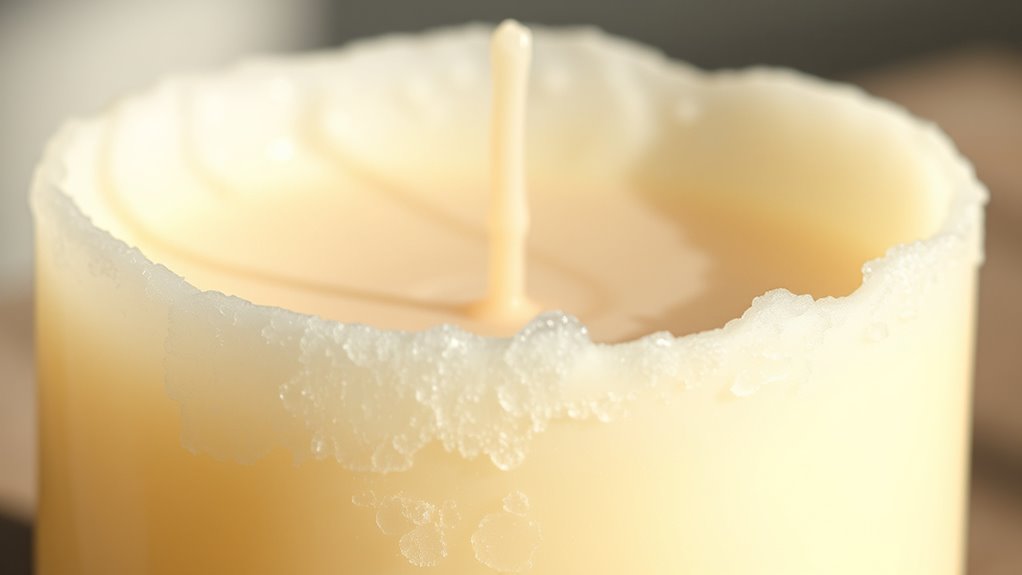
Certain waxes, like soy, beeswax, and paraffin, are more prone to frosting. You’ll notice that soy wax often develops a matte surface, while beeswax’s natural composition can cause similar effects. Paraffin wax, on the other hand, tends to frost as a result of its crystalline structure. Creative practice can help in understanding how different waxes behave during the cooling process, potentially reducing frosting issues. Additionally, understanding the crystalline structure of waxes can guide better curing techniques to minimize frosting. Recognizing the composition of each wax type can also aid in selecting the most suitable wax for specific candle-making goals.
Soy Wax Characteristics
Soy waxes are particularly susceptible to frosting because of their crystalline structure and the way they solidify as they cool. This natural characteristic often leads to a cloudy, frosted appearance on the candle’s surface, especially if not carefully managed. When working with soy wax, you need to take into account how it affects candle fragrance integration, as frosting can sometimes interfere with scent dispersal. Additionally, choosing the right wick selection techniques becomes vital to guarantee an even burn and minimize frosting visibility. Soy wax’s tendency to develop frost is influenced by factors like temperature, cooling rate, and fragrance load. Being aware of these traits helps you create smoother, more aesthetically appealing candles without sacrificing scent throw or burn quality. Proper cooling techniques are crucial for candle finishing and achieving a professional look. Regular use of Glycolic Acid in skincare routines can improve skin texture, which is analogous to how proper cooling techniques improve the appearance of candles. Furthermore, understanding the crystalline structure of soy wax allows crafters to better predict and control frosting effects during production. Recognizing the cooling rate and how it impacts crystallization can help prevent frosting from forming unevenly.
Beeswax Composition Traits
Have you noticed how some beeswax candles develop a frosted or mottled surface over time? This often relates to beeswax’s composition traits, especially its purity level. Pure beeswax contains natural oils and impurities that can influence how the wax cools and solidifies, making frosting more likely. Less refined beeswax with higher impurity levels tends to be more prone to frosting because these impurities affect crystallization patterns. Additionally, wax additive effects play a role; certain additives or blending agents can either reduce or increase frosting tendencies. If you want to minimize frosting, choosing high-purity beeswax and avoiding additives that promote uneven crystallization can help keep your candles smooth and glossy over time. Furthermore, understanding the crystallization process of beeswax can help in selecting the right wax for your candle-making needs to reduce frosting. Knowing the composition traits of beeswax, including its natural waxal and impurity levels, is crucial for achieving a glossy finish. Being aware of how temperature variations impact beeswax solidification can also aid in preventing frosting during the cooling phase. Exploring how wax purity influences crystallization can provide additional insights into maintaining a smooth surface.
Paraffin Wax Features
Paraffin waxes, especially softer or lower-grade varieties, are more prone to frosting due to their crystalline structure. Their paraffin characteristics include a high level of natural wax crystals, which can form visible frost when cooled. Frosting occurs more often in these waxes because of their tendency to develop uneven crystal growth. To reduce frosting, you might consider adding wax additives that improve clarity and stability. These additives can alter the crystalline structure, preventing frost formation. Additionally, improper temperature control during cooling can increase the likelihood of frosting, making temperature regulation an important factor in wax processing. Proper cooling methods can also help in minimizing frosting, ensuring a more uniform appearance.
Common Causes of Frosting in Candles
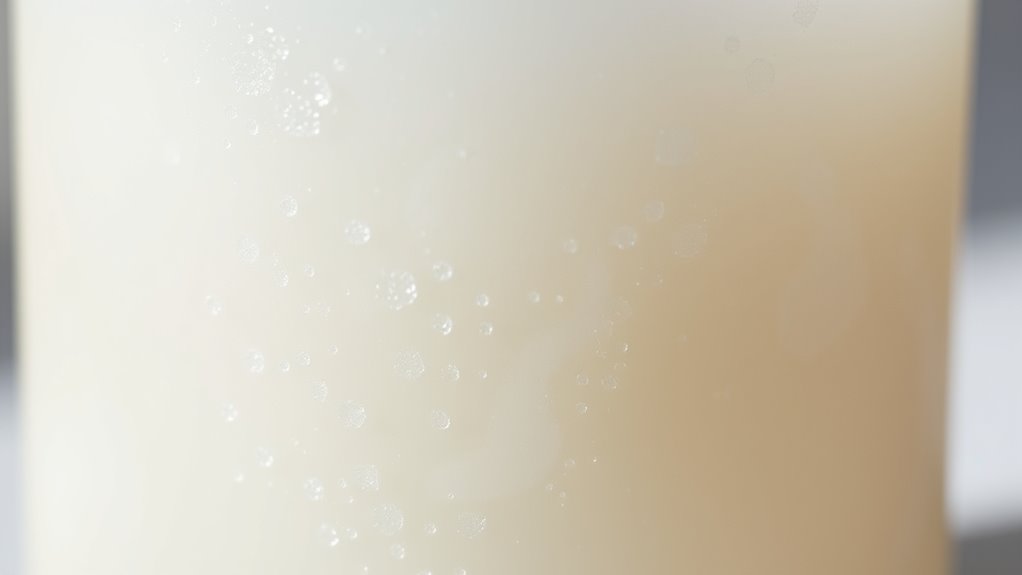
Frosting occurs when tiny crystals form on the surface of a candle, often as a result of the manufacturing process or environmental factors. One common cause is high environmental humidity, which can lead to moisture settling on the wax surface and promoting crystal formation. Additionally, fragrance additives can contribute, especially if they are incompatible with the wax or added at too high a concentration, causing uneven crystallization. Temperature fluctuations during cooling or storage also intensify frosting. To understand these causes better, consider the following factors:
| Cause | Effect | Mitigation Tips |
|---|---|---|
| Environmental humidity | Promotes moisture absorption and frosting | Store in dry, cool places |
| Fragrance additives | Uneven crystallization, surface frosting | Use compatible fragrance oils, add carefully |
| Rapid cooling | Causes uneven solidification, frosting | Cool candles slowly |
| Temperature fluctuations | Leads to crystal formation on surface | Store in stable temperature environments |
| Wax impurities | Initiates crystallization spots | Use purified wax |
Techniques to Minimize or Prevent Frosting

To effectively prevent frosting on your candles, you should implement specific techniques during the manufacturing and cooling processes. Proper temperature control is essential—cool the wax gradually to reduce surface imperfections. When adding fragrance, ensure it’s fully integrated at the right temperature to avoid uneven cooling that can cause frosting. For decorating techniques, use smooth pouring methods and avoid overfilling to prevent surface irregularities. You can also consider adding a thin layer of shellac or a gloss coating to minimize the appearance of frosting. Additionally, maintaining consistent environmental conditions during cooling helps produce a uniform finish. Controlling environmental factors during cooling can significantly impact the appearance of your candles. Being aware of frosting causes and solutions can further improve your candle-making results. Incorporating proper candle storage practices can also help maintain the candle’s appearance over time. Understanding the importance of wax composition can help you choose the best materials to prevent frosting from forming.
Best Practices for Candle Storage and Handling
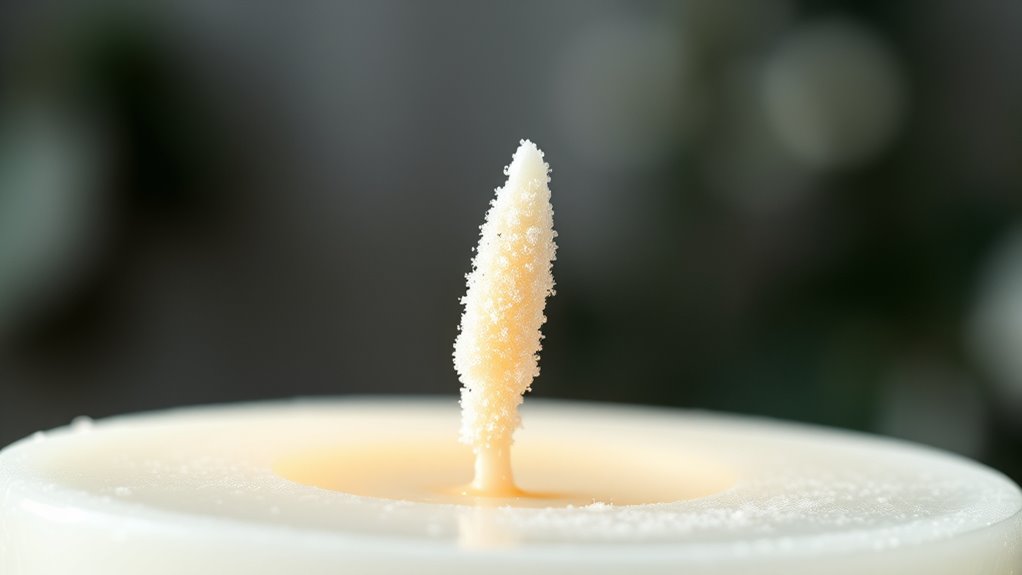
Proper storage and handling are essential to maintaining your candles’ quality and safety. To prevent issues like frosting or uneven burning, store candles in a cool, dry place away from direct sunlight and temperature fluctuations. Use candle storage containers or boxes to protect them from dust and damage. When handling, avoid touching the wax surface with your fingers, as oils can affect the finish and cause imperfections. Always trim the wick before each use and keep candles upright to prevent wax spills or warping. Handle candles gently to avoid chipping or cracking. Following proper candle storage and handling techniques ensures your candles stay in excellent condition, burn evenly, and look beautiful for longer periods. Additionally, utilizing automation in business intelligence can help monitor and optimize storage conditions, ensuring your candles remain in pristine condition. Proper placement and air circulation are also important to prevent moisture buildup and preserve the candle’s appearance and performance. Maintaining consistent temperature and humidity levels can also help reduce the risk of frosting, keeping your candles looking their best over time. Incorporating climate control measures can further safeguard your candles from environmental factors that cause surface imperfections.
Tips for Achieving a Smooth, Glossy Finish
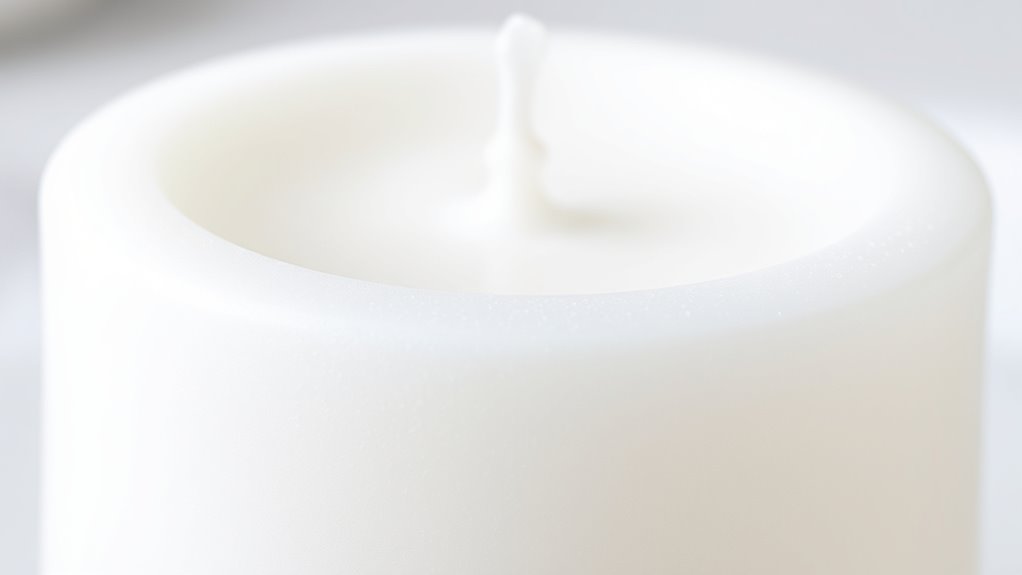
Achieving a smooth, glossy finish on your candles requires attention to detail and the right techniques. Proper decorating techniques and fragrance integration are key to a polished look. First, verify your candle surface is cooled but still warm for a flawless finish. Use a heat gun or hairdryer on low to gently melt the surface for a sleek, glossy appearance. Incorporate fragrance carefully, blending it fully before pouring to prevent uneven textures. To prevent frosting, pour at the correct temperature and avoid over-mixing.
- Use a heat gun to smooth the surface
- Pour wax at the right temperature for a glossy finish
- Add fragrance slowly and evenly
- Keep the surface warm during finishing
- Sand or polish for extra sheen
Frequently Asked Questions
Does Candle Frosting Affect the Scent Throw?
Candle frosting doesn’t directly affect the scent throw, but it can impact fragrance retention over time. Frosting creates a textured surface that may trap some scent molecules, potentially reducing scent diffusion slightly. However, the main concern is that frosting might indicate uneven burning or wax issues, which can diminish overall scent quality. To keep your candle’s fragrance strong, guarantee proper burn times and use high-quality waxes that resist frosting.
Can Frosting Be Reversed or Repaired After the Candle Cools?
You can attempt frosting repair or frosting reversal after the candle cools by gently reheating the surface with a heat gun or hairdryer. Carefully melt the frosting, then smooth it out with a spatula or paper towel. Keep in mind, this process might not fully restore a perfectly smooth finish, but it can considerably improve the candle’s appearance. Remember to work slowly and evenly to avoid further damage.
Is Frosting More Common in Homemade or Store-Bought Candles?
You’ll find frosting more common in homemade candles, like baking a loaf where imperfections sneak in. DIY tips and proper storage solutions help prevent frosting, which often occurs with uneven cooling or inconsistent ingredients. Store-bought candles usually have more controlled manufacturing, reducing frosting risks. To avoid it, focus on quality wax and consistent curing. Whether homemade or store-bought, understanding these details keeps your candles looking perfect and frost-free.
How Does Temperature Fluctuation Impact Frosting Development?
Temperature fluctuations can cause frosting to develop because they disrupt temperature stability during the candle’s cooling process. When your environment isn’t stable, uneven cooling occurs, leading to frosting on the surface. To prevent this, maintain consistent temperature and choose wax composition carefully, as some waxes are more prone to frosting. Keeping your candles in a stable environment ensures a smooth, glossy finish and minimizes frosting formation.
Are Certain Wick Sizes More Prone to Causing Frosting?
You’ll find that larger wick sizes or certain wick types are more prone to causing frosting, ironically because they burn hotter and faster. When you choose a wick size that’s too big, it creates uneven heat distribution, encouraging frosting. Smaller or appropriately sized wicks, especially those suited to your candle’s wax type, help maintain a steady burn and reduce frosting. So, selecting the right wick size and type is key to avoiding that frosty, uneven finish.
Conclusion
Think of candle frosting like a fog settling over a glass of water—it’s natural but can obscure clarity. When I first started pouring candles, I was frustrated by the cloudy look, but I learned to control the process, much like clearing fog with patience. Remember, a little frosting is part of the craft, just like life’s imperfections—they add character. With proper techniques and care, you can create beautifully smooth candles that shine with confidence and warmth.