
TL;DR

Get decor and gifts delivered free with Prime
- Fast, free delivery on millions of items
- Prime Video, Amazon Music and more included
- Member-only deals all year
Vintage and secondhand furnishings are gaining a more prominent place in interior design, as shoppers seek distinctive pieces and designers incorporate older furniture and decor. The source report cites industry surveys and market forecasts as signs of growth, but those figures do not establish how much of the shift is caused by price, sustainability or changing taste.
Secondhand and vintage furnishings are moving further into mainstream interior design, according to a Livingetc report that points to growing resale-market forecasts and widespread vintage sourcing among surveyed designers. The shift matters because it is changing what consumers and design professionals treat as desirable: not only pristine, newly made pieces, but furniture whose age, materials and history are visible.
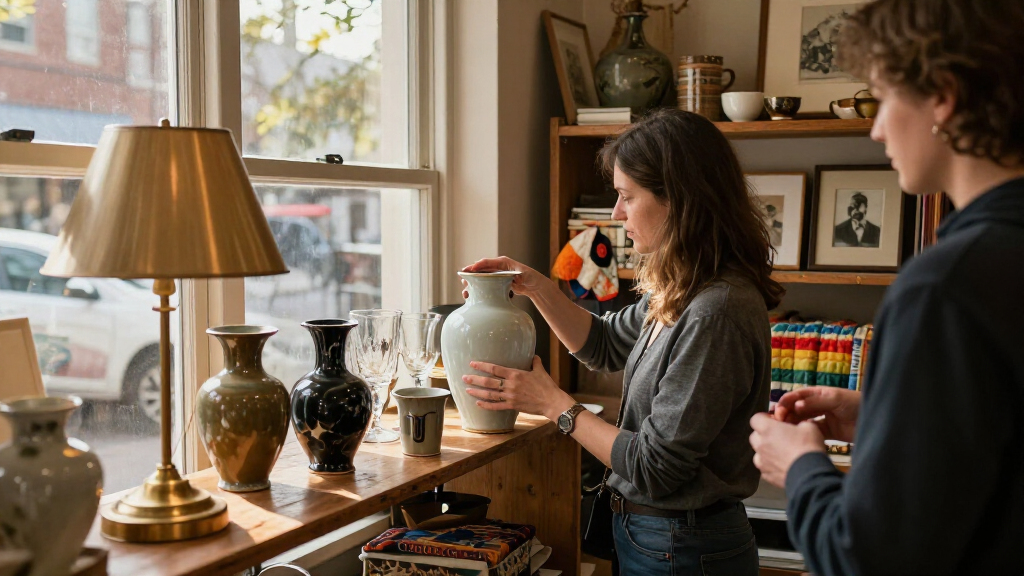
The report describes estate sales and thrift stores as attracting a younger crowd than in the past, including Gen Z shoppers looking for clothing, lighting and other finds. Its writer contrasts earlier visits, when younger buyers were uncommon, with more recent sales where young shoppers join the queues. That account is an observation, not a measure of the entire resale market, but it illustrates how secondhand shopping has become more visible as a cultural practice.
Several figures cited in the report suggest commercial growth, though they measure different markets and should not be treated as direct sales totals. ThredUp’s 13th Annual Resale Report projects the global secondhand apparel market will reach about $367 billion by 2029, including roughly $74 billion in the United States. The report uses apparel as an indicator of broader resale and lifestyle trends; those estimates are not figures for furniture.
For home furnishings, Mordor Intelligence estimates the global secondhand furniture market will grow from about $47 billion in 2025 to $62.7 billion by 2031. Technavio separately projects the market will expand by about $11.24 billion between 2025 and 2030. The Livingetc report also cites Vinterior, a UK vintage furniture marketplace, as saying sales to interior designers were up 53% year on year in 2026, and a 2026 1stDibs designer survey in which 81% of respondents said they sourced furniture and decor dating from the 1920s to the 1990s.
Vintage Becomes a Design Signal
The change is more than a matter of where people shop. The report describes a shift in the status attached to home furnishings: visible wear and provenance, once associated mainly with budget-conscious buying or practical reuse, can now convey taste, rarity and sustainability. Designers’ use of older pieces also places vintage objects alongside new products in higher-end projects rather than treating them as temporary substitutes.
For buyers, this can broaden the options beyond mass-produced furniture and create demand for pieces that are difficult to find or reproduce. It can also make shopping less predictable: a particular item may be available only once, and condition, age and history can vary. The cited market estimates point to business opportunities for resale platforms and sellers, but they do not show that every category, region or price band is growing at the same rate.
The shift may also complicate the idea that secondhand is always the cheaper choice. As vintage becomes a sought-after design category, a piece’s maker, condition and provenance can affect its price. The source describes these cultural and market forces but does not provide comparative pricing data showing whether shoppers generally spend less on resale than on new furnishings.
vintage mid-century modern furniture
As an affiliate, we earn on qualifying purchases.
As an affiliate, we earn on qualifying purchases.
From Estate Sales to Design Projects
The Livingetc account grounds the trend in a change in who attends estate sales and what they seek. Its writer recalls learning to shop secondhand with a grandmother and later turning to thrift stores for tables, art and clothing. Earlier, the writer says, estate-sale lines were made up largely of retirees, dealers and some designers; more recently, younger shoppers have become more visible. This is personal reporting, not a representative survey, but it provides a concrete example of the change the article examines.
The report links that shift to changing ideas of value. Buyers may be looking for distinctive design, material quality and a story, as well as affordability or environmental benefits. It points to reclaimed materials in contemporary projects, including a kitchen island made from a London plane tree that had stood in Soho Square. Such examples show how a material’s previous life can become part of a design’s appeal; they do not establish how common that practice is across the industry.
The wider market figures in the report come from separate research organizations and platforms, with different methods, categories and forecast periods. The apparel estimate, furniture projections and designer survey offer indications of activity, but they are not interchangeable measures. The designer survey describes sourcing habits among respondents, while forecasts estimate possible future market size rather than confirm future outcomes.
“Thrifting is no longer part of the subculture. It’s the marketplace.”
— Livingetc report
What the Market Figures Cannot Show
The figures do not establish a single, comparable measure of growth across resale apparel and secondhand furniture. The source does not provide the underlying methodology for each forecast, nor does it report realized sales against those projections. The cited 53% year-on-year increase in Vinterior sales to designers is attributed to the marketplace, but the report does not specify the comparison period or provide a longer sales history.
It is also unclear how much of the growth reflects sustainability concerns, price, the search for one-of-a-kind pieces, or other factors. The report describes these as overlapping motivations, but does not quantify their relative influence. Its account of younger estate-sale shoppers is an observed trend rather than a population-wide measure, and the 1stDibs survey figure applies to its respondents, not necessarily all interior designers.
How Resale Demand Develops
The cited forecasts point to continued expansion in secondhand furniture through 2030 and 2031, but they remain projections. Future sales data will show whether the growth materializes and whether demand spreads beyond specialist vintage platforms and design projects. Comparable figures on prices, buyer demographics and the share of newly furnished homes using secondhand pieces would help clarify the scale of the change.
For now, the report presents a clear change in design culture, supported by market forecasts and survey findings but not a definitive account of every shopper’s behavior. The next test is whether vintage sourcing remains a sustained part of interior design as resale markets grow, rather than a preference concentrated among particular shoppers and high-end projects.
Key Questions
What is changing in interior design?
Vintage and secondhand furnishings are becoming more prominent, with visible age, material history and provenance increasingly treated as desirable design features, according to the Livingetc report.
How large is the secondhand furniture market?
Mordor Intelligence estimates the global market at about $47 billion in 2025 and projects it could reach $62.7 billion by 2031. These are estimates and forecasts, not confirmed future sales.
Are younger people driving the trend?
The report describes more Gen Z shoppers at estate sales, but that observation is not a representative measure of all buyers. It also cites wider resale-market forecasts, which do not isolate growth by age group.
Does buying vintage always cost less?
The report does not provide price comparisons between new and secondhand furniture. Vintage prices can depend on factors such as condition, maker and provenance, so the cited material does not show that resale is always cheaper.
Source: rss
Fall Picks
fall essentials
As an affiliate, we earn on qualifying purchases.