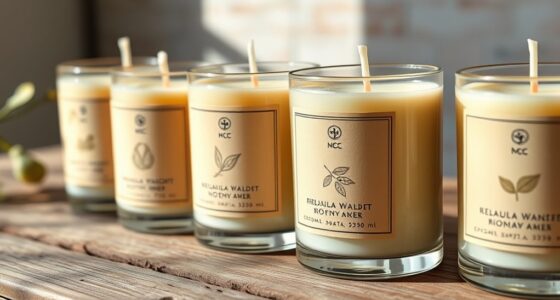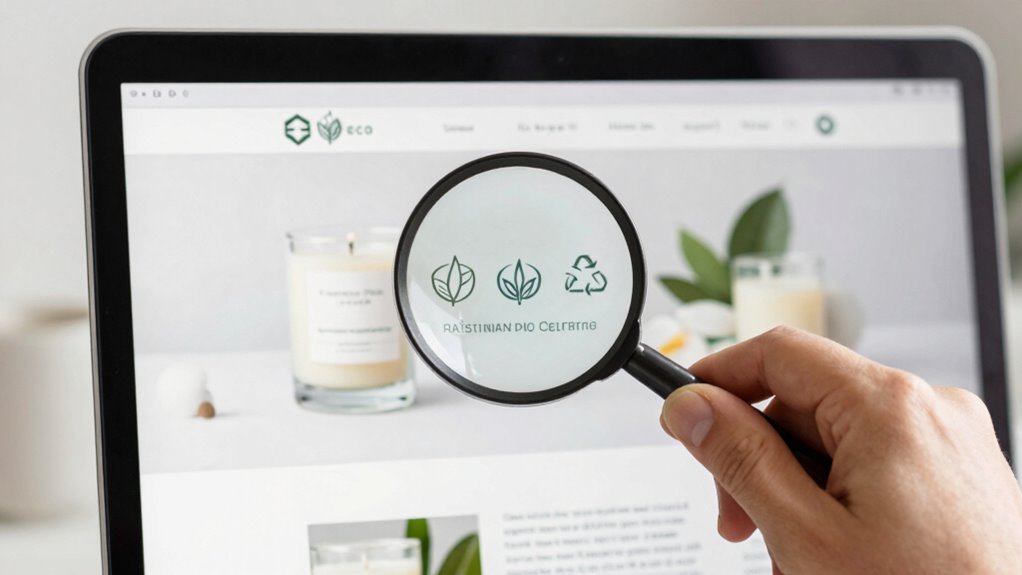

When evaluating eco claims on candle websites, start by checking if they mention sourcing from renewable resources like soy or beeswax and avoid vague terms like “natural.” Look for clear details on eco-friendly packaging, certifications such as FSC or Green Seal, and transparency about manufacturing practices. Be cautious of superficial marketing and research the brand’s sustainability efforts. If you want to distinguish genuine eco-friendly candles from greenwashed ones, keep exploring these key signs for smarter choices.

Get decor and gifts delivered free with Prime
- Fast, free delivery on millions of items
- Prime Video, Amazon Music and more included
- Member-only deals all year
Key Takeaways
- Check if the brand specifies sourcing from renewable resources like soy, beeswax, or coconut oil.
- Verify if packaging is recyclable, biodegradable, or compostable, and look for eco-conscious packaging details.
- Look for credible third-party certifications such as FSC or Green Seal to support eco claims.
- Review product descriptions for transparency about manufacturing practices and use of renewable energy.
- Approach claims skeptically, research the brand’s sustainability practices, and prioritize genuine eco-conscious efforts.
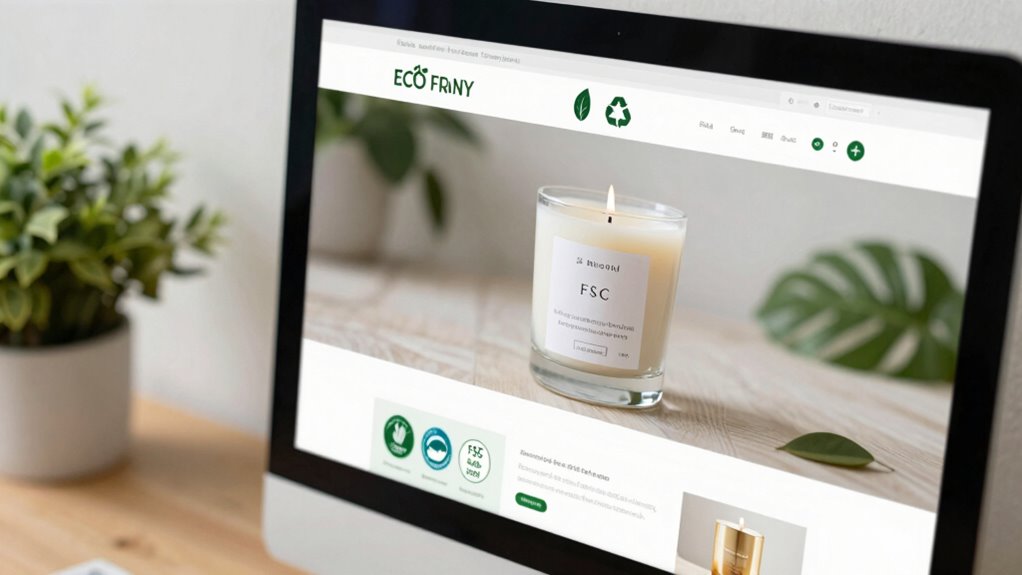
With so many candle brands claiming eco-friendly credentials, it’s important to scrutinize these assertions carefully. When you visit a candle website, look beyond the marketing buzzwords and dig into the details. One of the first things to check is whether the company mentions sustainable sourcing. Do they specify that their wax comes from renewable resources, like soy, beeswax, or coconut oil? Or do they simply use vague terms like “natural” or “eco-friendly” without further explanation? Brands committed to sustainability will often highlight their sourcing practices, ensuring their ingredients don’t contribute to deforestation or environmental harm. If they don’t provide transparency about where their wax comes from, that’s a red flag. Additionally, consider whether they mention renewable resources in their product descriptions, as this indicates a genuine commitment to sustainability.
Eco friendly packaging is another crucial aspect to consider. Does the brand use recyclable, biodegradable, or compostable materials for their containers and fillers? Many companies now emphasize minimal waste and eco-conscious packaging, but some might still rely on plastic wraps or non-recyclable boxes. Check if the website mentions their packaging policies or provides details about their efforts to reduce environmental impact. If they don’t specify, it’s worth questioning whether they truly prioritize sustainability or are just using green labels as marketing tools.
Check if the brand uses recyclable, biodegradable, or compostable packaging and clearly shares their sustainability efforts.
You should also be wary of claims that sound too good to be true. Phrases like “zero impact” or “completely eco-friendly” are often exaggerated unless backed up with concrete evidence. Look for third-party certifications or seals from reputable organizations, such as the Forest Stewardship Council (FSC) or Green Seal, which indicate that the company adheres to recognized environmental standards. These certifications can give you confidence that the brand’s eco claims are legitimate, not just marketing jargon.
Another step is to read the product descriptions carefully. Many companies include details about their manufacturing process, including whether they use renewable energy sources or implement eco-conscious production methods. If this information isn’t readily available, don’t hesitate to reach out directly to ask about their sustainability practices. Transparency isn’t just a bonus; it’s a sign that a brand genuinely cares about its ecological footprint.
Ultimately, evaluating eco claims on candle websites requires a mix of skepticism and research. By paying close attention to sustainable sourcing, eco friendly packaging, third-party certifications, and transparency, you can make more informed choices. This way, you support brands that genuinely prioritize environmental responsibility rather than falling for superficial green marketing.
As an affiliate, we earn on qualifying purchases.
Frequently Asked Questions
How Can I Verify the Authenticity of Eco Claims?
You can verify eco claims by checking if the candle brand uses sustainable packaging and practices ethical sourcing. Look for certifications like FSC or Fair Trade, which prove sustainable and ethical practices. Research the company’s transparency about their sourcing and packaging materials. If they openly share their supply chain info and use eco-friendly packaging, it’s a good sign they’re genuine about their eco claims. Always trust brands that prioritize sustainability and transparency.
Are Eco-Friendly Candles More Cost-Effective Long-Term?
Eco-friendly candles often prove to be more cost-effective long-term, especially when you consider scent longevity and wax variations. You might find that natural waxes like soy or beeswax burn cleaner and last longer, saving you money over time. While they sometimes cost a bit more upfront, their durability and richer scents mean you replace them less often, making them an economical choice for eco-conscious candle lovers.
What Certifications Should I Look for on Eco Candles?
You should look for certifications like USDA Organic, FSC, or Fair Trade, which guarantee eco-friendly sourcing and production. These certifications often indicate scent sustainability by confirming natural ingredients and eco-friendly packaging. Check if the candle’s packaging highlights eco friendliness, such as biodegradable or recyclable materials. Certifications help verify that the candle aligns with your values, making sure you’re choosing products that prioritize sustainability in scent, packaging, and overall eco impact.
Do Eco Claims Vary by Candle Scent or Type?
You can’t judge eco claims by scent or candle type alone; they often vary like chalk and cheese. Different candle types, whether soy, beeswax, or palm-based, may have distinct eco claims. Scent variations usually don’t impact the eco credentials, but some scented candles might contain synthetic fragrances, which could compromise eco status. Always check labels for certifications and ingredients, since eco claims can differ regardless of scent or type.
How Do Eco Candle Ingredients Impact Indoor Air Quality?
Eco candle ingredients, especially natural additives, notably impact indoor air quality by reducing indoor pollutants. When you choose candles with natural waxes and additives, you’re less likely to introduce harmful chemicals into your home. These natural ingredients burn cleaner, emitting fewer pollutants and toxins. As a result, your indoor environment stays healthier, minimizing respiratory irritation and promoting better air quality overall. Always check ingredient labels for natural components to guarantee you’re making eco-friendly choices.
Conclusion
When shopping for eco-friendly candles, remember that only about 20% of consumers verify eco claims before buying. By critically evaluating claims on candle websites, you guarantee you’re truly choosing sustainable options. Don’t be fooled by vague labels—look for certifications and transparent ingredients. Doing so not only supports eco-conscious brands but also helps reduce environmental impact. Next time, take a moment to scrutinize those claims; your conscious choices make a real difference.
Fall Picks
fall essentials
As an affiliate, we earn on qualifying purchases.