
When you see eco-labels like “organic,” “natural,” or “non-toxic” on candles, understand they can be misleading. “Organic” means ingredients come from sustainable farming but doesn’t guarantee purity or scent, and the candle could still have synthetic additives. “Natural” suggests minimal processing but may not be eco-friendly or free from chemicals. “Non-toxic” claims aren’t always verified, so always check ingredient lists and certifications to learn what truly qualifies. To uncover the real details, keep reading.
Key Takeaways
- “Organic” indicates ingredients from sustainable farming but doesn’t guarantee ingredient purity or absence of synthetic additives.
- “Natural” suggests minimal processing with plant-based or natural sources, but does not ensure sustainability or absence of chemicals.
- “Non-Toxic” labels imply safety but can be misleading; always check ingredient lists for harmful chemicals or synthetic fragrances.
- Labels alone don’t guarantee safety or eco-friendliness; verify certifications and ingredient transparency for informed choices.
- Understanding label limitations helps distinguish truly eco-friendly candles from those with only marketing claims.
Understanding the Meaning of “Organic” in Candle Ingredients
Have you ever wondered what “organic” truly means when it comes to candle ingredients? When a candle is labeled organic, it indicates that the ingredients, like wax and essential oils, come from sustainable farming practices that avoid synthetic pesticides and fertilizers. This promotes environmental health and conserves resources. Organic certification also emphasizes ingredient transparency, so you can trust that what’s listed is what’s in your candle without hidden additives or chemicals. Choosing organic candles supports farmers who prioritize eco-friendly methods, reducing your environmental impact. It’s about more than just the label; it’s about knowing that your candle’s ingredients are produced responsibly, ensuring safer, cleaner burning options for your space and the planet. Understanding organic certifications can help you make more informed choices.
What Does “Natural” Signify in Candle Production?
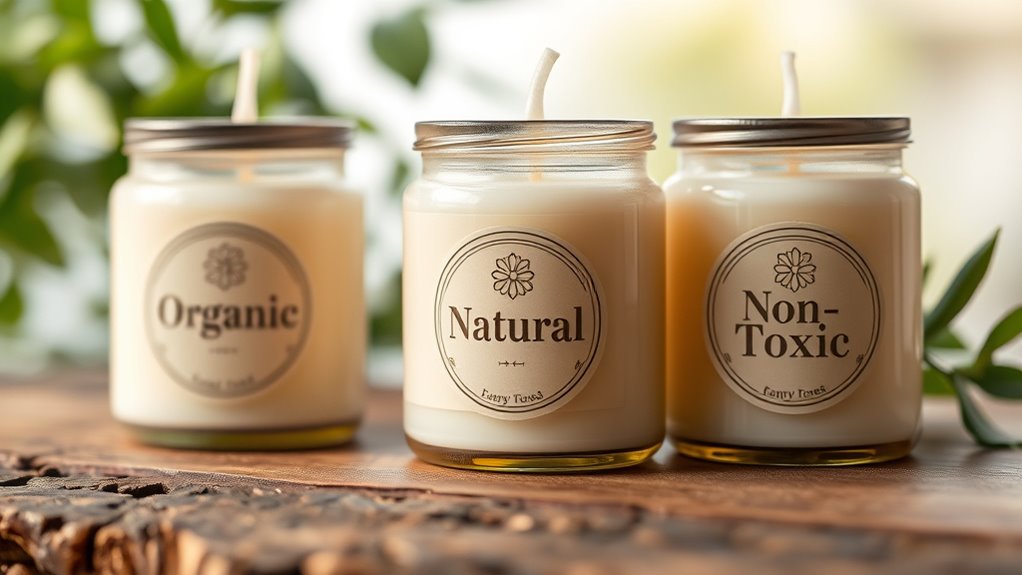
When it comes to candles, the label “natural” suggests a product made from ingredients that occur in nature and haven’t been heavily processed or synthetically altered. It indicates a focus on ingredients derived from plants, beeswax, or other natural sources, emphasizing purity and simplicity. However, “natural” doesn’t guarantee sustainability or ethical manufacturing, so you should look for additional certifications. Using beginners guides can help you better understand the different terms and certifications to look for when choosing natural candles. Recognizing eco-friendly practices in production can also help ensure you’re selecting truly sustainable options. Understanding raw materials used in candle making can further assist in making eco-conscious choices. Being aware of essential oils and other natural additives can enhance your understanding of a candle’s ingredients and their benefits.
The Truth Behind “Non-Toxic” Labels and Safety Claims

Although the label “non-toxic” suggests a product free from harmful chemicals, it can be misleading without proper context. Many candles labeled as “non-toxic” still contain chemical additives that might cause concern. Manufacturers often rely on vague claims or incomplete information, making labeling accuracy critical. Just because a candle is marketed as “non-toxic” doesn’t guarantee it’s free from all potentially harmful substances; some chemicals may be present in small amounts or used in ways that don’t pose immediate risk. To truly understand safety claims, you need to scrutinize ingredient lists and ask whether the label reflects the product’s actual composition. Additionally, awareness of legislative changes can influence what claims are legally permissible on product labels. Recognizing the difference between organic and natural certification can also help consumers make more informed choices. Being aware of chemical regulations can further clarify what substances are permitted in candle formulations. Moreover, understanding consumer rights regarding product transparency can empower individuals to advocate for clearer labeling. Remember, a clear, truthful label is your best tool for evaluating whether a candle is genuinely safe and non-toxic.
Common Misconceptions About Eco-Labels on Candles

Many people assume that an eco-label guarantees safety or purity, but that’s not always the case. Just because a candle has an organic label doesn’t mean it’s free from all contaminants. It’s important to look beyond the label and understand what it really signifies. For example, air quality can be affected by various factors beyond what eco-labels specify. Additionally, certification standards may vary between labels, leading to different levels of product safety and purity. Being aware of regulatory compliance can help consumers make more informed choices about eco-friendly candles. Recognizing the manufacturing processes behind the labels can also provide insight into the overall environmental impact of the product.
Labels Don’t Equal Safety
Eco-labels on candles can be misleading because they don’t always guarantee safety or health benefits. Many consumers assume that a label indicates high safety standards, but label accuracy varies. Just because a candle is labeled “natural” or “non-toxic” doesn’t mean it’s completely safe or free from harmful ingredients. This can lead to skewed safety perceptions, making you believe you’re protected when you might not be. It’s important to remember that labels are not strictly regulated across all brands. Additionally, wall organization systems and other decor labels can similarly be misleading about product safety and quality. Furthermore, the lack of standardization in precious metals dealer certifications can make it difficult to verify the authenticity and security of investments in gold and other assets. Consumers should also be aware of product labeling practices, which can sometimes obscure important safety information. Being aware of cookie and privacy policies can help consumers better understand how product information is collected and used, which is crucial for making informed choices.
Organic Doesn’t Mean Pure
Have you ever assumed that a candle labeled “organic” is automatically pure and free of harmful ingredients? Many think that “organic” guarantees safety, but that’s not always true. Some candles with organic labels still contain synthetic fragrances or chemical additives to enhance scent or appearance. These additives can emit volatile organic compounds (VOCs) when burned, which may irritate your lungs or cause allergic reactions. Just because a product is labeled organic doesn’t mean it’s completely free of synthetic components. Always check the ingredient list and look for transparency from brands. Remember, eco-labels can be misleading, and “organic” doesn’t automatically mean “safe” or “pure.” Making informed choices requires understanding that labels are just part of the story. Understanding VOCs can help you make better decisions about candle safety and quality. Additionally, awareness of aura indicators can provide insights into environmental and emotional harmony. Recognizing how quality assurance practices impact product safety can further guide your choices in selecting truly safe candles. Being aware of water safety cues can also be beneficial, especially when candles are used around water features or in outdoor settings.
How to Read and Interpret Candle Labels Effectively

Ever wonder how to make sense of candle labels quickly and accurately? Reading labels effectively helps you choose safer, eco-friendly candles. Start by checking the fragrance ingredients—look for natural oils and avoid synthetic scents. Pay attention to the candle burn time; longer burn times often mean better quality and fewer harmful additives. Also, review any certifications or eco-labels that indicate organic or non-toxic ingredients. Keep an eye out for ingredient lists, noting any potentially harmful chemicals. Understanding these elements helps you compare options easily and select candles that align with your eco-conscious values. Additionally, being aware of label transparency trends can inform your choices if you’re interested in integrating soundscapes with your eco-friendly products. Being conscious of ingredient clarity can further ensure you’re selecting products free from hidden or questionable substances. Recognizing certification marks on packaging can also help verify the authenticity of claims made by manufacturers.
Key Ingredients to Look for and Avoid in Candles
Choosing the right candle starts with understanding its ingredients. Avoid candles with synthetic fragrances, as they can release harmful chemicals when burned, impacting your health and indoor air quality. Look for candles made with natural essential oils or fragrance-free options. Also, steer clear of paraffin wax, a petroleum byproduct that can emit toxins like benzene and toluene. Instead, opt for candles made from beeswax, soy, or other natural waxes, which burn cleaner and produce less soot. Pay attention to labels and ingredient lists, and choose products that specify natural, non-toxic components. By being mindful of these key ingredients, you guarantee your candle choices are safer for both your health and the environment.
The Impact of Eco-Friendly Labels on Health and Environment

Eco-friendly labels on candles can improve your health by reducing exposure to harmful chemicals. They also help protect the environment by lowering pollution and conserving resources. Understanding these impacts empowers you to make better choices for yourself and the planet.
Health Benefits of Eco Labels
Have you ever wondered how eco labels on candles can benefit your health and the environment? These labels often indicate products free from harmful chemicals, reducing your exposure to toxins. Choosing eco-labeled candles can also enhance your well-being by maximizing essential oil benefits, which can uplift your mood and promote relaxation. Plus, eco-friendly candles tend to have better candle scent longevity, so you enjoy your favorite aromas longer.
- Reduced exposure to synthetic fragrances and toxins
- Enhanced mood and relaxation through natural ingredients
- Better air quality by avoiding harmful emissions
- Longer-lasting scents due to natural components
Environmental Impact Reduction
Because eco labels identify candles made with sustainable and non-toxic materials, they substantially reduce environmental harm during production and disposal. By choosing eco-friendly candles, you help lower pollution and conserve resources. Many brands use solar power in manufacturing processes, decreasing reliance on fossil fuels and reducing carbon footprints. Additionally, these candles often come in biodegradable packaging, which decomposes naturally and prevents landfill accumulation. This approach minimizes waste and limits plastic pollution. Supporting such products encourages manufacturers to adopt greener practices and invest in renewable energy sources. Your choices directly impact the environment by promoting sustainable production methods and reducing harmful emissions. Ultimately, eco-labeled candles help protect ecosystems and promote a healthier planet for future generations.
Certification Standards and What They Guarantee

Certification standards serve as clear benchmarks that guarantee candles meet specific environmental and health criteria. These standards ensure that products undergo rigorous certification processes, verifying label authenticity and ingredient safety. When a candle bears a recognized eco-label, you can trust it aligns with strict guidelines on sustainability and non-toxicity. Certification bodies assess factors like raw materials, manufacturing practices, and emissions, providing transparency and accountability. This way, you avoid misleading claims and make informed choices. Keep in mind that not all labels are equally strict; understanding what each certification guarantees helps you select truly eco-conscious candles. Ultimately, certification standards protect your health and the environment by setting consistent, reliable benchmarks for eco-friendly products.
- Certification processes verify ingredient safety and sustainability.
- Labels guarantee compliance with strict environmental and health standards.
- Certification bodies assess manufacturing practices and emissions.
- Recognized standards ensure label authenticity and transparency.
Tips for Choosing Truly Eco-Conscious Candles

When selecting truly eco-conscious candles, it’s important to look beyond just labels and understand what makes a product genuinely sustainable. Consider whether you prefer scented or unscented candles, as scent sources impact eco-friendliness. Scented candles often use synthetic fragrances, while natural options rely on essential oils. Also, pay attention to candle burning techniques; proper practices like trimming wicks and avoiding drafts reduce soot and waste. The table below highlights key eco-friendly features:
| Feature | Scented or Unscented | Burning Technique |
|---|---|---|
| Natural ingredients | Unscented | Trim wick regularly |
| Eco-friendly wax | Scented | Burn in well-ventilated spaces |
| Minimal packaging | Unscented | Keep candles away from drafts |
| Non-toxic dyes | Scented | Avoid overburning |
| Renewable sources | Both | Use candle snuffers instead of blowing |
Choose wisely to ensure your candles align with your eco-values.
Questions to Ask When Shopping for Sustainable Candles

Shopping for sustainable candles requires asking the right questions to guarantee you’re making eco-conscious choices. Don’t fall for myths; myth busting is essential to avoid misleading labels. Focus on label literacy—understanding what terms like “organic,” “natural,” and “non-toxic” truly mean. Ask about the candle’s ingredients, sourcing, and manufacturing process to verify sustainability claims. Is the wax renewable? Are dyes or fragrances synthetic? Does the brand prioritize eco-friendly packaging? Clarify these points before purchasing. Remember, a well-informed shopper can distinguish genuine eco-labels from marketing tricks. Prioritize transparency and ask questions that reveal the true environmental impact. This way, you ensure your candle choices align with your sustainability values and support brands committed to genuine eco-conscious practices.
Frequently Asked Questions
How Do Eco-Labels Influence Candle Burning Safety?
Eco-labels influence your candle burning safety by guiding you to choose options that prioritize indoor air quality and flame safety. When you pick candles with eco-labels like organic or non-toxic, you’re reducing exposure to harmful chemicals and ensuring cleaner air indoors. This helps prevent potential respiratory issues and fire hazards, making your candle experience safer and healthier. Always follow safety tips for flame control and ventilation to maximize safety.
Are Organic Candles More Environmentally Friendly Than Others?
Yes, organic candles are more environmentally friendly because they typically use sustainable farming practices that reduce chemical use and soil degradation. Plus, they often come with eco-conscious packaging that minimizes waste. By choosing organic candles, you support healthier ecosystems and promote greener manufacturing, making your candle choice more sustainable overall. You’re actively reducing your environmental impact and encouraging better farming and packaging practices.
Can Eco-Labels Guarantee Allergen-Free Candles?
Eco-labels can’t guarantee allergen-free candles, but allergenic claims and label transparency help you make informed choices. Manufacturers who clearly disclose ingredients and avoid common allergens give you more confidence in their products. Always read the label carefully, and look for certifications or detailed ingredient lists that specify allergen-free ingredients. While eco-labels signal environmental practices, they don’t necessarily confirm that a candle is hypoallergenic.
What Are the Long-Term Health Benefits of Eco-Friendly Candles?
Using eco-friendly candles can boost your long-term wellness and support respiratory health. These candles contain fewer toxic chemicals, reducing your exposure to airborne irritants that can cause allergies or breathing issues over time. By choosing natural ingredients, you promote a cleaner indoor environment, helping you breathe easier and maintain overall health. Consistently opting for eco-friendly candles may contribute to a healthier lifestyle and improved respiratory well-being in the long run.
Do All Eco-Labels Undergo Strict Certification Processes?
You might think all eco-labels are rock-solid, but the truth is, certification standards vary widely, and not every label has the same credibility. While some undergo rigorous processes, others rely on vague claims. So, don’t assume a label guarantees eco-friendliness. Always check for trustworthy certification standards to guarantee label credibility. Your vigilance helps you make truly sustainable choices, rather than falling for marketing hype.
Conclusion
Think of eco-labels on candles as a map guiding you through a forest of marketing. By understanding what each label truly means, you can safely navigate toward choices that are kinder to your health and the planet. Don’t just follow the trail of pretty words—dig deeper and ask questions. With this knowledge, you’ll light candles that shine bright with authenticity, turning your space into a sanctuary of sustainability.