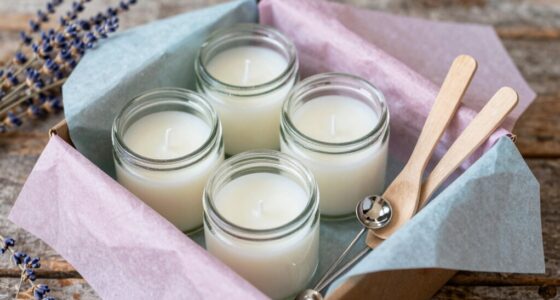
You can transform your wax scraps into charming candles by melting them carefully in a double boiler, adding fragrance oils or color as desired. Use heat-resistant molds or recycled containers, and make sure to position wicks before pouring. Allow your candles to cool completely for a smooth finish, and reuse materials to minimize waste. Follow safety precautions at every step to create beautiful, eco-friendly candles. If you want to discover more tips and creative ideas, keep exploring.

Get decor and gifts delivered free with Prime
- Fast, free delivery on millions of items
- Prime Video, Amazon Music and more included
- Member-only deals all year
Key Takeaways
- Collect and clean wax scraps, then melt them safely using a double boiler or melting pot.
- Reuse containers like candle jars or silicone molds for eco-friendly candle projects.
- Add fragrance oils and colorants during melting to customize your candles.
- Carefully position wicks before pouring melted wax into molds or containers.
- Allow candles to cool completely at room temperature for a smooth, crack-free finish.
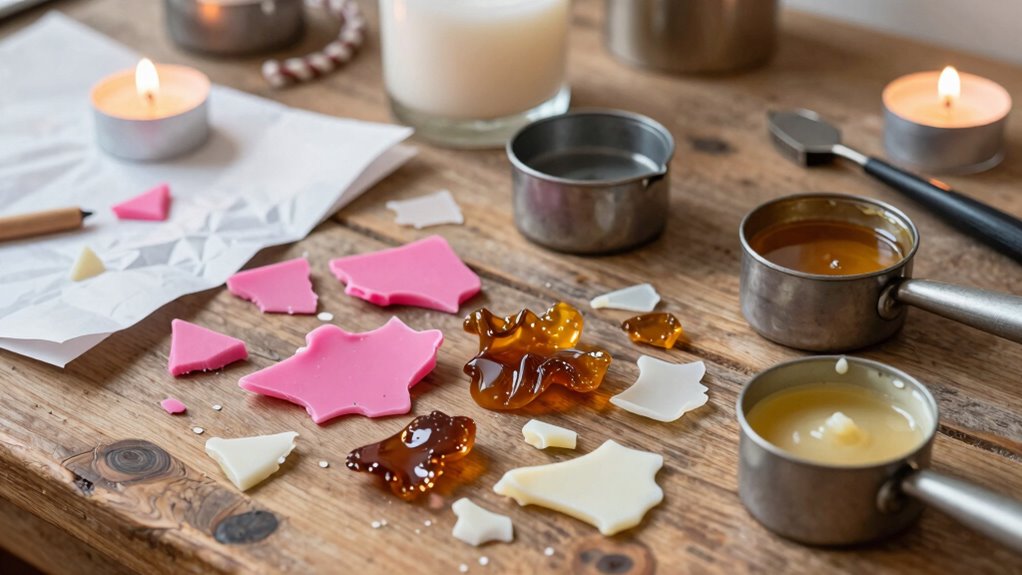
If you’ve ever wondered how to make the most of leftover wax scraps, now’s the perfect time to start. Turning your wax remnants into new projects not only reduces waste but also sparks your creativity. Before diving in, it’s important to prioritize safety precautions. Wax can be flammable, so always work in a well-ventilated area away from open flames or heat sources. Use a double boiler or a dedicated melting pot to gently melt the wax, avoiding direct heat that could cause splattering or fire hazards. Keep a fire extinguisher nearby, and never leave melting wax unattended. When handling hot wax, wear protective gloves and eye protection to prevent burns or splashes. Once your safety measures are in place, sourcing materials becomes the next step. You’ll need your leftover wax scraps, but also consider gathering some additional supplies like old candle jars, silicone molds, wicks, and fragrance oils if you want to add scent. Reusing containers you already have is eco-friendly and cost-effective, but ensure they’re thoroughly cleaned to remove any residual wax or labels that might interfere with your new candles.
When sourcing materials, aim for quality to ensure your projects turn out well. For instance, if you’re adding fragrance oils, choose high-quality, candle-safe scents to avoid issues with scent throw or burning. Silicone molds are popular because they’re flexible and easy to release, but make sure they’re heat-resistant and food-grade if you plan to repurpose kitchen utensils. Wicks should be appropriate for the size and type of your candle, ensuring a safe and steady burn. If you’re using recycled jars or containers, check that they’re heat-resistant and free from cracks or chips that could break when heated.
Once your materials are ready, you can start melting your wax scraps. Use a double boiler setup to melt the wax evenly, stirring occasionally to prevent sticking or burning. As the wax liquefies, you can add fragrance oils or colorants if desired, following the manufacturer’s instructions. Pour the melted wax into your prepared molds or containers, carefully positioning the wicks before the wax cools and hardens. Patience is key here; allow the candles to cool completely at room temperature to prevent cracks or imperfections. By following these steps and emphasizing safety precautions and sourcing materials thoughtfully, you’ll be able to create beautiful, functional candles from your leftover wax scraps while minimizing waste.
Products Worth Considering

Dyson Ball Animal 3 Corded Upright Vacuum

Hisense 85 U6 Pro Series Mini-LED ULED 4K UHD HDR Gaming AI Smart Fire TV (85U6SF Pro)

Bose TV Speaker Compact Soundbar with Bluetooth and HDMI-ARC, Black
As an affiliate, we earn on qualifying purchases.
Frequently Asked Questions
Can Wax Scraps Be Reused for New Candles?
Yes, you can reuse wax scraps for new candles. Recycling techniques like melting and filtering help you reclaim leftover wax efficiently. Upcycling ideas include creating layered candles or unique shapes by combining different wax colors and scents. Just make certain you remove any debris or wick remnants before melting. Reusing wax scraps not only reduces waste but also sparks creativity, allowing you to craft personalized candles while being eco-friendly.
What Types of Wax Are Best for Scrap Projects?
You should use vegetable wax and paraffin wax for scrap projects because they melt easily and blend well. Vegetable wax, like soy, is natural and eco-friendly, perfect for sustainable DIY projects. Paraffin wax, a common choice, offers a smooth finish and good scent throw. Combining these types allows you to create unique candles. Make sure to melt scraps gently and mix thoroughly for the best results in your craft.
How Do I Prevent Cracking in Wax Scrap Creations?
Cracking in wax scrap creations can feel like a disaster, but it’s preventable! To avoid this, keep your wax at a consistent temperature during pouring, usually around 170-180°F. Properly blending fragrance retention and color mixing helps create a smooth surface, reducing stress on the wax as it cools. Use a slow cooling process, and avoid rapid temperature drops to keep your project flawless and crack-free.
Are There Safety Tips When Melting Wax Scraps?
When melting wax scraps, always wear safety gear like gloves and goggles to protect your skin and eyes. Make sure proper ventilation in your workspace to avoid inhaling fumes, especially if you’re using a double boiler or microwave. Never leave melting wax unattended, and keep a fire extinguisher nearby. These precautions help prevent accidents and keep your candle-making process safe and enjoyable.
How Long Do DIY Wax Scrap Projects Typically Last?
Honestly, your wax scrap projects usually last just as long as your patience—so, not very long. Wax recycling and candle preservation often mean these creations are more about the fun and less about longevity. If you keep your candles away from drafts and direct sunlight, they’ll burn longer. But in the end, these DIY projects are meant to be enjoyed now, not stored forever.
Conclusion
Now that you’ve explored these DIY wax scrap projects, you’re ready to transform leftover wax into beautiful, functional creations. With a little creativity and effort, you can turn scraps into charming candles, melts, or decorative accents—kind of like a modern-day alchemist. So, grab your tools, channel your inner Marie Antoinette, and start crafting. Who knew that turning wax scraps into treasures could be as easy and satisfying as a Sunday picnic? Happy creating!