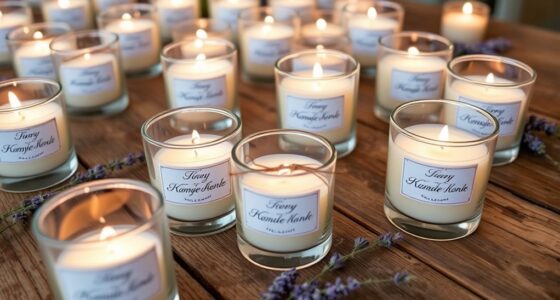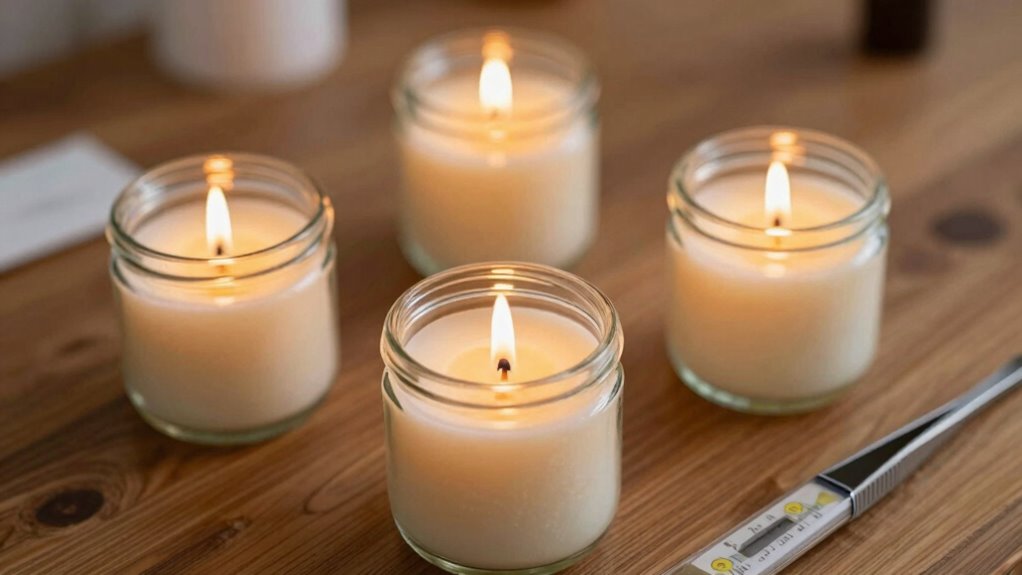
To do DIY candle burn tests as a beginner, start by choosing small candle samples with different waxes and wicks. Light them and watch how the wax melts, noting any pooling, tunneling, or uneven burns. Pay attention to wick performance, such as flickering or soot. Record your observations, adjust wick sizes or wax temperature, and repeat to improve safety and performance. Keep exploring, and you’ll discover even more tips for perfecting your candles.

Get decor and gifts delivered free with Prime
- Fast, free delivery on millions of items
- Prime Video, Amazon Music and more included
- Member-only deals all year
Key Takeaways
- Start with small wax samples and select appropriate wicks for accurate testing.
- Light the candle and observe how the wax melts and how the wick performs during burn.
- Record burn time, flame stability, and any issues like tunneling or flickering.
- Adjust wax temperature and wick size based on observations for better results.
- Repeat tests to compare different waxes and wicks for optimal candle performance.
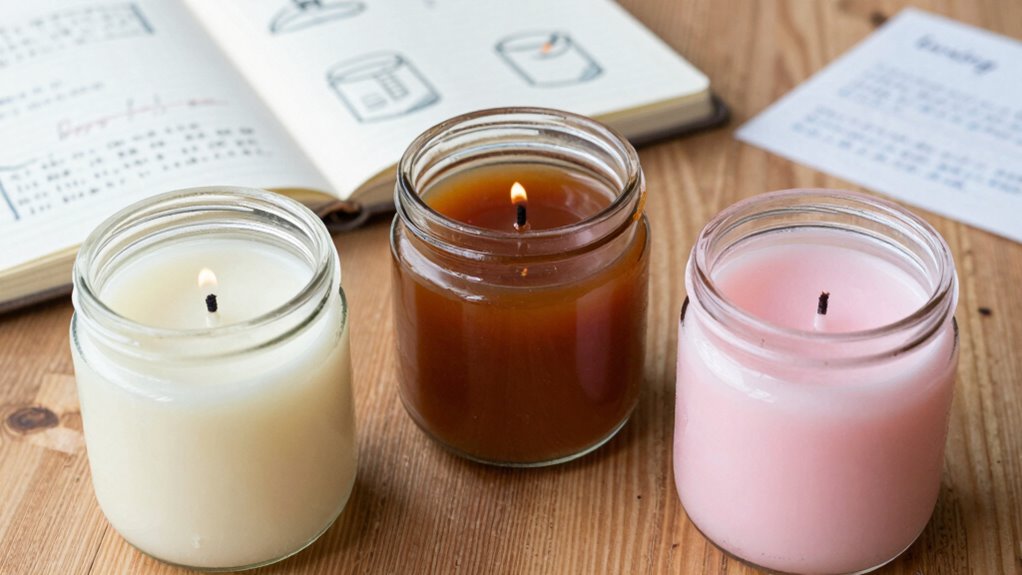
If you’ve ever wondered how different candles burn or want to guarantee your homemade candles are safe and effective, conducting a DIY candle burn test is an easy and informative process. This test helps you understand how your candle’s wax melts, how the wick materials perform, and whether your candle burns evenly. It’s a simple step that can significantly improve your candle-making skills and ensure safety, especially if you’re making candles for others.
Start by choosing a small, representative sample of your candle. Light the wick and observe how the wax melts. One key aspect to watch is the wax melting points. Different wax types have varying melting temperatures, which influence how the candle burns and how quickly the wax pool forms. For example, soy wax melts at around 120°F to 180°F, while beeswax melts closer to 144°F to 149°F. Knowing this helps you select the right wax for your desired burning time and scent throw. When you’re testing, note if the wax melts evenly or if there are cold spots or pooling issues. Uneven melting can indicate that your wax isn’t suited for that particular wick material or that the wax temperature needs adjustment.
Choosing the right wax and monitoring melting points ensures a safe, even, and effective candle burn.
Wick materials play a crucial role in how well the candle burns. Cotton wicks are common, but some candles benefit from wood wicks or wicks with metal cores. During your burn test, observe how the wick interacts with the wax. Does it stay upright? Does it produce a steady, even flame? A wick that’s too thick or too thin can cause problems—either too large a flame that burns too quickly or a flickering, unstable flame. If the wick bothers you by tunneling or drowning in wax, you may need to experiment with different wick materials or sizes. The right wick will create a clean, even burn without excessive soot or flickering. Additionally, understanding the melting points of waxes can help you optimize your candle formulation for safer and more efficient burning. Conducting compatibility tests between different waxes and wick types can also reveal compatibility issues that might affect the burn quality. Conducting these tests and understanding the burn characteristics of your candles can help you troubleshoot issues effectively.
As you conduct these tests, keep notes on burn times, wax melting behavior, and wick performance. This information helps you fine-tune your candle recipes, from selecting the best wax melting points to choosing optimal wick materials. A well-performed burn test ensures your candles are safer, more efficient, and better suited to your preferences. Whether you’re a hobbyist or making candles for sale, understanding these elements through simple testing can elevate your craft and give you confidence in your finished products.
As an affiliate, we earn on qualifying purchases.
Frequently Asked Questions
How Long Should Each Burn Test Last?
You should burn each candle for about 1 to 2 hours during your burn test. This duration allows the wax to melt evenly, helping you observe the candle scent and flame height effectively. Keep an eye on the flame height to make sure it’s not too high, which could be unsafe. This test helps you assess burn quality, scent throw, and overall candle performance for future improvements.
What Safety Precautions Are Necessary During Burn Tests?
You better suit up with safety gear—think goggles and gloves—before tackling that candle burn test, or risk becoming a fiery cautionary tale. Fire hazards lurk around every wick, so keep a fire extinguisher nearby and work in a well-ventilated space. Never leave a burning candle unattended. Taking these precautions guarantees your DIY adventure stays fun, not fiery, keeping you safe from unexpected flames and mishaps.
How Many Burn Tests Are Needed for Accurate Results?
You should perform at least three to five burn tests to get accurate results, especially when evaluating candle fragrance and wicking materials. This helps identify consistent burn behavior and scent throw. Vary the wick types and fragrance loads in each test, recording the results carefully. Multiple tests guarantee your candle burns evenly, prevents tunneling, and optimizes fragrance diffusion, giving you confidence in your final product.
Can Different Wick Types Affect Burn Performance?
Different wick types considerably affect burn performance. For example, wick material influences burn consistency, with cotton wicks providing a steady flame and wood wicks creating a louder crackling sound. A thicker or different material wick can cause uneven burning or excessive soot. By testing various wick types, you’ll see how each impacts burn consistency, ensuring your candle burns evenly and safely, giving you better control over your finished product.
How Do Temperature and Humidity Influence Burn Tests?
Sure, environmental factors like temperature and humidity make candle burn tests more predictable, right? In reality, they’re the sneaky variables that mess with candle stability. High temperatures can cause uneven burning or dripping, while humidity might result in poor wick ignition or soot. You’d think testing was simple, but these factors subtly influence how your candle performs, turning a straightforward test into a game of environmental roulette.
Conclusion
As you finish your candle burn tests, remember that sometimes the smallest details reveal the biggest truths. It’s funny how a simple flame can teach you patience, precision, and a touch of magic—all by coincidence. Your curiosity sparked this journey, and in turn, you’ve gained a deeper understanding of your craft. Keep experimenting, and let each burn remind you that even the tiniest sparks can lead to unexpected discoveries.
Halloween Picks
halloween
As an affiliate, we earn on qualifying purchases.