Candles symbolize hope, guidance, and divine presence across many cultures and religions. In Christian worship, different colors represent purity, sacrifice, and mourning, while in Buddhist and Hindu practices, they signify enlightenment and spiritual awakening. Jewish traditions use candles to mark holy days and create sacred space. Candles are also essential for meditation, memorials, and personal rituals, fostering reflection and connection. Explore further, and you’ll uncover how these timeless symbols deeply influence spiritual practices worldwide.
Key Takeaways
- Candles symbolize spiritual illumination, hope, remembrance, and divine presence across various religious and cultural traditions.
- In Christianity, candle colors and placement enhance prayer, symbolize purity, sacrifice, and divine connection.
- Buddhist, Hindu, and Jewish rituals use candles to represent enlightenment, devotion, and divine sparks.
- Candles are used in meditation, memorials, and modern spiritual practices to foster mindfulness, reflection, and emotional healing.
- Proper lighting, scent, and symbolism of candles deepen spiritual experiences and create sacred, intentional environments.
The Symbolic Meaning of Candlelight Across Cultures
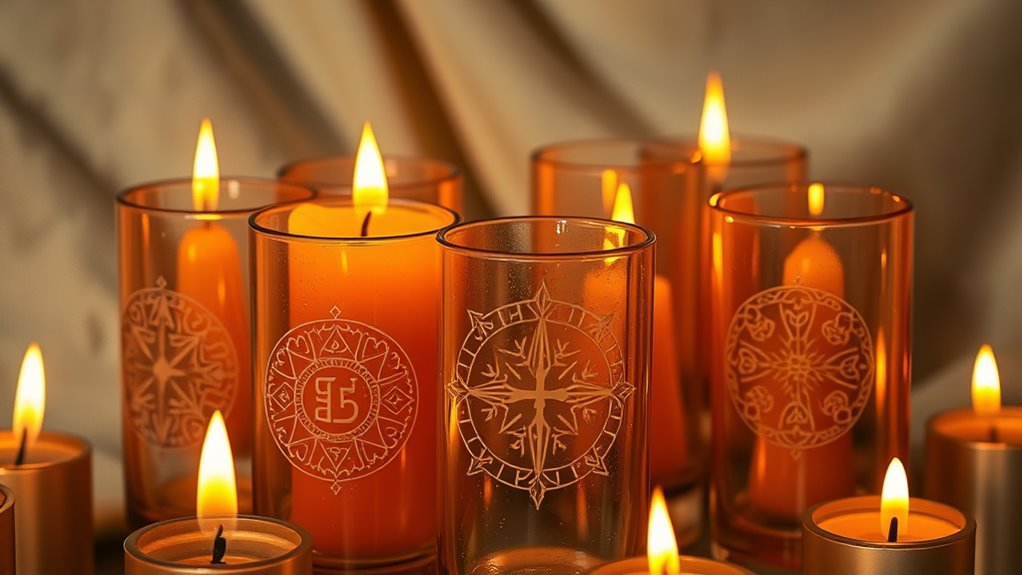
Candlelight has long served as a powerful symbol across various cultures, representing more than just illumination. In terms of historical symbolism, candles often symbolize hope, guidance, and spiritual awakening. Different cultures interpret these meanings uniquely; for example, in some traditions, candles stand for life and vitality, while in others, they symbolize remembrance or divine presence. Cultural variations highlight how candles are used to honor ancestors, mark celebrations, or invoke protection. You might notice that in Asian cultures, candles symbolize enlightenment and wisdom, whereas in Western traditions, they often represent prayer and reflection. These diverse interpretations show that, despite differences, candles universally serve as a bridge between the physical and spiritual worlds, embodying deep-rooted cultural values and timeless symbolism. Additionally, the act of lighting a candle can serve as a mindful practice that fosters practical mindfulness, helping individuals connect with their inner selves and spiritual intentions. Moreover, candles are frequently employed in rituals and ceremonies, emphasizing their role in various spiritual practices. Furthermore, the symbolism of candles often extends to rituals of spiritual purification, emphasizing their role in cleansing negative energies and fostering positive ones.
Candles in Christian Worship and Rituals
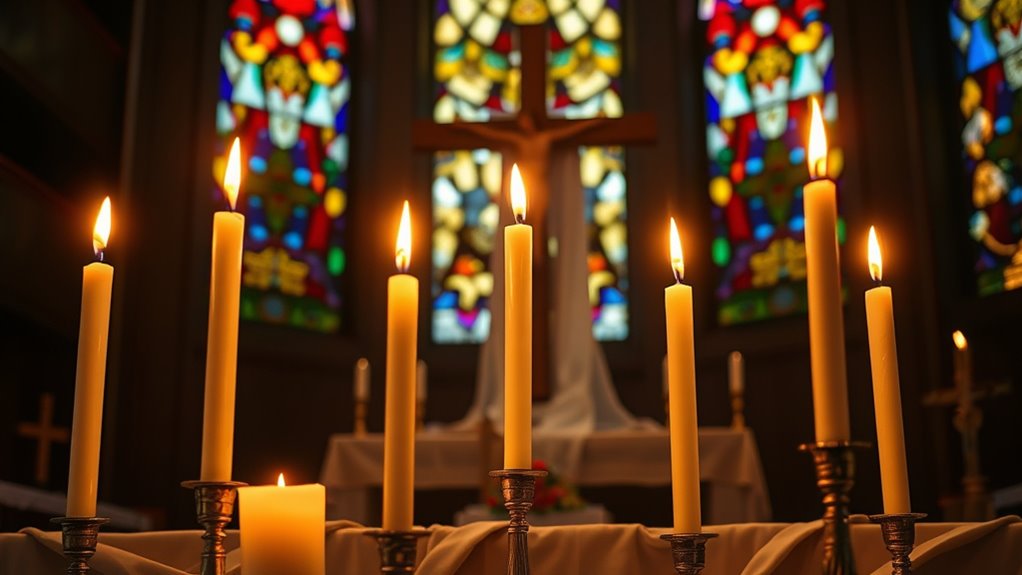
Have you ever noticed how candles play a central role in Christian worship and rituals? The candle color symbolism is significant; white candles often represent purity and Christ, while red symbolizes love and sacrifice. During services, candle placement rituals guide the congregation’s focus—candles are often placed on altars, representing divine presence and prayer intentions. In liturgical settings, the positioning of candles emphasizes themes like hope, remembrance, or the Holy Spirit. Lighting candles can mark the beginning or end of a prayer, creating a sacred atmosphere. These rituals serve to deepen spiritual connection, symbolizing divine light amidst darkness. The thoughtful use of candle colors and placement helps you engage more fully in worship, making the experience both meaningful and spiritually enriching. Additionally, understanding candle symbolism enhances the appreciation of their role in spiritual practices, as the nutritional value of juices can also influence health and well-being.
The Role of Candles in Buddhist and Hindu Practices
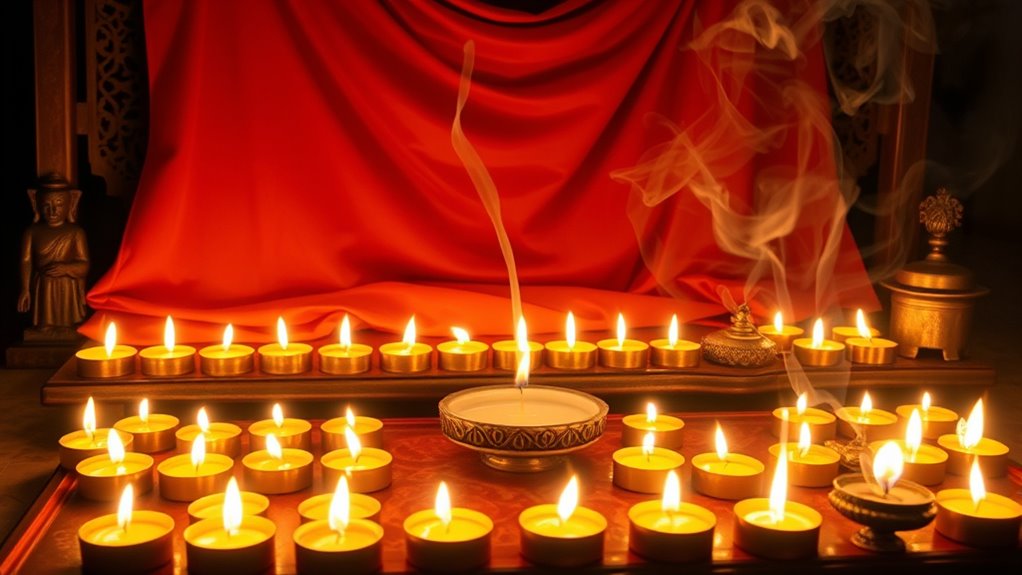
How do candles deepen spiritual practice in Buddhist and Hindu traditions? Candles serve as a focal point during rituals like mantra chanting and prayer offerings, helping you connect with divine energies. They symbolize enlightenment, purity, and the dispelling of darkness. When you light a candle, it creates a sacred atmosphere that enhances concentration and mindfulness. In Hindu ceremonies, candles often accompany offerings to deities, representing devotion and spiritual awakening. In Buddhist practices, the flame reminds you of the Buddha’s teachings and the path to enlightenment. The Imker and apiculturist communities also recognize the importance of natural elements like beeswax candles in creating authentic spiritual experiences. Incorporating spiritual symbolism through candle lighting can deepen your connection to the divine and reinforce your intentions. Using natural materials like beeswax can further enhance the authenticity of your ritual experience. Additionally, the use of sustainable practices in candle-making aligns with spiritual principles of harmony with nature. – Enhance meditation by creating a calming ambiance – Focus attention during mantra chanting – Signify the presence of spiritual light and guidance
Jewish Traditions and the Significance of Candle Lighting
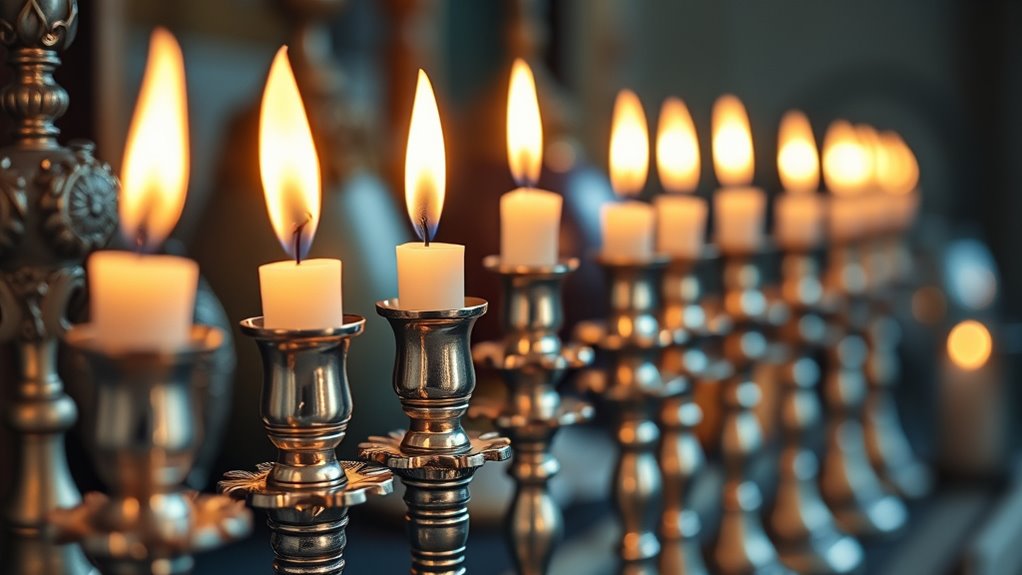
What makes candle lighting so central to Jewish tradition? It symbolizes bringing light into the world and connecting with divine presence. During Shabbat candle lighting, you create a sacred space, marking the passage from mundane to holy time. Kabbalistic symbolism emphasizes the candles as representations of divine sparks and spiritual illumination. Lighting candles also signifies peace, hope, and the reminder of mitzvot. Additionally, understanding home theatre projectors can enhance your experience of spiritual gatherings with optimal visual clarity. Choosing the right lighting techniques can further elevate the spiritual ambiance and focus during these meaningful moments, especially considering the diverse dog breeds that can bring joy and companionship during family celebrations.
Candles as Tools for Meditation and Mindfulness
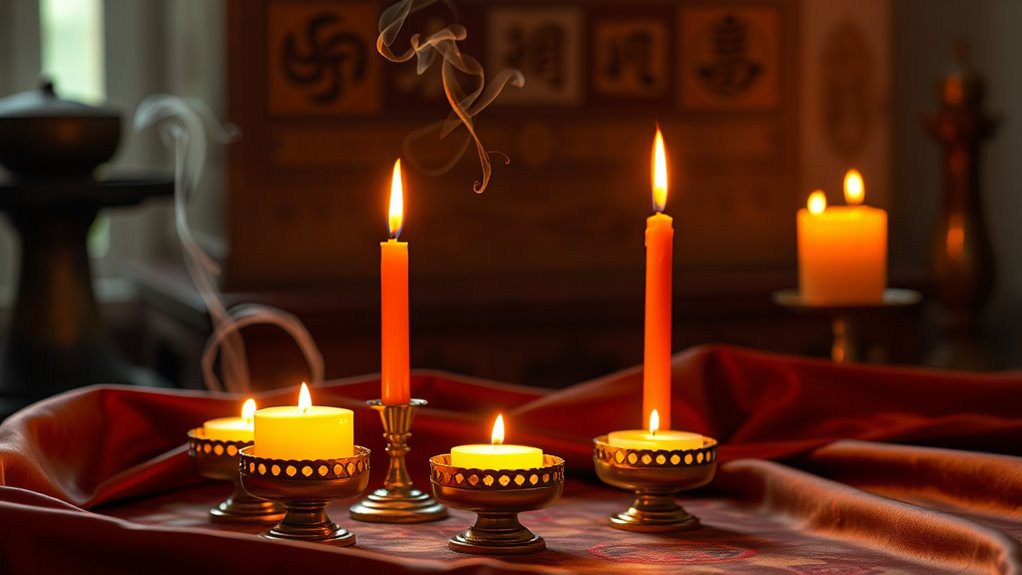
Candles serve as powerful tools for meditation and mindfulness by creating a calm, focused environment. Their gentle glow helps you center your thoughts and deepen your practice. Pay attention to candle color symbolism; for example, white promotes purity, while green encourages healing. When practicing meditation, consider meditation candle placement—placing the candle at eye level or slightly below helps minimize distraction and maintain focus. To enhance your experience, try these tips:
- Use specific candle colors to align with your intention
- Place the candle on a stable surface, away from drafts
- Light the candle during your meditation to anchor your attention
- Incorporating mindfulness techniques can further improve your focus and relaxation during practice. Additionally, understanding narcissistic behaviors in relationships can foster healthier boundaries and emotional resilience. Recognizing the significance of remembrance in spiritual practices can deepen your connection and create a more meaningful experience.
Ceremonial Uses of Candles in Celebrations and Memorials
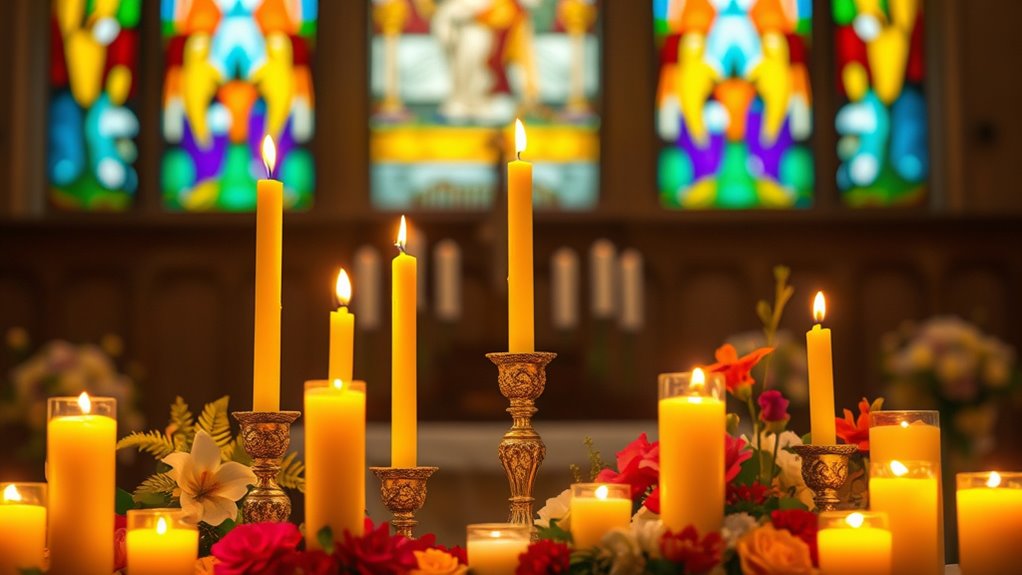
Candles play a powerful role in ceremonies, symbolizing hope, remembrance, and spiritual connection. You might light a candle during special celebrations or memorials to honor loved ones or mark significant events. These practices highlight the deep ritual significance that candles hold in various cultural and spiritual traditions. Additionally, the use of candles in rituals can be seen as a form of divine communication, serving as a medium through which messages and spiritual truths are conveyed. Creating a warm and peaceful environment with candles can also enhance the overall ambience of sacred spaces, fostering a sense of reverence and reflection. The presence of candles can also be influenced by alimony laws, as many traditions incorporate specific rituals that honor commitments and spiritual bonds.
Ritual Significance in Rituals
During ceremonies and memorials, candles serve as powerful symbols that enhance the spiritual atmosphere and deepen your connection to the sacred. The choice of candle color symbolism plays a crucial role in conveying specific intentions, such as white for purity or red for passion. The scent significance also heightens the ritual’s meaning, with fragrances like lavender promoting calmness or frankincense evoking reverence. When you light candles during rituals, you’re not just illuminating the space but actively participating in a symbolic act that aligns your focus and intention. These elements work together to create a sacred environment, fostering reflection and spiritual connection. By understanding candle color symbolism and scent significance, you deepen the ritual’s impact on your spiritual journey. Additionally, awareness of electricity production from bike generators can inspire sustainable practices that support eco-friendly energy use and complement spiritual mindfulness in everyday life. Recognizing the importance of digital literacy in modern education can also help incorporate responsible technology use into spiritual or family activities.
Memorial Candle Practices
Memorial candle practices serve as a poignant way to honor loved ones and mark significant moments of remembrance. When lighting a memorial candle, you often choose colors based on candle color symbolism—white for purity, red for love, or purple for mourning. Remember candle safety rituals: keep the flame in a safe holder, never leave it unattended, and snuff it out gently. These rituals ensure reverence without hazards. The candle’s flame symbolizes the enduring spirit and memory of those lost. Consider this table for deeper meaning:
| Candle Color | Symbolism | Usage |
|---|---|---|
| White | Purity, peace | Funeral services, vigils |
| Red | Love, passion | Remembrance of loved ones |
| Purple | Mourning, spirituality | Memorials, anniversaries |
Through these practices, you keep memories alive with respect and safety. Additionally, incorporating cultural traditions can enrich the significance of candle lighting in various spiritual contexts. Recognizing the potential risks involved ensures that these meaningful rituals are performed safely and respectfully. Understanding candle color symbolism can deepen emotional connections during memorial observances.
Modern Interpretations and Spiritual Significance of Candlelit Practices
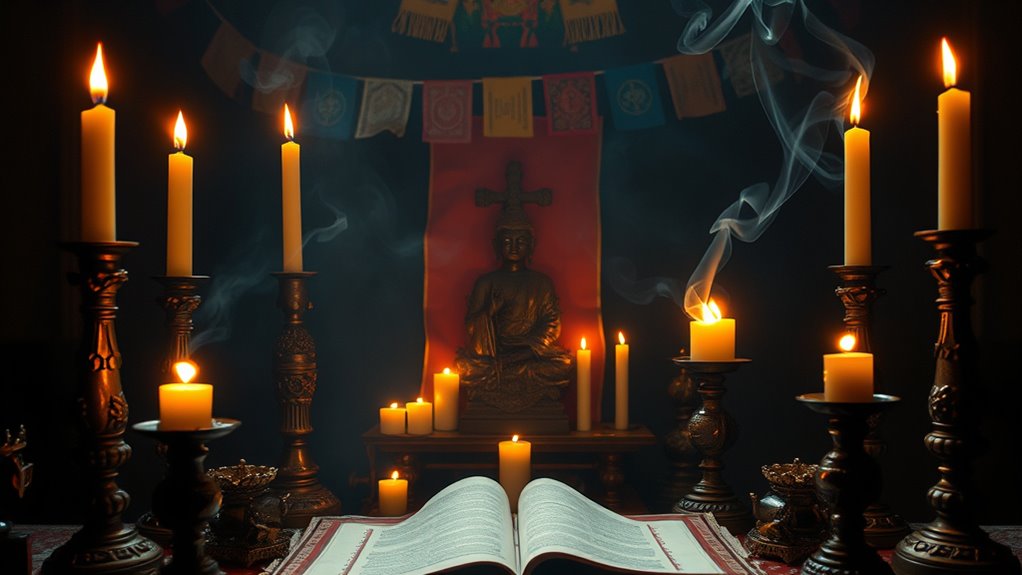
In contemporary spiritual practices, candlelit rituals have taken on new meanings that go beyond their traditional symbolism. You might now see candles used for meditation, energy clearing, or personal reflection, often emphasizing modern candle aesthetics. These practices highlight a focus on mindfulness and self-care, blending ancient significance with current trends.
Modern candlelit rituals emphasize mindfulness, self-care, and personal growth beyond traditional symbolism.
- Many choose candles made from eco-friendly materials to reduce environmental impacts of candles
- Candle colors and scents are selected intentionally to align with specific intentions or energies
- Rituals incorporate candles as symbols of personal growth, healing, and connection in a more individualized way
Frequently Asked Questions
How Do Different Cultures Interpret the Color of Candles?
You’ll find that different cultures interpret candle colors through their unique cultural symbolism and color significance. For example, white often represents purity and peace, while red symbolizes love or passion. In some traditions, green signifies growth and renewal, and black can denote protection or banishing negativity. By understanding these cultural symbolism and color significance, you can better appreciate how each culture uses candle colors to express their spiritual beliefs and emotions.
What Are the Safety Precautions for Using Candles During Rituals?
When using candles during rituals, you should always prioritize safe handling to prevent fire hazards. Keep the candles away from flammable materials, never leave them unattended, and place them on stable, heat-resistant surfaces. Trim the wicks regularly to avoid excessive flames, and guarantee proper ventilation. Following these safety precautions helps you enjoy your ritual practice safely, minimizing risks and ensuring a respectful, meaningful experience.
Can Candles Be Used to Communicate With Spirits or Ancestors?
Yes, you can use candles for spiritual communication and ancestor veneration. Light a candle to create a focused, sacred space, inviting spirits or ancestors to connect. Keep your intentions clear and maintain respectful silence. Use specific colors or scents associated with your purpose. Remember, candles serve as a bridge for your intentions, helping you establish a deeper spiritual connection during your rituals.
How Do Candle Scents Influence Spiritual Practices?
Imagine your favorite scent guiding your meditation—candle scents deeply influence your spiritual practice. Aromatherapy benefits come from choosing scents like lavender for calm or sage for cleansing. You can enhance your experience by selecting scents that align with your intention; for example, sandalwood for grounding. Scent selection tips include considering your goals and personal preferences, allowing the aroma to amplify your connection and deepen your spiritual journey.
Are There Specific Types of Candles Recommended for Meditation?
For meditation, you should choose calming meditation candle types like unscented beeswax or soy candles, as they promote focus and relaxation. Recommended candles for meditation often have a soft glow and minimal scent to avoid distractions. Opt for simple, natural options that create a peaceful atmosphere. These candles help deepen your practice, allowing you to center yourself and enhance your mindfulness during meditation sessions.
Conclusion
You now see how candles light up more than just rooms—they illuminate the depths of spiritual meaning across cultures. From sacred rituals to personal meditation, each flicker holds the power to connect you with something greater than yourself. Think of candlelight as a tiny universe, glowing with infinite symbolism that guides your soul through darkness into enlightenment. Embrace their warmth and let their silent language inspire your spiritual journey every day.