

To spot fake “eco” claims in the candle industry, scrutinize labels for vague language like “natural” or “green” without proof. Check ingredient lists for transparency, ensuring ingredients are clearly disclosed and sourced ethically. Be cautious of misleading packaging and certifications that seem superficial. Compare prices with industry standards to spot overpricing or bargains. Investigate the brand’s transparency and customer reviews for consistency. If you want to learn how to identify true sustainability, keep exploring these tips.
Key Takeaways
- Scrutinize eco claims like “natural” or “green” for lack of specific, verifiable evidence.
- Check ingredient lists for transparency, avoiding vague terms such as “fragrance” or “parfum” that hide synthetic chemicals.
- Verify third-party certifications (FSC, USDA Organic, Fair Trade) to confirm genuine eco-friendly practices.
- Examine packaging for clear indicators of recyclability, biodegradability, or compostability, avoiding misleading visuals.
- Research company sourcing and practices; brands with transparent disclosures and reputable standards are less likely to be greenwashing.
Recognizing Overused Buzzwords and Vague Language

Many candle companies rely on overused buzzwords and vague language to appear eco-friendly without backing it up. Terms like “natural,” “green,” or “environmentally friendly” often serve as part of their eco friendly branding, but they don’t always mean much. Watch out for phrases that focus on sustainable packaging, which sounds responsible but may still hide questionable ingredients or practices. Companies may also emphasize “plant-based” or “biodegradable” to seem eco-conscious, but these labels can be superficial if not supported by transparent details. Recognizing these overused buzzwords helps you see through the greenwashing. When you encounter sweeping claims without specifics, question their authenticity. Genuine eco-friendly products are backed by clear information, not just vague language designed to attract eco-minded consumers. Additionally, understanding product labeling can help you better interpret what companies truly stand for and avoid being misled by superficial claims. Familiarizing yourself with brewing guides can also provide insights into authentic sustainable practices, as many reputable brands incorporate transparent processes similar to responsible coffee brewing techniques.
Examining the Candle’s Ingredient List for Transparency

You should always check a candle’s ingredient list to see what’s really inside. Hidden chemical additives can be present even if the label seems natural, so transparency is key. Knowing whether ingredients are natural or synthetic helps you make safer, more informed choices, especially since some candles may contain harmful chemicals that are not immediately obvious. Additionally, understanding the regulatory frameworks surrounding candle ingredients can help consumers identify truly eco-friendly products. Regular inspections of product labels can also reveal discrepancies or misleading claims about eco-friendly ingredients. Being aware of industry trends can further support consumers in making conscious purchasing decisions.
Ingredient Transparency Matters
Have you ever checked the ingredient list on a candle label? If not, you’re missing a key way to spot authenticity. Transparent labels reveal whether the candle uses plant-based ingredients and if those ingredients are sustainably sourced. Look for clear mentions of natural waxes like soy, beeswax, or coconut wax, rather than vague terms like “natural” or “green.” Transparency shows the company’s commitment to honesty and eco-friendly practices. When ingredients are listed openly, you can better assess whether the candle truly aligns with eco-conscious values or if it’s just greenwashing. Avoid vague claims and seek detailed ingredient lists that specify plant-based sources and sustainable sourcing methods. Being informed helps you make smarter choices and supports brands genuinely committed to environmental responsibility. Ingredient Transparency is crucial in differentiating authentic eco-friendly candles from false claims. Recognizing sustainable sourcing practices ensures you support companies dedicated to truly eco-conscious production methods. Additionally, understanding sound design techniques can help you identify genuine efforts behind eco-friendly branding, such as clear communication of ingredient sourcing through high-quality audio narratives or transparent promotional content. Moreover, paying attention to brand transparency can further confirm a company’s dedication to honest and responsible practices.
Hidden Chemical Additives
Even if a candle’s ingredients list highlights natural or plant-based components, it’s important to scrutinize it further for hidden chemical additives. Many brands omit full chemical disclosures, hiding additives that can impact your health. Look out for vague terms like “fragrance” or “parfum,” which often mask synthetic chemicals that may cause allergies or sensitivities. Fragrance concerns are common, and manufacturers aren’t always transparent about what’s included. Some candles contain chemical stabilizers, solvents, or artificial dyes that aren’t clearly listed but can be released into indoor air. To protect yourself, seek brands that openly disclose all ingredients and avoid candles with ambiguous or unverified fragrance claims. Transparency in chemical disclosures helps you make informed choices and steer clear of potentially harmful additives. Ingredient transparency is a key factor in identifying genuinely eco-friendly candles, especially when considering the importance of mindfulness in choosing healthier, eco-conscious products. Additionally, being aware of vibrational energy can influence your overall well-being and environmental impact when selecting products. Recognizing that some chemicals may also affect indoor air quality can further guide your purchasing decisions.
Natural vs. Synthetic
Examining a candle’s ingredient list for transparency reveals whether the components are natural or synthetic. Look for plant-based ingredients, which indicate natural sources like soy, beeswax, or coconut wax. These ingredients are often marketed as eco-friendly options. Beware of synthetic fragrances, which are artificially created and can mask the true nature of the scent. If a candle lists “fragrance” without specifying whether it’s derived from essential oils or synthetic sources, it’s a red flag. Genuine natural candles often highlight the use of essential oils and plant extracts, while synthetic fragrances are usually added to enhance scent cheaply. Clear labeling helps you distinguish between truly natural ingredients and those that are artificially manufactured, preventing you from falling for greenwashed claims. Additionally, understanding clean beauty principles can help you better evaluate product transparency and authenticity. Recognizing ingredient transparency can empower consumers to make more informed choices and avoid misleading marketing tactics. Being aware of industry standards can further guide you in identifying authentic eco-friendly products. Knowing how regulatory guidelines influence labeling practices is also crucial for discerning truthful claims.
Understanding the Difference Between “Natural,” “soy,” and Other Labels
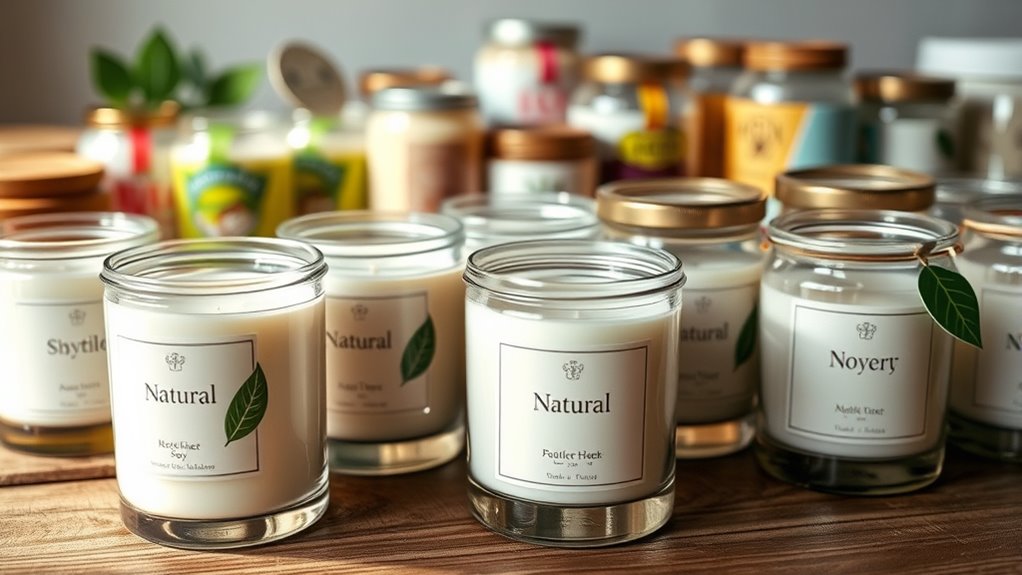
What do labels like “natural,” “soy,” and others really mean on candles? These terms can be misleading. “Natural” often suggests the candle is plant-based and chemical free, but that’s not always true. Many “natural” candles still contain additives or synthetic fragrances. “Soy” indicates the wax is made from soybeans, a renewable plant-based resource, but it doesn’t guarantee the candle is eco-friendly overall. Other labels like “eco,” “green,” or “clean-burning” can be vague or exaggerated. Always check the ingredient list and sourcing information. Just because a label sounds good doesn’t mean the product lives up to it. Understanding these labels helps you avoid greenwashing and choose genuinely eco-friendly candles. Be skeptical of vague claims and look for transparency. Additionally, certifications and third-party labeling can provide more trustworthy indicators of a candle’s eco-friendliness. Recognizing industry standards and reputable seals can also help distinguish authentic eco products from misleading claims. Familiarity with personality insights can also enhance your ability to interpret marketing claims critically, ensuring you make informed choices. Moreover, being aware of disclosure practices in the industry helps consumers better evaluate the true environmental impact of candle products.
Investigating the Source of the Wax and Wicks Used

To truly assess a candle’s environmental impact, you need to investigate the source of its wax and wicks. Check where the wax sourcing originates; some companies may claim natural or eco-friendly but use imported or heavily processed wax. Likewise, understanding wick origins reveals if they’re made from sustainable materials like cotton or wood, or if they contain metal or synthetic components. Here’s a quick overview:
| Aspect | What to Look For | Why It Matters |
|---|---|---|
| Wax sourcing | Local, organic, or sustainably farmed | Reduces carbon footprint |
| Wick origins | Cotton, wood, or hemp | Ensures natural, non-toxic ingredients |
| Material transparency | Clear disclosure from brands | Verifies eco claims |
Additionally, examining the manufacturing processes can provide insight into a company’s commitment to sustainability and environmental responsibility. It is also important to understand the certifications that verify eco-friendly practices, as these can serve as credible indicators of genuine sustainability efforts.
Analyzing Packaging and Certification Claims
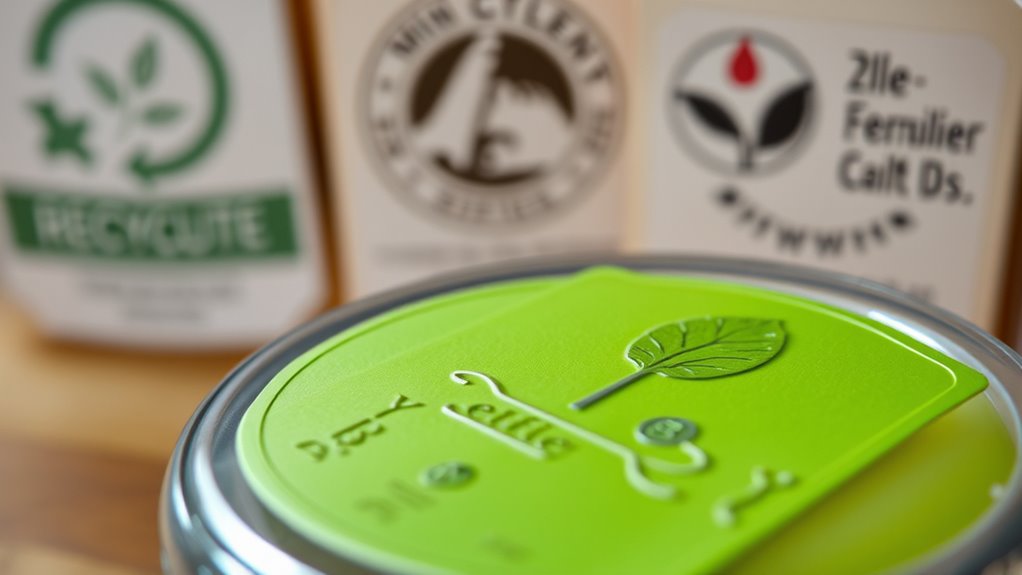
Have you ever checked the packaging and certification claims on a candle before buying? It’s essential to scrutinize labels for genuine eco credentials. Look for symbols or certifications from reputable organizations, but remember, eco label accuracy can vary. Some brands might use vague terms like “green” or “eco-friendly” without backing them up. Genuine sustainable packaging should be clearly labeled, indicating biodegradable, recyclable, or compostable materials. Be wary of packaging that appears overly elaborate or uses misleading visuals to imply sustainability. Always verify if the certification is legitimate—check for recognizable logos and research their standards. Authentic eco claims rely on transparent, verifiable information. By being vigilant, you can avoid falling for greenwashing tactics and choose candles that truly align with eco-conscious values.
Looking for Hidden Chemicals and Additives
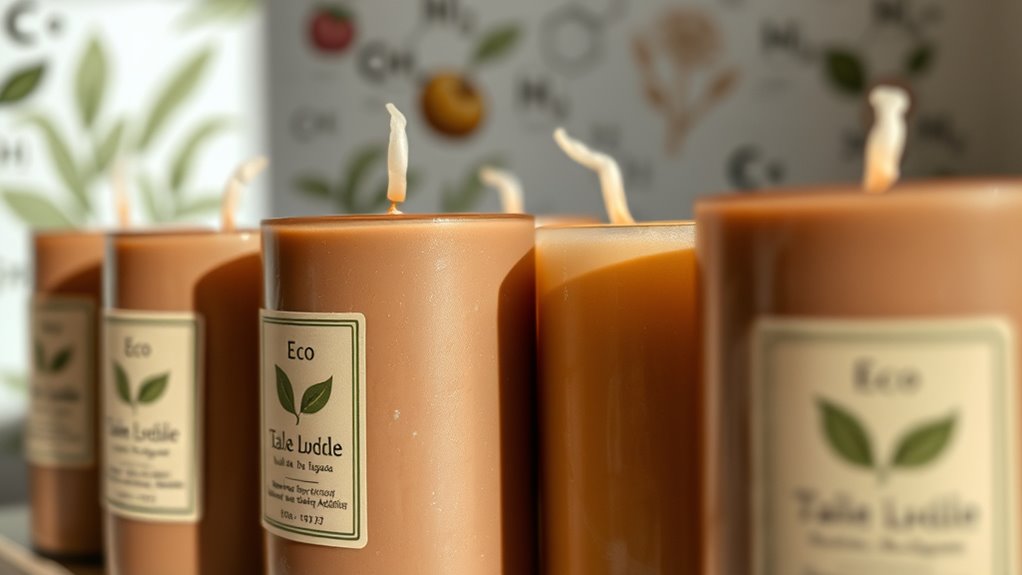
You need to stay alert for unlisted ingredients on candle labels, as some chemicals are concealed behind vague terms. Recognize chemical names that aren’t immediately obvious, so you can identify potential toxins. Always check for additive labels to ensure you’re not supporting environmentally harmful or synthetic ingredients.
Uncover Unlisted Ingredients
Many candles may contain hidden chemicals and additives that aren’t listed on the label, making it difficult to know exactly what you’re burning. To uncover unlisted ingredients, prioritize brands that emphasize ingredient transparency. Check if the company provides detailed ingredient lists or openly discusses their sourcing and manufacturing processes. Be cautious of vague labels like “fragrance” or “parfum,” which can hide numerous synthetic chemicals. Sometimes, unlisted ingredients are added for scent enhancement or to improve candle longevity. Doing your research and asking questions can help you identify candles that truly prioritize clean ingredients. Remember, transparent brands will willingly share information about their ingredients and avoid hiding unlisted chemicals, helping you make informed choices and avoid potential toxins.
Recognize Hidden Chemical Names
To truly understand what’s inside a candle, it’s important to recognize chemical names that may be hidden in ingredient labels. Many candles use synthetic fragrances or fragrance oils to create appealing scents, but these can hide harmful chemicals. Look out for terms like “fragrance,” “parfum,” or “essential oils,” which may mask synthetic components. Some synthetic fragrances contain phthalates or other additives linked to health concerns. Even if a label claims “natural” or “eco-friendly,” it might still include hidden chemicals that aren’t immediately obvious. Learning to identify these chemical names helps you avoid candles that use fake scents or undisclosed additives. Being vigilant with ingredient labels allows you to choose truly safer, more transparent products.
Check for Additive Labels
Checking the additive labels on candle packaging is essential to uncover hidden chemicals and additives that may not be disclosed in the ingredient disclosures. Many brands hide synthetic fragrances, stabilizers, or dyes under vague terms or omit them altogether. Carefully examine the additive labels for unfamiliar or unlisted chemicals, especially those that sound artificial or chemical-heavy. Legitimate eco-friendly candles typically list natural ingredients like essential oils, vegetable waxes, or natural dyes. Be wary of labels that lack detailed additive information or use broad terms like “fragrance” without specifics. By scrutinizing these labels, you can better determine whether a candle truly aligns with eco-friendly standards or if it’s masking synthetic additives behind a false green image. Always prioritize transparent ingredient disclosures to avoid falling for greenwashing.
Comparing Price Points to Industry Standards
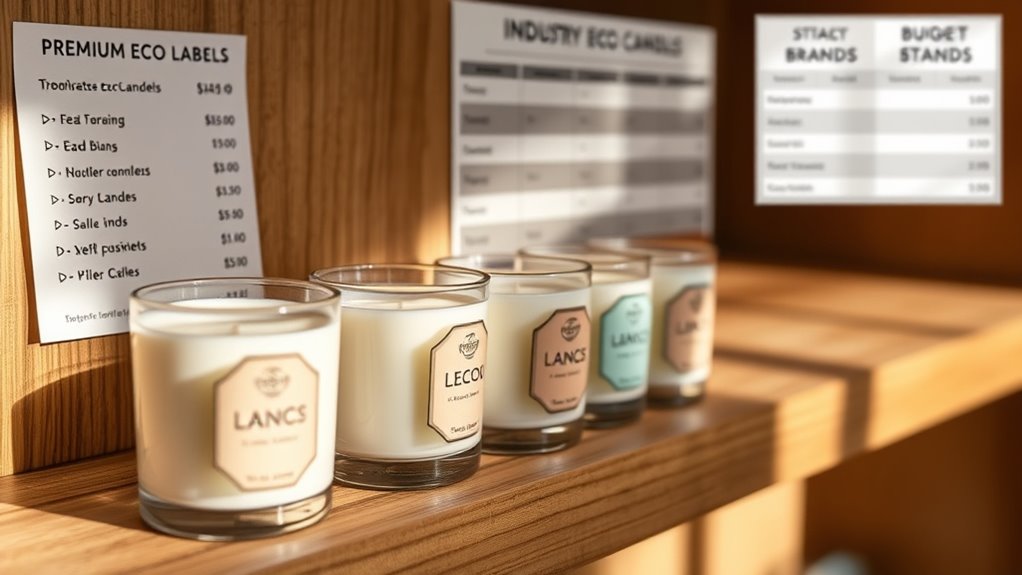
When evaluating candle prices, it’s important to compare what you’re paying to industry standards rather than relying solely on brand names or marketing claims. Conducting a price comparison helps you determine if a product is reasonably priced or if it’s overpriced due to branding tactics. Industry benchmarks provide a baseline for what’s typical in the market based on candle materials, size, and quality. If a candle’s price is markedly lower than these benchmarks, it might be cutting corners or using cheaper ingredients. Conversely, a much higher price doesn’t always guarantee better quality or eco-credentials. Use industry standards as a guide to assess whether a candle’s price aligns with its value, helping you avoid falling for greenwashing claims that inflate prices without offering genuine eco-friendly benefits.
Checking Brand Transparency and Ethical Practices
You should start by verifying where the ingredients come from to guarantee they’re ethically sourced. Checking for reputable certifications can also give you confidence that the company follows fair and sustainable practices. These steps help you see through greenwashing and support genuinely responsible brands.
Verify Ingredient Sourcing
Ensuring ingredient sourcing is essential to distinguishing genuinely ethical candle brands from greenwashing ones. You should investigate how brands verify their sourcing ethics and whether they disclose ingredient origin transparently. Reputable companies provide clear information about where their ingredients come from and how they guarantee sustainable practices. Look for detailed sourcing claims on their website or product packaging. If a brand is vague or avoids specifics, it’s a red flag. Authentic brands often partner with suppliers committed to ethical harvesting and fair trade practices. By verifying ingredient sourcing, you confirm that the candles genuinely prioritize sustainability rather than merely claiming it. This step helps you avoid supporting brands that make superficial eco-friendly claims, ensuring your purchase aligns with your values.
Assess Company Certifications
Checking a candle brand’s certifications is a key step in verifying its transparency and ethical commitments. Look for credible product certifications that demonstrate eco label verification, ensuring the brand truly meets environmental standards. These certifications, like FSC, USDA Organic, or Fair Trade, signal that the company adheres to verified sustainable practices. Be cautious of vague claims and always verify the certifying bodies behind them. Authentic eco labels mean the company has passed third-party audits, providing confidence in their eco-friendly claims. By evaluating these certifications, you can better differentiate genuine sustainable brands from those that simply use green marketing. This step helps you make informed choices rooted in transparency, supporting brands that genuinely prioritize environmental responsibility.
Reading Customer Reviews for Consistency and Authenticity

Have customer reviews become a reliable way to spot greenwashing in the candle industry? Absolutely. Customer feedback often reveals whether a company’s eco claims hold up in real life. Look for patterns in review consistency—are multiple reviewers praising the same eco-friendly features, or do their comments clash? Genuine products tend to generate consistent praise about sustainability, ingredients, and packaging. Be wary of reviews that seem overly generic or overly positive without specifics, as these may be fake or manipulated. Pay attention to detailed feedback from verified buyers, especially those mentioning specific eco-friendly qualities. By analyzing reviews for consistency and authenticity, you can better gauge whether a brand truly practices what it preaches or is just riding the eco-label wave.
Being Wary of Greenwashed Marketing Tactics
Many candle brands use clever marketing tactics to create the illusion of sustainability, making it essential for you to stay cautious. They often emphasize eco friendly branding or showcase sustainable packaging to appeal to environmentally conscious consumers. However, these claims can be misleading or exaggerated. Look beyond the labels and ask questions: Is the packaging truly sustainable or just recyclable? Are the ingredients genuinely eco-friendly, or are they greenwashed? Be wary of vague statements like “all-natural” or “eco-conscious” without proof. Brands may highlight minor eco initiatives while ignoring larger environmental impacts. Always research the company’s practices and certifications. By staying alert to these marketing tactics, you can better discern genuine eco-friendly products from those simply riding the green trend.
Frequently Asked Questions
How Can I Identify Genuine Eco-Friendly Candle Brands?
To identify genuine eco-friendly candle brands, look for transparency about sustainable sourcing and ethical manufacturing practices. Check if they provide detailed ingredient lists, use natural or renewable materials, and avoid harmful chemicals. Brands committed to sustainability often share certifications or eco-labels. Research their sourcing origins and manufacturing processes to guarantee they prioritize environmental impact and social responsibility, helping you choose truly eco-conscious candles.
Are There Specific Certifications That Guarantee a Candle’s Sustainability?
Yes, certain certifications guarantee a candle’s sustainability. Look for certification standards like USDA Organic, FSC, or Fair Trade, which verify eco label authenticity. These labels often appear by coincidence on genuinely eco-friendly products, giving you confidence in their sustainability claims. When you see these trusted marks, you know the candle meets strict environmental and ethical criteria, helping you avoid greenwashing and support truly eco-conscious brands.
What Are Common Misleading Claims Used by Greenwashed Candle Companies?
You should watch out for green labels that seem too good to be true, as they often mask misleading marketing. Common claims include candles being “100% natural,” “eco-friendly,” or “biodegradable,” without proof. Companies may also highlight vague terms like “sustainable” or “green” without certification. Always scrutinize these claims critically, and look for credible certifications to verify the authenticity of their eco-friendly assertions.
How Do Candle Ingredients Impact Indoor Air Quality?
You’re playing with fire if you ignore how candle ingredients impact indoor air quality. Volatile organic compounds (VOCs) released from certain waxes and dyes can markedly increase indoor air pollution, making your space less healthy. When candles contain synthetic fragrances or paraffin wax, they emit harmful chemicals that may trigger allergies or respiratory issues. To keep your air clean, opt for natural ingredients like beeswax or soy, and always check labels for eco-friendly claims.
Can Price Reliably Indicate a Candle’s Environmental Friendliness?
Price isn’t always a reliable indicator of a candle’s environmental friendliness because pricing strategies often influence consumer perceptions more than actual sustainability. Higher prices may suggest better ingredients or eco-friendly practices, but that’s not guaranteed. Instead, look for transparent labels and certifications. You should prioritize product transparency over cost, ensuring the candle’s ingredients and manufacturing methods align with genuine eco-friendly standards rather than relying solely on price cues.
Conclusion
By staying sharp and asking the right questions, you can spot greenwashing like a lighthouse cutting through fog. Don’t let shiny labels and vague claims lead you astray—dig deeper into ingredients, certifications, and brand stories. Think of it as peeling back layers of an onion to find the true core. When you’re informed and vigilant, you’ll guarantee your candle choices glow with genuine eco-consciousness, not just a flash of greenwashed smoke.