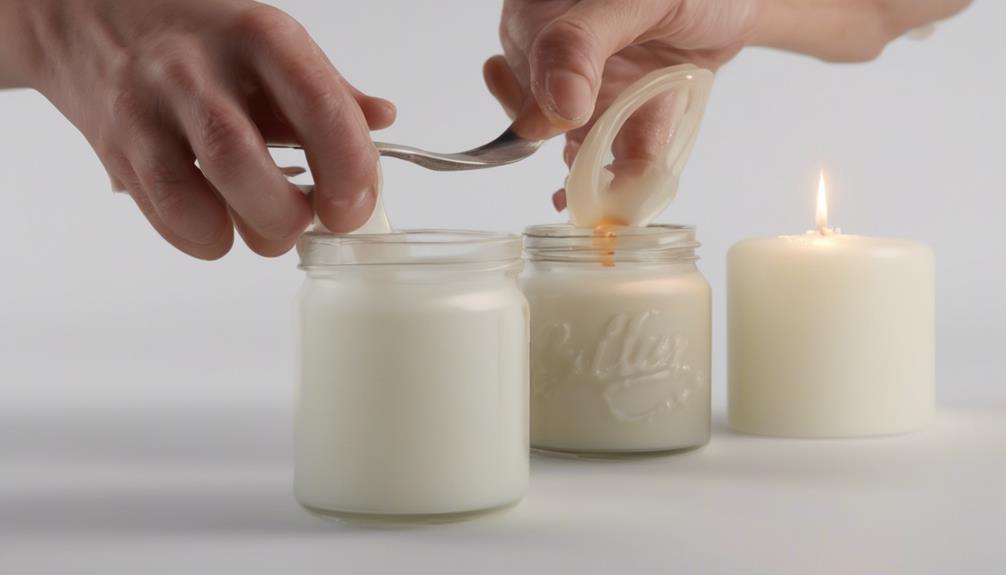

Candle burn patterns happen based on factors like wick size, wax blend, and candle placement. If the wick is too tall or short, or if the wax isn’t melting evenly, you might see tunneling or uneven melt pools. Proper wick trimming, choosing the right wax, and placing your candle on a stable surface helps promote a smoother burn. Keep going to discover more tips on achieving a safe, even, and beautiful candle glow.
Key Takeaways
- Proper wick placement and sizing prevent uneven heat distribution, reducing tunneling and promoting a flat burn.
- Melt pools form when wax liquefies evenly, influenced by wax composition and surface tension, crucial for uniform burning.
- Wicks control heat flow; correctly sized wicks create steady flames and even melt pools, minimizing tunneling.
- Common mistakes like improper wick trimming and container mismatch cause uneven burns and tunneling.
- Maintaining optimal burn time and placement ensures consistent melt pools, improving candle safety and performance.
What Causes Tunneling in Candles?
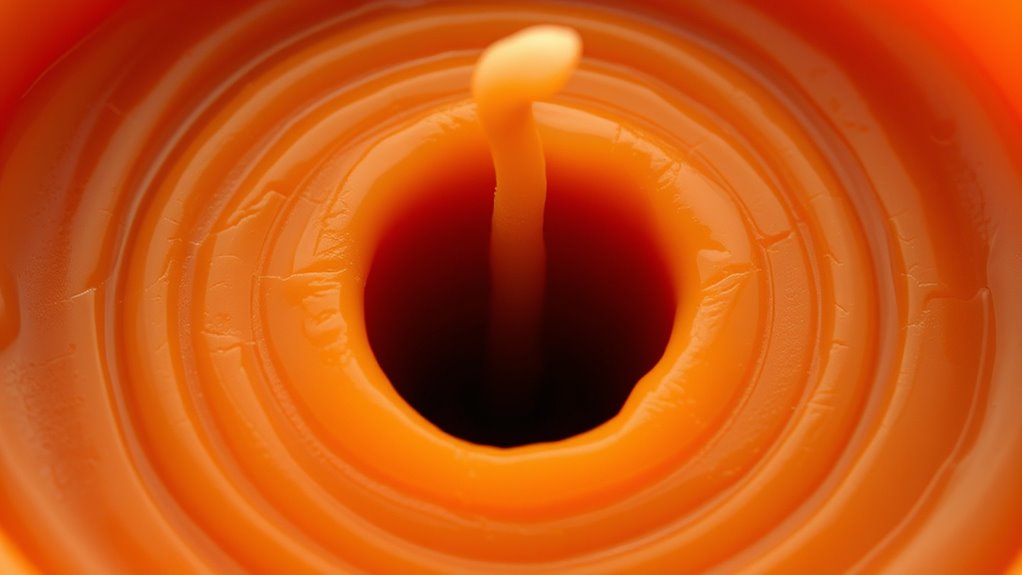
Have you ever noticed a candle burning unevenly, with only a small tunnel forming down the center? That’s caused by improper wick placement and wax composition. If the wick isn’t centered, it’ll burn more on one side, creating a tunnel rather than melting evenly across the top. Similarly, wax composition plays a role—certain wax blends melt at different rates or have inconsistent melting points, making it harder for the flame to evenly distribute heat. When the wick is too long or too short, or if the wax isn’t formulated correctly, the flame may not reach all areas of the wax surface, encouraging tunneling. Ensuring proper wick placement and choosing a wax with uniform melting properties helps promote a flat, even burn, preventing the formation of tunnels. Additionally, understanding wax melting characteristics can help you select the best candle types for a consistent burn, especially when considering factors like thermal conductivity and melting behavior. Proper wick sizing is also critical in preventing tunneling and achieving an even melt pool. Being aware of candle safety guidelines is essential to avoid potential hazards associated with improper burning.
The Formation and Significance of Melt Pools
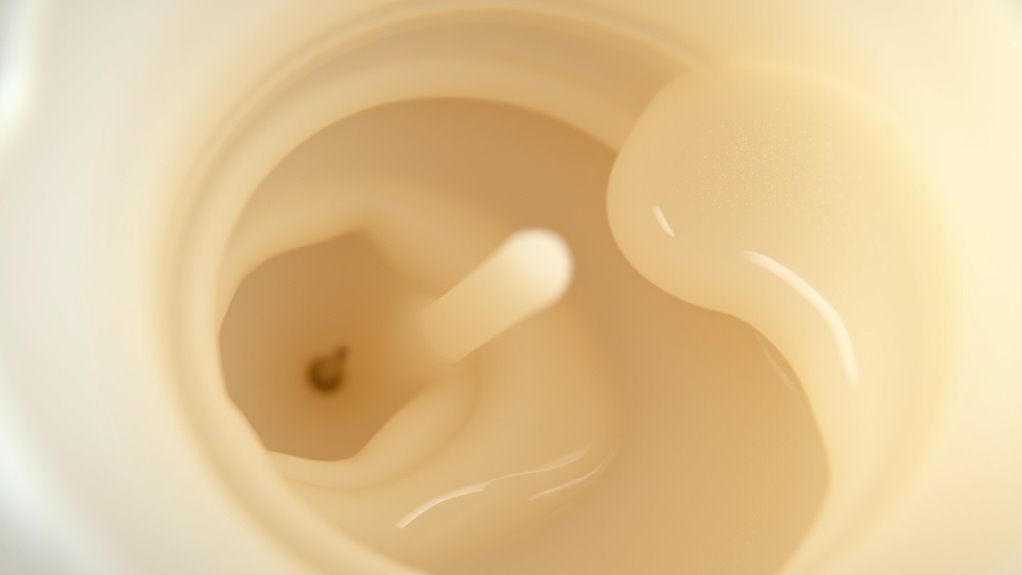
When a candle burns properly, a melt pool begins to form on the surface, playing a essential role in how the candle performs. This pool results from the wax melting due to heat, with wax viscosity influencing how easily it liquefies. Lower viscosity allows the wax to flow smoothly, creating a well-defined pool. Surface tension helps maintain the shape of the melt pool, keeping the liquid wax centered around the wick. The size and stability of the melt pool are critical because they determine how evenly the candle burns. Proper melt pool formation prevents tunneling** and ensures consistent wax consumption, which is vital for the candle’s longevity. A properly formed melt pool ensures consistent wax consumption and prevents tunneling. Understanding this process helps you recognize when your candle is burning correctly and how factors like wax composition affect performance. Additionally, wax composition can significantly influence the viscosity and surface tension, impacting the quality of the melt pool. Recognizing the influence of candle design** and its effects on melt pools can also help optimize burning efficiency and safety.
How Wicks Influence Burning Patterns
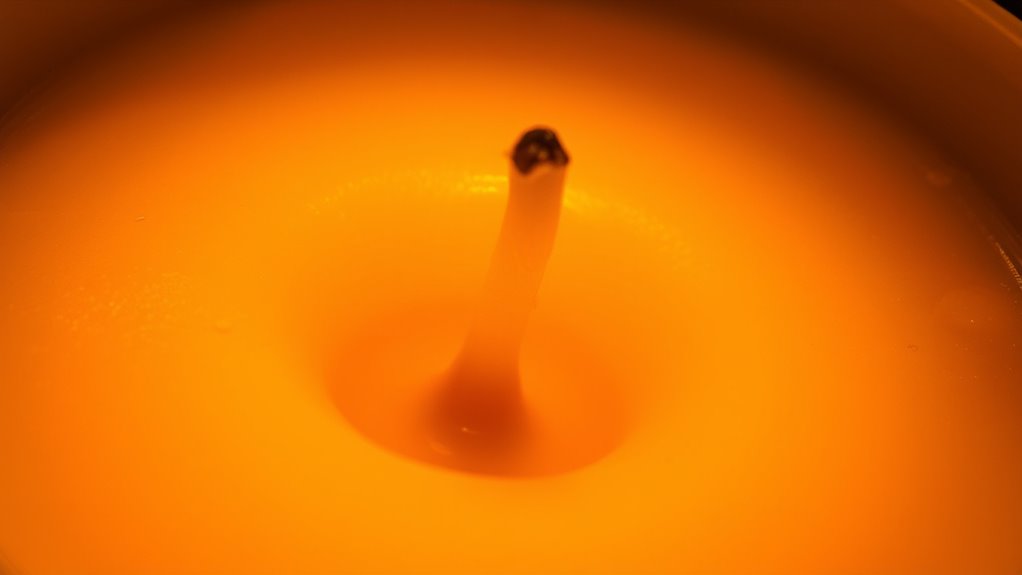
The wick plays an essential role in shaping the candle’s burning pattern, as it controls how heat is transferred to the wax. Your choice of wick design and size directly impacts whether your candle burns evenly or creates problems like tunneling. A properly sized wick ensures a steady flame, preventing excess soot or uneven melt pools. Conversely, a wick that’s too small may cause a weak flame, while an oversized wick can create a high, flickering flame that burns too quickly. When selecting the right wick, consider these emotional impacts:
- Feel confident knowing your candle will burn cleanly and evenly
- Enjoy a mesmerizing, steady glow without flickering distractions
- Experience that satisfying sense of control over your candle’s performance
- Revel in the cozy ambiance created by a perfect melt pool
- Avoid frustration from uneven or wasted wax
- Selecting the correct wick size also helps prevent issues like excess soot and smoke, ensuring a cleaner burn and a more pleasant environment. Additionally, choosing the right wick can contribute to a more efficient burn, conserving wax and extending the life of your candle. Proper wick selection is also linked to the even melting of wax, which enhances the overall aesthetic and functionality of your candle.
Common Mistakes That Lead to Uneven Burns
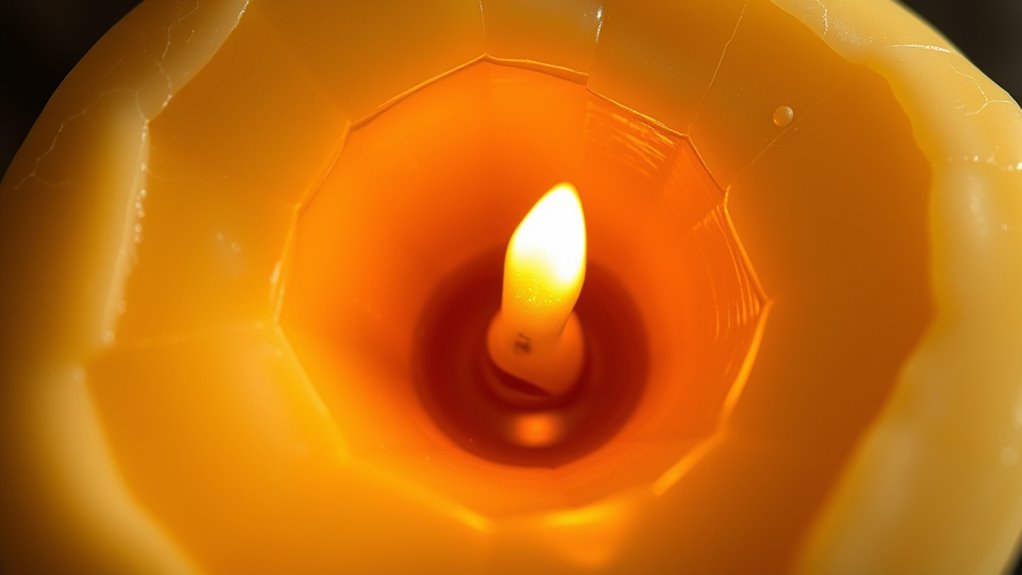
Choosing the right wick sets the foundation for a well-burning candle, but even small missteps can lead to uneven burns. One common mistake is neglecting regular wick trimming. A wick that’s too long can cause excessive soot, uneven melting, or tunneling. Keep your wick trimmed to about a quarter-inch to promote a steady flame and even burn. Additionally, container selection plays an indispensable role. Using a container that’s too wide or narrow can disrupt the melt pool, causing uneven burning or tunneling. Always choose a container that matches the candle size and wick type. Failing to consider these factors can result in inconsistent performance, wasted wax, and a less enjoyable candle experience. Proper wick maintenance and container choice are essential for a smooth, even burn. Furthermore, understanding candle heat distribution can help prevent common issues like tunneling by ensuring the heat is evenly dispersed across the wax surface. Paying attention to thermal conductivity of the container material can further enhance the candle’s burn quality.
Tips for Promoting a Consistent and Safe Candle Burn

To make certain your candle burns consistently and safely, it’s crucial to follow some simple but effective tips. First, always trim the wick to about a quarter-inch before lighting, which helps prevent excessive flickering and soot. Use high-quality candles with proper candle fragrance diffusion for even scent release and a welcoming aroma. Choose decorative candle choices that match your space and ensure they sit on stable, heat-resistant surfaces. Never leave a burning candle unattended, and keep it away from drafts or flammable objects. Consider burning candles for no more than four hours at a time to prevent tunneling and uneven melting. Additionally, understanding tunneling and melt pools can help you optimize your candle’s performance and longevity. Proper candle placement can reduce the risk of accidents and improve overall burn quality. Being aware of Gold IRA options can also provide a safe way to diversify your investments while enjoying your candles. Paying attention to wick maintenance can further enhance burn safety and efficiency. These small steps can enhance your candle experience, creating a cozy ambiance while ensuring safety and ideal scent distribution.
Frequently Asked Questions
How Do Different Wax Types Affect Burn Patterns?
Different wax types notably influence burn patterns through their wax consistency and additive effects. For example, soy wax tends to burn evenly, reducing tunneling, while paraffin wax might create more pronounced melt pools due to its consistency. Additives like vybar or stearic acid can alter melting points and burn rate, impacting how evenly your candle burns. Choosing the right wax and additives helps guarantee a smoother, more consistent burn experience.
Can Environmental Factors Influence Tunneling or Melt Pools?
Yes, environmental factors like air circulation and ambient temperature can influence tunneling and melt pools. When there’s strong air circulation, drafts can cause uneven burning, leading to tunneling. Higher ambient temperatures might cause the wax to melt faster on the surface, creating larger melt pools, but could also increase the risk of uneven burn. Keep your candle in a stable environment to promote an even burn and avoid tunneling.
What Role Does Candle Container Shape Play in Burn Behavior?
Your candle’s container shape considerably influences its burn behavior. Container design, especially the shape influence, determines how the wax melts and burns evenly. For example, wide open containers promote a broader melt pool, reducing tunneling, while narrow or tall containers can cause the wax to tunnel or burn unevenly. Choosing a container shape that supports even heat distribution helps guarantee a consistent, safe burn every time.
How Can I Fix a Candle That Is Tunneling Excessively?
To fix a candle that’s tunneling excessively, start by trimming the wick to about ¼ inch to promote an even burn. Then, try repositioning the candle to a cooler, draft-free area to prevent uneven melting. You can also carefully surface the top layer, removing the tunnel and exposing fresh wax. These steps encourage a more uniform melt pool and prevent future tunneling, ensuring your candle burns evenly.
Are There Specific Wick Materials That Prevent Uneven Burning?
Yes, choosing candles with specific wick composition and design can help prevent uneven burning. Wicks made from cotton or paper braided with metal wire promote steady, even flames, reducing tunneling. Look for wicks designed for ideal burn performance, such as those labeled “self-trimming” or “centered.” Proper wick selection guarantees consistent melt pools and minimizes tunneling, allowing your candle to burn evenly and last longer.
Conclusion
So, next time you marvel at your candle’s perfect glow, remember—tunneling and uneven burns are just nature’s way of reminding you to be patient. Ironically, the very mistakes you make to speed things up can ruin the ambiance you crave. Instead of rushing, embrace the melt pools and wick quirks. After all, a well-burned candle isn’t just about light; it’s about patience and understanding—lessons we often forget when we just want the flame to stay perfect.