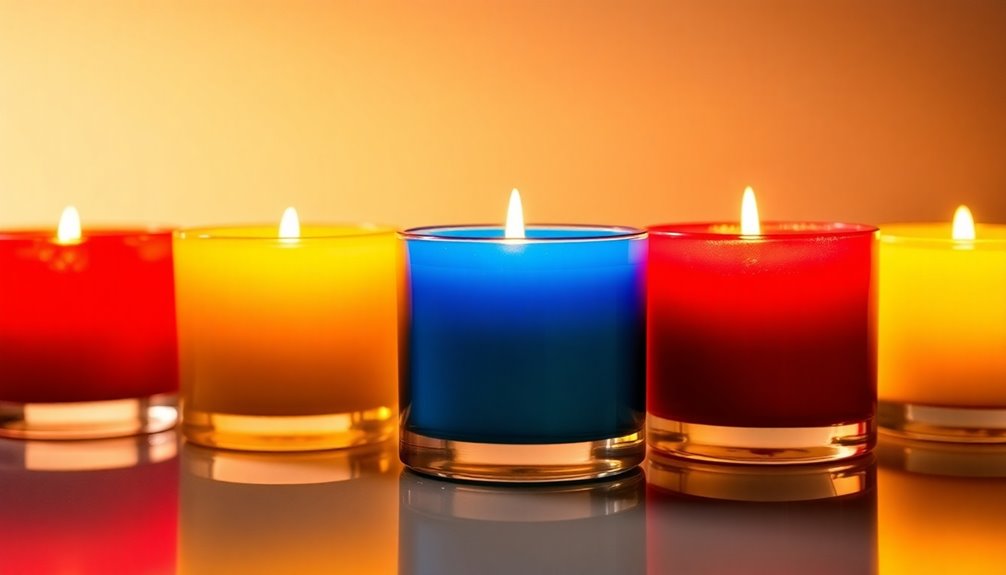

If you sell candles or wax melts, faded color is a silent profit killer. A candle that looked rich violet when you poured it can turn dusty lavender after a few weeks on a sunny shelf, and customers notice. A UV inhibitor for candles solves this by absorbing the light energy that breaks down dye molecules before it can bleach your color. After comparing the additives on the market, three products stand out for different reasons: the Reddig-Glo Liquid UV Inhibitor earns my top spot because it is the only one formulated and dosed specifically for candle wax, with clear usage rates across soy, paraffin, coconut, and beeswax. The Superclear Super UV Inhibitor is the strongest pick if you work across both candles and resin, since it targets yellowing in clear media. And the Candlemakers 1 Pound Bag makes sense for high-volume producers who burn through small bottles too quickly.

Get decor and gifts delivered free with Prime
- Fast, free delivery on millions of items
- Prime Video, Amazon Music and more included
- Member-only deals all year
The main tradeoffs come down to dosage transparency versus quantity. The liquid options tell you exactly how much to add per pound of wax, which matters enormously when overdosing can affect burn quality or scent throw. The bulk powder offers the lowest cost per use but leaves you to work out the addition rate yourself. Candle makers who want predictable, repeatable results should lean liquid; makers who already know their ratios can save money going bulk.
Complete the kit


Key Takeaways
- The Reddig-Glo liquid inhibitor is the only pick with a clear candle-specific dosage (0.2%–0.4% by weight, about 1/4 teaspoon per pound of wax), making it the safest choice for repeatable color retention.
- One 1 oz bottle of Reddig-Glo treats up to 24 lbs of wax, which covers most small-batch and hobby sellers for months.
- Superclear‘s 2 oz additive is the better fit if you make both candles and resin pieces, but it is primarily engineered to slow yellowing in cured resin rather than prevent dye fading in wax.
- The Candlemakers 1 lb bag wins on cost per use for production-volume makers but ships with no printed usage rate, so you must dial in your own ratio through testing.
- No UV inhibitor eliminates fading entirely — all three slow the process, so pair any of them with sensible packaging and display habits away from direct sunlight.
| Liquid UV Inhibitor for Candles, Wax Melts, Resin, Epoxy, and Coatings, 1 oz |  | Best Overall — purpose-built for candle wax with clear dosing | Brand: Reddig-Glo | Item form: Liquid | Size: 1 oz | VIEW ON AMAZON | See Our Full Breakdown |
| Superclear Super UV Inhibitor Additive 2 oz for Epoxy Resin |  | Best for Candle Makers Who Also Work with Resin | Size: 2 oz | Product dimensions: 3 x 3 x 3 inches | Manufacturer: Fiberglass Coatings, Inc. | VIEW ON AMAZON | See Our Full Breakdown |
| Candlemakers UV Inhibitor Additive – 1 Pound Bag |  | Best Bulk Value for High-Volume Production | Weight: 1 pound | Form: Additive powder/bag | Intended use: Candle making | VIEW ON AMAZON | See Our Full Breakdown |
| uv inhibitor for candle | Size | Coverage | Form |
|---|---|---|---|
| Liquid UV Inhibitor for Candle | 1 oz | Up to 24 lbs of wax per bottle | — |
| Superclear Super UV Inhibitor | 2 oz | — | Liquid concentrate additive |
| Candlemakers UV Inhibitor Addi | — | Many batches at typical inhibitor addition rates | Additive powder/bag |
More Details on Our Top Picks
Liquid UV Inhibitor for Candles, Wax Melts, Resin, Epoxy, and Coatings, 1 oz
This Reddig-Glo liquid inhibitor takes the top spot for one simple reason: it is the only product in this lineup that speaks directly to candle makers. The label gives you a precise usage window of 0.2%–0.4% by weight, roughly a quarter teaspoon per pound of wax, which means you can reproduce your results batch after batch without guesswork. For anyone selling candles, that repeatability matters more than anything else on the spec sheet.
Compared with the Superclear additive, which is optimized for keeping cured resin clear, this one is formulated around the problem candle makers actually face: dye fade and color shift from sunlight and even prolonged indoor lighting. It is also compatible with an unusually broad list of materials — soy, paraffin, coconut, beeswax, and blended waxes, plus epoxy, polyurethane, PVC, and PP — so if you branch into wax melts, coated crafts, or resin accents, one bottle covers you.
The tradeoff is volume. A single 1 oz bottle treats up to 24 lbs of wax, which is generous for a hobbyist or small seller but will run dry quickly for a production operation. That is where the 1 pound Candlemakers bag pulls ahead on pure economy. The liquid also carries a slight yellow tint in the bottle; at correct dosage it disappears into most wax colors, but makers of very pale pastel or white candles should run a small test pour first.
Pros:- Clear candle-specific dosage of 0.2%–0.4% by weight makes results repeatable
- Compatible with soy, paraffin, coconut, beeswax, and blended waxes
- Also works in epoxy resin, polyurethane, PVC, and PP for multi-craft makers
- One 1 oz bottle treats up to 24 lbs of wax
- Made in the USA
Cons:- Bottle size is small for production-volume candle makers
- Slight yellow coloration requires a test pour in pale or white candles
- Liquid form demands accurate measuring by weight for best results
Best for: Small-batch candle sellers and hobbyists who want predictable, measurable color protection across soy, paraffin, coconut, and beeswax
Not ideal for: High-volume production shops that would burn through 1 oz bottles too fast, or makers of pure white candles who cannot tolerate any risk of tint transfer
- Brand:Reddig-Glo
- Item form:Liquid
- Size:1 oz
- Recommended usage:0.2%–0.4% by weight, about 1/4 teaspoon per pound of wax
- Coverage:Up to 24 lbs of wax per bottle
- Compatible materials:Soy, paraffin, coconut, beeswax, blended waxes, epoxy resin, polyurethane, PVC, PP
- Country of manufacture:USA
- Color:Yellow (in bottle)
Our verdict“The most complete UV inhibitor for candle makers specifically, with dosing clarity the other two picks cannot match.”
Superclear Super UV Inhibitor Additive 2 oz for Epoxy Resin
Where the Reddig-Glo liquid is built around wax, the Superclear additive is built around clarity. Its job is to slow the yellowing that slowly degrades cured epoxy over months of light exposure, which is why it is the go-to for river tables, coasters, trays, and jewelry. If your business straddles both worlds — candles plus resin-topped coasters or embedded pieces — this 2 oz bottle is the more versatile bench companion, and the concentrated formula means a small addition protects a large pour volume.
The formulator behind it, Fiberglass Coatings, has been mixing resin chemistry in Saint Petersburg, Florida for over six decades, and that pedigree shows in how the product behaves in cured media compared with generic inhibitors. That said, judged purely as a candle additive, it is a step behind my top pick: the listing does not publish a wax-specific dosage the way Reddig-Glo does, so candle makers are left to extrapolate from resin ratios and test their way to a reliable addition rate.
Honesty about limits also matters here. This additive slows yellowing rather than eliminating it, and the same physics applies to candle dyes. Compared with the bulk Candlemakers bag, you get far better formulation credentials and a liquid-friendly concentrate, but less raw quantity. It makes the most sense for the multi-craft maker who values one additive that spans resin and wax over the single-purpose alternatives.
Pros:- Concentrated formula with a small addition rate protects large pour volumes
- Slows UV yellowing to preserve long-term clarity in resin art
- Versatile across river tables, trays, coasters, and jewelry
- Made in the USA by a formulator with 60+ years of resin experience
Cons:- Optimized for resin yellowing rather than candle dye fade
- No candle-specific dosage guidance published
- Slows rather than fully prevents yellowing, and requires careful measuring
Best for: Multi-craft makers who split their time between candles and epoxy resin projects and want one inhibitor for both
Not ideal for: Candle-only makers who want printed wax dosing instructions and dye-fade protection as the primary goal
- Size:2 oz
- Product dimensions:3 x 3 x 3 inches
- Manufacturer:Fiberglass Coatings, Inc.
- Model number:153063
- Date first available:April 21, 2023
- Country of origin:USA (Saint Petersburg, Florida)
- Form:Liquid concentrate additive
Our verdict“The strongest pick for resin-forward makers, though candle-only producers get more direct value from the Reddig-Glo liquid.”
Candlemakers UV Inhibitor Additive – 1 Pound Bag
At one full pound, this bag holds many times the quantity of either liquid option, and for a candle maker producing hundreds of units a month, that math is hard to ignore. If you already know your preferred addition rate from past testing, the 1 pound bag format means you stop ordering additives every few weeks and start treating UV protection as a fixed, low-cost line item. That is its entire pitch, and it delivers on it.
The catch is everything the listing leaves unsaid. There are no usage instructions included, which puts this product in a different category from the Reddig-Glo liquid, where the dosage window is printed right on the product. A beginner who buys this bag is facing trial and error with no starting point, and a wrong ratio can mean wasted wax batches or inhibited scent throw. Compared with the Superclear additive, you also give up the resin-focused engineering and the long formulator track record — this is a straightforward commodity additive aimed squarely at wax.
For the right buyer, though, none of that is a real obstacle. Production shops typically standardize on one wax blend and one dye system anyway, so a few test pours establish the ratio once and it holds for the life of the bag. This pick makes the most sense for that established maker; everyone still learning their process should pay a little more per ounce for guided dosing.
Pros:- Large 1 pound bag offers the lowest cost per use in this lineup
- Simple to standardize across repeated production batches
- Focused specifically on reducing UV-related color fading in candles
Cons:- No usage instructions included, so you must determine your own ratio
- Not formulated for resin or non-wax crafts
- Bulk quantity is wasteful for occasional or hobby-scale makers
Best for: Experienced, high-volume candle producers who know their addition rate and want the lowest cost per use
Not ideal for: Beginners or small-batch makers who need printed dosage guidance and would take years to use a full pound
- Weight:1 pound
- Form:Additive powder/bag
- Intended use:Candle making
- Function:Reduces color fading from UV light exposure
- Coverage:Many batches at typical inhibitor addition rates
- Best use case:High-volume candle production
Our verdict“The economy play for production shops that have their process dialed in and simply need quantity.”

How We Picked
Because none of these products can be judged by appearance alone, I evaluated them on the factors that actually determine whether a candle’s color survives retail shelves. First, I looked at dosage guidance. A UV inhibitor only works within a dosing window, and a product that tells you exactly how much to add per pound of wax removes the biggest variable in getting consistent results. Second, I weighed material compatibility — soy, paraffin, coconut, and beeswax all behave differently, and an inhibitor that works across wax types plus resin and coatings gives makers more flexibility. Third, I considered coverage per bottle, since a concentrated formula that treats 24 lbs of wax costs far less per candle than it first appears. Finally, I factored in formulator credibility: products made by companies with long histories in resin or wax chemistry, and manufactured in the USA, tend to have more consistent batches. Where a product fell short — vague instructions, narrow compatibility — I treated that as a genuine drawback rather than a footnote.
| uv inhibitor for candle | Coverage | Form |
|---|---|---|
| Liquid UV Inhibitor for Candle | Up to 24 lbs of wax per bottle | — |
| Superclear Super UV Inhibitor | — | Liquid concentrate additive |
| Candlemakers UV Inhibitor Addi | Many batches at typical inhibitor addition rates | Additive powder/bag |
Factors to Consider When Choosing Uv Inhibitor For Candles
Choosing a UV inhibitor comes down to four questions: what you make, how much you make, how precisely you want to dose, and what materials need protection. Here is how I would work through the decision.Liquid Additive or Bulk Format?
Liquid inhibitors with dropper or teaspoon-based dosing are easier to measure into small wax batches and blend evenly at low addition rates. Bulk bags cost less per candle but demand a scale, a standardized process, and your own established ratio. If you make fewer than a few dozen candles a month, liquid is almost always the smarter buy because you will actually finish the bottle before it degrades.
Know Your Addition Rate
Most liquid candle inhibitors work in the 0.2%–0.4% by weight range, which is roughly a quarter teaspoon per pound of wax. Underdosing gives weak protection; overdosing can affect how wax holds dye and fragrance. Products that publish a dosage window save you from costly test batches, which is why I ranked them higher for most buyers.
Wax and Material Compatibility
Soy, paraffin, coconut, and beeswax each interact differently with additives. If you use blended waxes or also pour resin accents, pick an inhibitor that lists multi-material compatibility explicitly — like the Reddig-Glo liquid — rather than one engineered for a single medium.
Set Realistic Expectations
No inhibitor blocks UV completely. These products slow fading and yellowing, extending shelf appeal from weeks to months. Pair them with opaque packaging, tinted jars, and display practices that keep finished candles out of direct sun, and your colors will hold far longer than any additive alone can manage.
Frequently Asked Questions
How much UV inhibitor should I add to candle wax?
For liquid inhibitors formulated for candles, the typical range is 0.2% to 0.4% by weight, which works out to roughly a quarter teaspoon per pound of wax. I recommend starting at the low end, pouring a test candle, and placing it in a sunny window alongside an untreated control candle for two to three weeks. If you still see noticeable fade, move toward the upper end of the range. Always measure by weight rather than volume when possible, since densities vary between brands and accurate dosing is what keeps your results consistent from batch to batch.
Will a UV inhibitor affect my candle’s scent throw or burn quality?
At the correct dosage, a quality inhibitor should have no measurable impact on burn or fragrance. Problems appear when makers overdose, because the additive competes with dye and fragrance oil for space in the wax matrix, potentially dulling scent throw or altering how the wax melts. This is precisely why I ranked the Reddig-Glo liquid so highly — its printed dosage window keeps you inside the safe zone. If you are working from an unmarked bulk bag, run a small comparison burn test before committing a full production batch.
Can I use epoxy resin UV inhibitor in candle wax?
You can in some cases, but it is not what those products are engineered for. Resin-focused additives like the Superclear formula are designed to slow yellowing in cured clear media, while candle inhibitors target the breakdown of dye pigments in wax. The chemistry overlaps enough that multi-material products exist, but a resin-first additive usually lacks a validated wax dosage, so you are extrapolating and testing on your own. If candles are your main product, choose a wax-specific inhibitor; only reach for the resin version if you genuinely split your production across both crafts.
Does a UV inhibitor prevent fading completely?
No, and any product claiming total protection should be treated with skepticism. UV inhibitors work by absorbing damaging light energy before it breaks down dye molecules, which slows the fading process dramatically but cannot stop it indefinitely. A treated candle might hold its color for months where an untreated one fades in weeks, yet sustained direct sunlight will eventually win. Combine the additive with sensible practices — opaque or tinted containers, boxes for storage, and shelf placement away from windows — and you get the longest realistic color life.
Which colors benefit most from a UV inhibitor?
Purples, blues, pinks, and reds are the fastest casualties of UV exposure, fading to washed-out grays and dusty pastels within weeks on a sunny shelf. Deep saturated shades show damage most obviously, which is why candle sellers working in jewel tones tend to notice fading first. Pastels and whites fade less visibly but face a different risk in yellowing, especially in natural waxes. If your line leans heavily on vivid color, an inhibitor is close to mandatory; if you sell mostly undyed or ivory candles, it is a lighter insurance policy.
Conclusion
The right pick depends entirely on what you make and how much. Hobbyists and small candle sellers should buy the Reddig-Glo Liquid UV Inhibitor — its printed 0.2%–0.4% dosage and broad wax compatibility make it the safest, most repeatable choice, and one bottle covers 24 lbs of wax. Multi-craft makers who pour both candles and resin get more value from the Superclear Super UV Inhibitor, whose concentrate is engineered for clarity in cured epoxy while still lending itself to wax blends. High-volume production shops with an established formula should go straight to the Candlemakers 1 Pound Bag, where the cost per candle is unbeatable and the missing instructions are irrelevant to a maker who already knows their ratio. Whichever you choose, remember that all three slow fading rather than stop it — pair your inhibitor with smart packaging and display habits, and your colors will stay shelf-ready far longer.
Evergreen bestsellers Picks
bestsellers
As an affiliate, we earn on qualifying purchases.