
If you’re new to candle dye, start by understanding how important it is to test your colors before pouring your final candles. Use small samples to mix and adjust shades gradually, as colors can look different once cooled. Choose the dye type that suits your project, whether liquid or chips, and always measure precisely for consistent results. Patience is key; with practice, you’ll master color mixing and achieve beautiful, vibrant candles. Keep exploring to learn more tips and tricks.

Get decor and gifts delivered free with Prime
- Fast, free delivery on millions of items
- Prime Video, Amazon Music and more included
- Member-only deals all year
Key Takeaways
- Start with small dye amounts and add gradually to prevent over-coloring.
- Use appropriate dyes (liquid, chips, or blocks) based on your project and ease of mixing.
- Always test dye mixtures in small samples before adding to your main wax batch.
- Measure dye precisely using scales or spoons to ensure consistent color across batches.
- Allow candles to cool fully before judging color; re-melt and adjust if needed.

Are you new to candle making and wondering how to add vibrant colors to your creations? If so, understanding the basics of candle dye is essential for achieving beautiful, consistent results. When it comes to adding color, you’ll want to get familiar with color mixing and dye application because these are the key steps to creating the perfect hue.
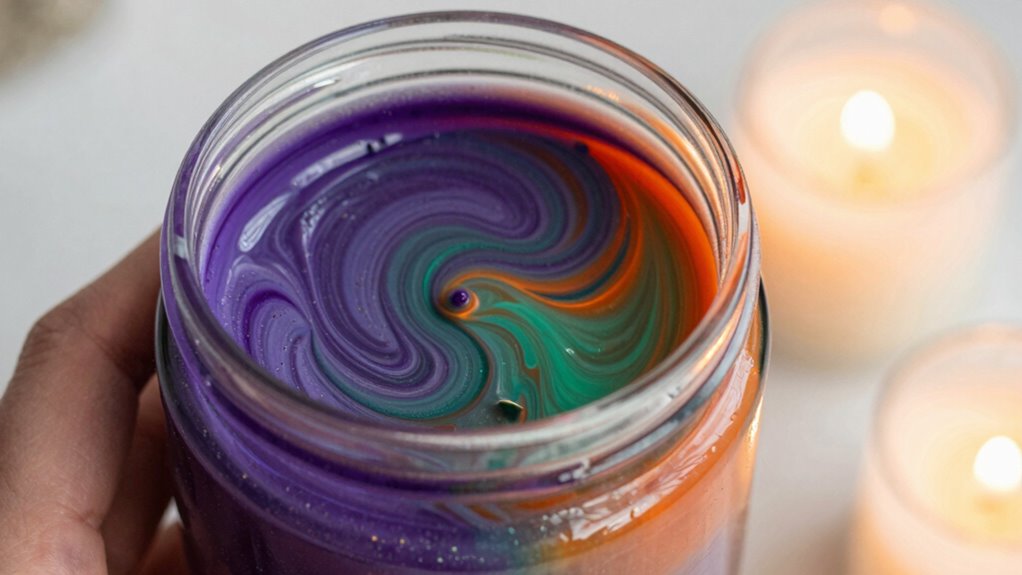
Color mixing involves blending different dyes to produce custom shades. Start with small amounts of dye and gradually add more until you reach your desired color. This approach prevents over-coloring, which can be hard to correct. Remember, the color you see in the melted wax may appear slightly different once it cools and hardens, so it’s a good idea to test your mixtures beforehand. Using a small container for testing allows you to experiment without wasting your main wax supply. Additionally, understanding dye concentration can help you achieve more precise and predictable results, especially when aiming for specific shades. Being aware of dye properties can also influence how well the color disperses and adheres to the wax.
Start with small dye amounts, test first, and adjust gradually for perfect, consistent candle colors.
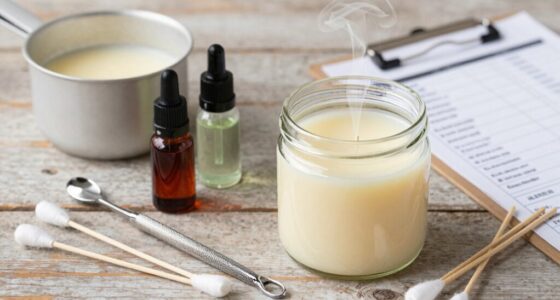
Dye application is straightforward but requires attention to detail. There are various types of candle dyes — liquid dyes, dye blocks, and chips. Liquid dyes are easy to mix into hot wax, providing even color distribution, but they can be messier. Dye blocks or chips are more convenient for handling, as you can melt small pieces directly into your wax. Whichever form you choose, make sure to add the dye when your wax is fully melted and at the right temperature, usually around 170-180°F (77-82°C). Stir thoroughly to ensure the dye disperses evenly throughout the wax, which helps prevent uneven coloring or streaks.
To achieve consistent color, always measure your dye carefully. Using a scale or small measuring spoons can help you replicate your favorite shades consistently across different batches. Also, keep in mind that some dyes are more concentrated than others, so check the manufacturer’s instructions for recommended amounts. If you want your candle to have a rich, vibrant hue, don’t be afraid to add a little more dye, but do so gradually to avoid oversaturation. Additionally, selecting the right type of dye for your project can influence the final appearance and ease of use. Furthermore, understanding the concentration of your dyes can help you optimize your color results and avoid wastage.
Finally, remember that patience is crucial. Let your candle cool and set completely before judging the final color. If it turns out a little dull or uneven, you can always melt the wax again and add more dye in small increments. With practice, you’ll develop an eye for perfect color mixing and dye application, transforming simple candles into stunning, personalized pieces. The key is to experiment, learn from each batch, and enjoy the process of creating beautifully colored candles.
As an affiliate, we earn on qualifying purchases.
Frequently Asked Questions
Can Candle Dye Be Used in All Types of Wax?
Yes, candle dye can be used in most types of wax, but you need to take into account dye compatibility. Some dyes blend well with soy, beeswax, or paraffin, allowing for smooth color blending. However, always check the specific dye’s instructions, as certain dyes may not work effectively with all waxes. Testing small amounts first helps guarantee you get the right shade and consistent color throughout your candle.
How Long Does Candle Dye Last Before It Expires?
Candle dye doesn’t really expire, but its color intensity can fade over time if not stored properly. To preserve its dye quality, keep it in a cool, dark place away from sunlight and humidity. Proper dye preservation helps maintain vibrant colors in your candles. Usually, dye lasts for several years, but if you notice dulling or clumping, it’s time to replace it for the best results in your candle-making projects.
Are There Any Safety Concerns When Handling Candle Dye?
Handling candle dye safely is essential, just like respecting a knight’s code of chivalry. You should always follow safety precautions and handling guidelines to avoid skin irritation or inhaling fumes. Work in a well-ventilated area, wear gloves, and keep dyes away from children or pets. Never add dye directly into hot wax, and always wash your hands afterward. These steps guarantee a safe, enjoyable candle-making experience.
Can Candle Dye Be Mixed for Custom Colors?
Yes, you can mix candle dyes to create custom colors, but you should pay attention to color blending and dye compatibility. Start with small amounts and test your mixture before adding more. Some dyes may not blend well or could alter the candle’s burn quality. Always use dyes designed for candles to guarantee safety and vibrant results. Experimenting carefully lets you achieve unique shades tailored to your preferences.
Is Candle Dye Waterproof or Will It Fade Over Time?
Candle dye isn’t completely waterproof, but it does have good colorfast properties that help it resist fading over time. Its dye stability guarantees that the color stays vibrant when exposed to mild moisture or handling. However, if exposed to constant moisture or extreme conditions, the dye may fade eventually. To keep your candles looking fresh, store them in a cool, dry place and avoid prolonged exposure to water or high humidity.
Conclusion
As you start experimenting with candle dye, you’ll notice how the right color can transform your creations into cozy, inviting spaces. Sometimes, a simple splash of dye unexpectedly matches the decor perfectly, making your candle feel like it was meant to be. It’s almost like the colors choose themselves, turning your DIY project into a delightful surprise. So keep experimenting—you might just find that the perfect hue was waiting for you all along.
Halloween Picks
halloween
As an affiliate, we earn on qualifying purchases.