To start learning candle making without feeling overwhelmed, focus on small, simple projects and master one technique at a time. Begin by choosing a basic fragrance and wax, then experiment with melting and pouring in a safe, organized space. Keep your initial blends straightforward, and don’t rush the process—all while practicing patience. As you gain confidence, you can gradually explore new scents and styles. Stick with it, and you’ll discover more tips and tricks along the way.
Key Takeaways
- Begin with simple candle projects, focusing on mastering one technique at a time.
- Use small amounts of fragrance and wax to keep initial experiments manageable.
- Follow safety guidelines and work in a well-ventilated, organized space.
- Avoid rushing; practice patience and gradually build your skills.
- Celebrate small successes to stay motivated and avoid feeling overwhelmed.
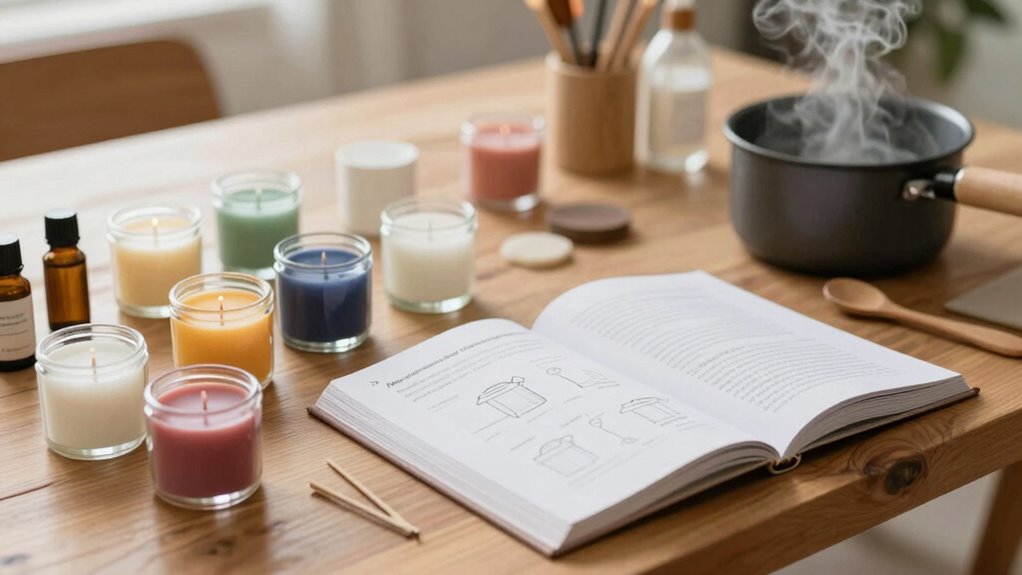
Starting to learn candle making can be an exciting and rewarding hobby, especially if you enjoy crafting and creating with your hands. When you’re just beginning, it’s natural to feel a bit overwhelmed by all the different supplies and techniques. But remember, you don’t need to master everything at once. Focus on the basics first, and gradually build your skills as you go. One of the first things you’ll want to explore is selecting the right candle fragrance. Fragrance adds personality and ambiance to your candles, so choose scents that inspire you. Start with small amounts of fragrance oils, as too much can overwhelm the wax and affect how your candle burns. Experiment with different scents to find combinations you love, but keep it simple initially to avoid confusion.
Begin with simple fragrances, experiment, and enjoy creating candles that reflect your unique style.
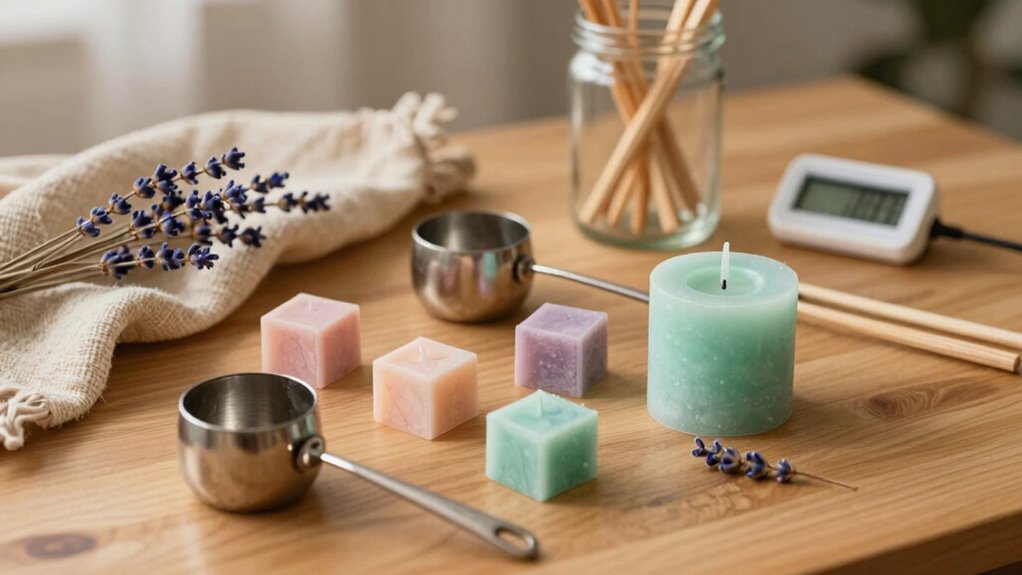
Next, get comfortable with wax melting techniques. Melting wax may seem straightforward, but doing it properly is key to creating candles that burn evenly and safely. Use a double boiler or a dedicated wax melter to gently heat the wax, keeping the temperature steady. Avoid rushing this step, as overheating can lead to problems like uneven burning or a weak scent throw. Use a thermometer to monitor the temperature closely, especially when adding fragrance or pouring the wax. A good rule of thumb is to melt the wax until it reaches the recommended temperature for your specific type, usually around 170-180°F for soy or paraffin wax. Patience is essential here—don’t rush the process. Additionally, understanding the types of wax available can help you choose the best one for your project and desired candle quality. Learning about wax characteristics can further enhance your ability to select the right wax for your specific needs. Familiarizing yourself with candle safety tips will also ensure a safe crafting experience as you progress. Remember that knowing the proper handling of hot wax is crucial for safety and successful candle making. Also, exploring different wax blending techniques can help you create unique textures and effects in your candles.
When you’re ready to pour, remember that your workspace should be clean and free of distractions. Prepare your containers and wicks beforehand, and always pour the wax at the right temperature to ensure a smooth surface and proper adhesion. As you gain confidence, you can experiment with different wax melting techniques, like layering colors or creating textured finishes, but initially, sticking to simple pours will help you build a solid foundation.
Throughout your learning process, keep safety in mind. Work in a well-ventilated area, wear protective gear if needed, and never leave melting wax unattended. Keep your workspace organized and tidy, so you don’t accidentally knock over hot wax. The key to not feeling overwhelmed is to take small steps—learn one technique at a time, celebrate your progress, and don’t be afraid to try again if something doesn’t turn out perfect. With patience and practice, you’ll soon be creating beautiful, fragrant candles that reflect your personal style.

Complete Candle Making Kits for Adults Beginners, DIY Candle Making Supplies Include Soy Wax,Wax Melter,Scents,Dyes,Wicks,Wicks Sticker,Candle Tins & More-Full Candle Maker Set – Arts & Crafts Kits
- All-In-One Candle Making Kit: Complete supplies for all levels
- Beginner-Friendly Design: Includes step-by-step instructions
- Premium Soy Wax: 100% natural, long-lasting, and aromatic
As an affiliate, we earn on qualifying purchases.
As an affiliate, we earn on qualifying purchases.
Frequently Asked Questions
What Are the Safest Materials for Beginners?
For beginners, the safest materials include soy wax or beeswax because they burn clean and are less likely to cause issues. Use thermometers and double boilers as your beginner tools to maintain candle safety. Always work in a well-ventilated area, keep a fire extinguisher nearby, and follow safety guidelines. Starting with these safe materials and tools helps you learn candle making confidently without feeling overwhelmed.
How Much Space Do I Need to Start?
Like a painter needs a studio, you need a dedicated space for candle making. You can start with a small workstation setup in a corner of your room, about 3×3 feet, for your tools and wax. Use smart storage solutions to keep supplies organized and accessible. As you grow more confident, you can expand your space, but initially, a compact area keeps things manageable and keeps overwhelm at bay.
Are There Eco-Friendly Candle-Making Options?
Yes, you can choose eco-friendly candle-making options. Look for sustainable waxes like soy, beeswax, or coconut wax to reduce environmental impact. Use eco-friendly dyes made from natural ingredients, avoiding synthetic pigments. These choices help you create beautiful candles while being kind to the planet. Switching to sustainable waxes and eco-friendly dyes makes your candle-making process more environmentally conscious and satisfying, giving you peace of mind with every candle you craft.
How Do I Choose the Right Fragrance Oils?
To choose the right fragrance oils, start by exploring popular scent blends that match your mood or theme. Consider scent layering, combining different oils to create a unique aroma. Always test small batches first, smelling and adjusting until you find a balanced, pleasing fragrance. Look for high-quality, skin-safe oils, and read reviews to verify they blend well with your wax. This approach helps prevent overwhelm and guides you toward the perfect scent.
Can I Make Candles Without Prior Art Experience?
Yes, you can make candles without prior art experience; think of it as opening a blank canvas for your creativity. Start with simple candle designs and explore artistic techniques step by step. Focus on basic techniques like pouring and decorating, gradually building your skills. With patience and practice, you’ll create beautiful, personalized candles that reflect your unique style—no art degree needed, just a willingness to experiment and learn.
Conclusion
As you begin your candle-making journey, remember that every stumble is part of the process—like discovering a hidden scent or a perfect wax blend by chance. Keep experimenting, stay patient, and don’t rush the learning curve. Sometimes, the most beautiful candles come from unexpected mishaps. With each flicker of progress, you’ll find that what once felt overwhelming becomes a rewarding creative escape, turning coincidence into your secret ingredient for success.