
Candles do have a shelf life, and over time, their scent, appearance, and burn quality can decline. Signs your candle is too old include a faded or off-putting fragrance, discoloration, wax cracking or cloudiness, and poor wick performance. Proper storage—cool, dry, and airtight—helps prolong their life, but if a candle shows these signs, it’s time to replace it for safety and better burn experience. Learn more about keeping your candles fresh and safe.
Play games included with Prime
Start a Prime free trial and play with Amazon Luna on your devices.
As an affiliate, we earn on qualifying purchases.
Key Takeaways
- Candles don’t have a strict expiration date but can deteriorate over time, affecting scent and burn quality.
- Faded or off-putting fragrance signals the candle has aged or gone bad.
- Discoloration, cloudy wax, or cracks indicate wax deterioration and reduced safety.
- Poor wick performance or excessive soot suggests the candle is old or no longer suitable for burning.
- Proper storage in a cool, dry, airtight place helps extend a candle’s shelf life and maintain its quality.
scented candles with long-lasting fragrance
As an affiliate, we earn on qualifying purchases.
As an affiliate, we earn on qualifying purchases.
Understanding Candle Ingredients and Shelf Life
Understanding candle ingredients and shelf life is essential because not all candles last equally long or burn safely. Your candle’s wax composition directly influences its longevity and how well it burns over time. Beeswax, soy, and paraffin each have different melting points and burn characteristics, affecting shelf life. Additionally, fragrance stability plays a vital role; some scents fade or change as the candle ages, especially if exposed to light or air. Knowing the type of wax and how it interacts with fragrance oils helps you predict how long your candle will remain effective and safe to use. Proper storage can also slow down deterioration, ensuring your candles stay fresh and fragrant longer. This knowledge helps you make smarter choices about candle use and safety.
Signs That Indicate a Candle Has Gone Bad
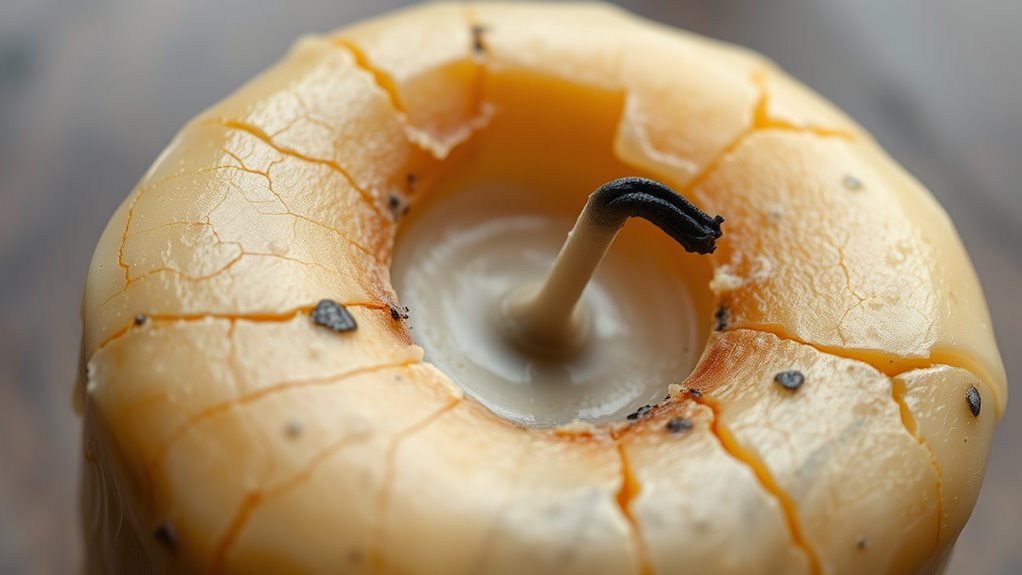
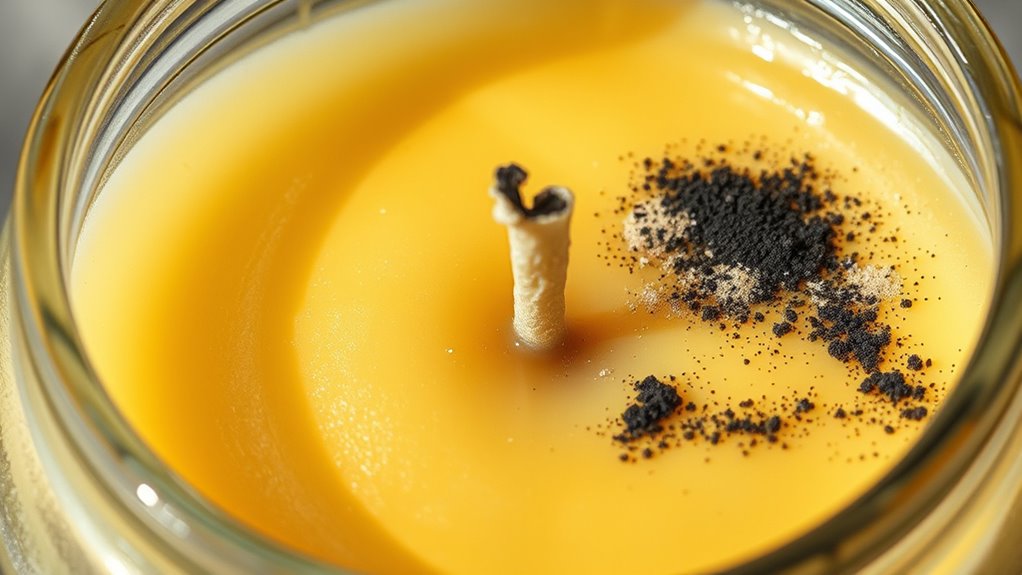
A candle that has gone bad often shows clear signs that it’s no longer safe or enjoyable to use. You might notice a faded or off-putting candle fragrance, indicating the scent has degraded over time. Poor wick performance is another sign; if the wick struggles to stay lit or produces excessive smoke, it’s a red flag. You may also see discoloration or a cloudy appearance in the wax, which suggests spoilage. Additionally, a brittle or cracked surface indicates the candle has dried out or gone stale. These signs can affect both the safety and the ambiance you expect when lighting a candle. Paying attention to fragrance quality and wick performance helps you determine whether your candle is still good or needs replacing. Proper storage can also extend a candle’s lifespan and prevent premature spoilage. Regularly inspecting your candles and understanding how environmental factors impact candle freshness ensures you get the most out of your collection. To better maintain your candles, understanding wax composition can help you choose the right storage conditions. Moreover, knowing the chemical stability of waxes can help prevent issues like melting or cracking over time.
How Storage Conditions Affect Candle Longevity
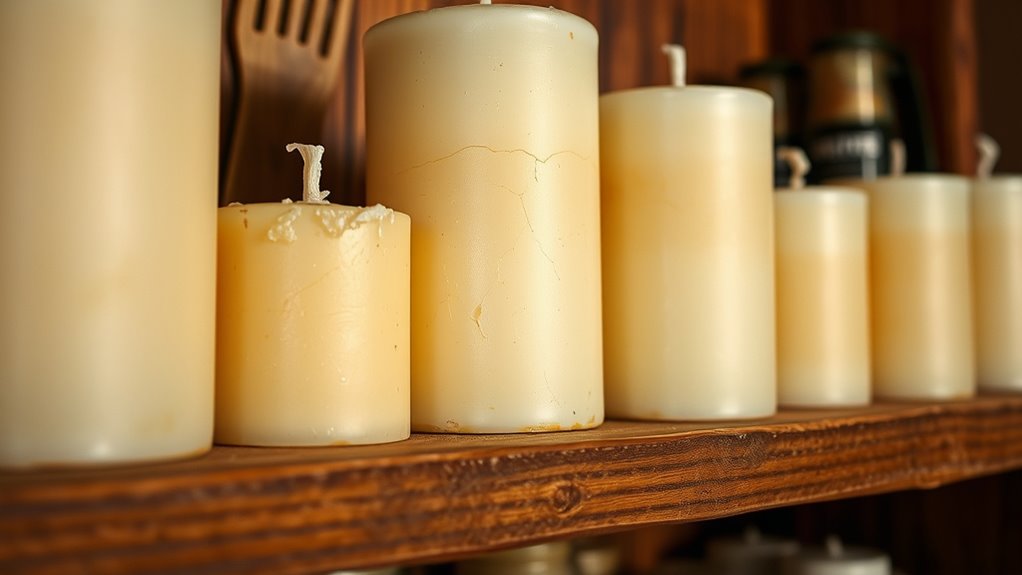
Proper storage is essential to keep your candles fresh and extend their lifespan. When you store candles in a cool, dry place away from direct sunlight, you prevent candle scent degradation that can occur over time. Exposure to heat or sunlight accelerates the fading of wax color, making your candles look dull and less appealing. Keep candles in airtight containers or sealed packaging to avoid dust, moisture, and air exposure, which can also cause scent loss and wax discoloration. Avoid storing candles near vents, windows, or heat sources, as fluctuations in temperature can compromise their quality. Properly stored candles maintain their original scent, appearance, and burn quality longer, ensuring you enjoy them fully before they expire. Additionally, proper storage techniques help prevent the formation of mold or separation that can occur if candles are exposed to humidity or improper conditions. Ensuring optimal storage conditions not only preserves their aesthetic appeal but also maintains their fragrance and burn quality, prolonging their usability. For example, storing candles in a consistent temperature environment can prevent wax separation, which affects how evenly they burn and their overall appearance. Proper storage also helps protect candles from dust and dirt, which can settle on the surface and diminish their visual appeal over time.
Safety Tips for Burning Old or Uncertain Candles
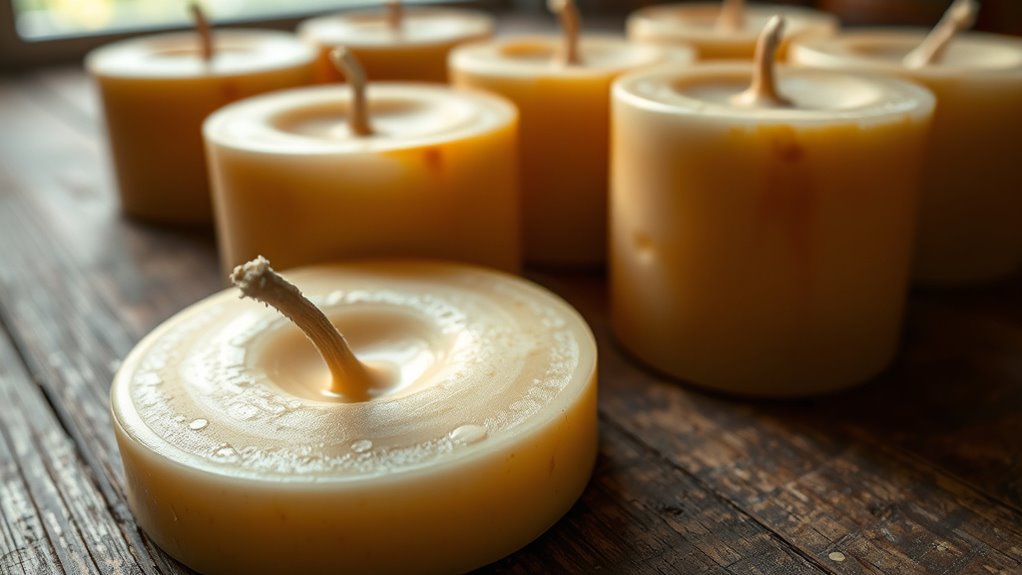
Before lighting old or uncertain candles, it’s essential to inspect them carefully to guarantee they’re safe to burn. Check for cracks, discoloration, or any debris that could cause unsafe burning. Trim the candle wick to about a quarter-inch to promote proper candle wick maintenance and prevent excessive soot or flickering. Be mindful that older candles may have lost some scent, so candle scent preservation might be limited. Always burn candles in a well-ventilated area and on a heat-resistant surface. Keep an eye on the candle as it burns, and never leave it unattended. If the candle shows signs of mold, a strange odor, or has a significant buildup of residue, it’s best to discard it. Safety first ensures a pleasant and worry-free experience.
When to Replace Your Candles for a Better Experience
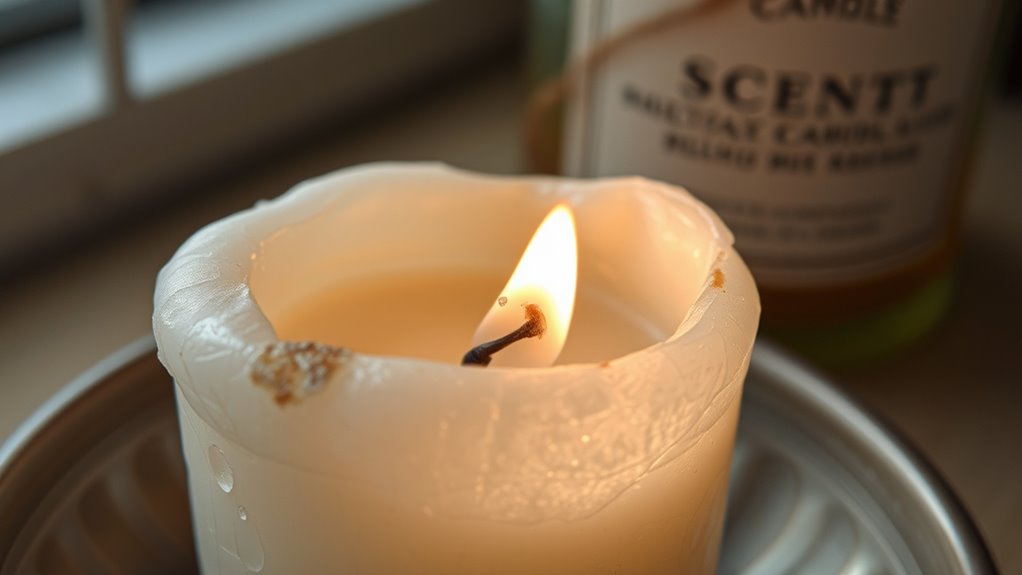
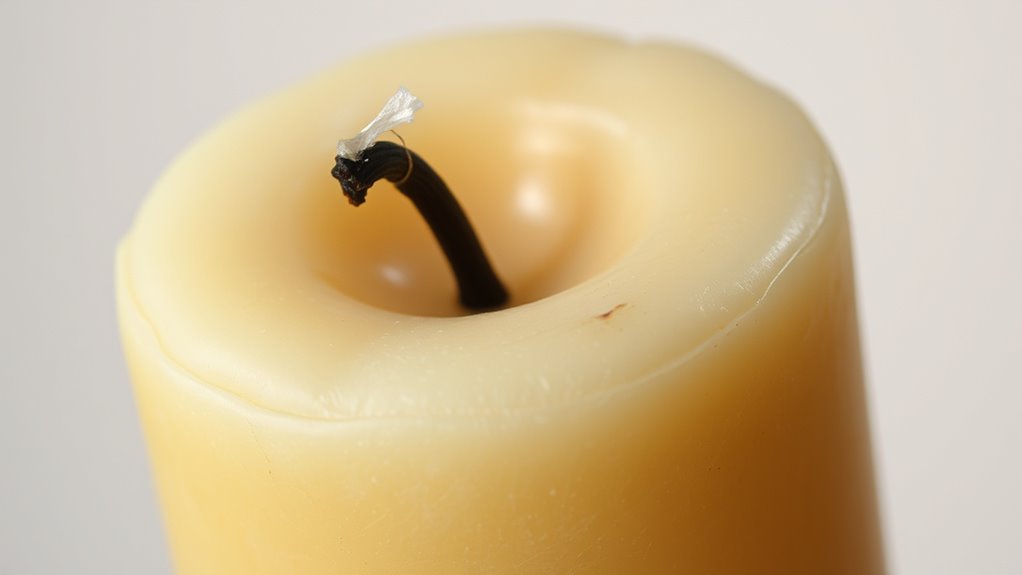
Knowing when to replace your candles can considerably enhance your burning experience and safety. If your candle’s fragrance has faded or become stale, it’s a sign it’s time for a replacement, as the scent impact diminishes over time. Additionally, check the wick material; if it’s warped, crumbly, or blackened, it can cause uneven burning or soot. When you notice pooling wax isn’t reaching the edges or the flame flickers excessively, it’s a cue to replace the candle to prevent safety hazards. Old candles may also develop a hard or cracked surface, indicating the wax has degraded. Replacing your candles at the right time ensures you enjoy maximum fragrance, clean burns, and a safer experience. Regularly inspecting your candles helps you know when it’s time for a refresh. Moreover, understanding how attention can be cultivated through consistent practice may help in developing better awareness of your candles’ condition.
Frequently Asked Questions
Can Candles Develop Mold Over Time?
Candles can develop mold over time, especially if stored in humid or poor conditions. Mold growth occurs when moisture interacts with the wax or wick, creating a damp environment. To prevent this, keep your candles in a cool, dry place with good airflow. Regularly check for any signs of mold, like fuzzy spots or a musty smell, and discard the candle if mold appears to avoid health risks.
Do Scented Candles Lose Their Fragrance With Age?
Yes, scented candles can lose their fragrance with age. Over time, fragrance fading occurs due to exposure to air and light. To preserve their scent, store your candles in a cool, dark place, away from direct sunlight and temperature fluctuations. Proper candle storage helps maintain the fragrance longer, ensuring you enjoy the scent as intended. If the scent has markedly diminished, it might be time to replace the candle.
Are There Candles That Never Expire?
Yes, some candles can last indefinitely if stored properly. To guarantee they don’t suffer wax degradation, keep them in a cool, dark place, away from sunlight and temperature fluctuations. Proper candle storage prevents the wax from breaking down, so they won’t expire or lose quality over time. These long-lasting candles are often made with stable wax blends, making them a reliable choice for years to come.
How Do Different Wax Types Affect Shelf Life?
Did you know that soy wax candles last up to 50% longer than paraffin? Your choice of wax affects shelf stability markedly. Soy, beeswax, and palm wax tend to have better durability and resist oxidation, while paraffin can degrade faster over time. Understanding wax composition helps you determine how long your candles will stay fresh and safe to use, ensuring you enjoy their scent and ambiance longer.
Is It Safe to Burn a Candle That Smells Off?
If a candle smells off, it’s best to prioritize candle safety and avoid burning it. Scent deterioration can indicate mold, bacteria, or chemical changes, which might produce harmful fumes. Burning a candle with an unusual odor could pose health risks and cause unsafe combustion. Always trust your senses—if the smell is off, discard the candle to guarantee safety and prevent potential hazards.
Conclusion
So, if you ignore these signs and keep burning that ancient candle, you might unleash a fiery monster that outlasts your house! Old candles can crack, leak, or even cause fires, turning your cozy space into chaos. Don’t risk it—trust your senses and replace those questionable candles before they turn into a disaster. Your safety and sanity depend on it. When in doubt, toss it out and light a fresh one for a worry-free glow!
Fall yard work Picks
leaf blowers
As an affiliate, we earn on qualifying purchases.