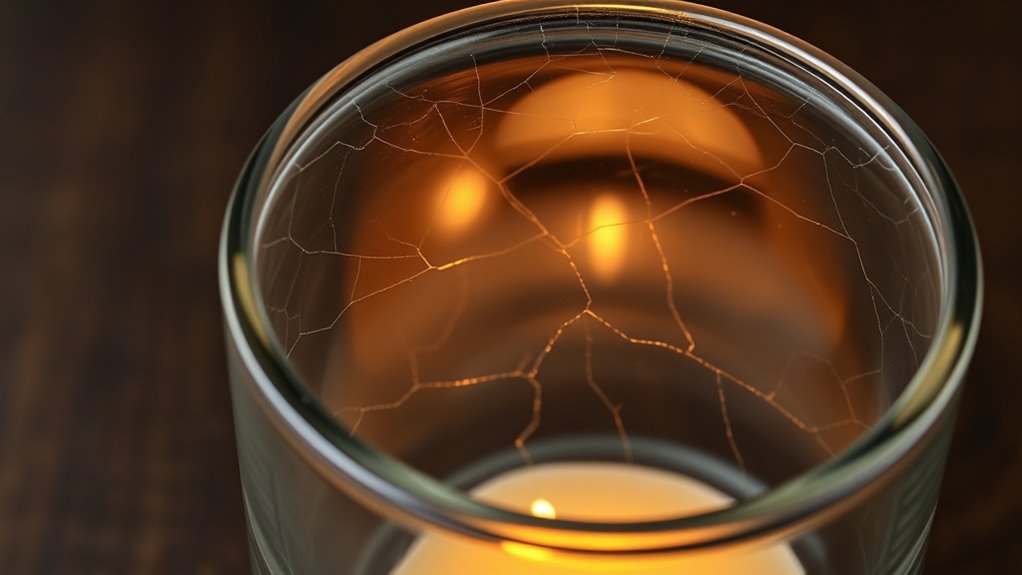

Candle jars crack mainly because sudden temperature changes cause thermal stress, which weakens the glass over time. Thin or low-quality jars are more prone to breaking, especially if you pour hot wax into cold containers or expose jars to drafts and rapid heating or cooling. To prevent this, choose sturdy, heat-resistant glass or metal containers and practice gradual heating and cooling. Keep exploring for more tips on avoiding glass breakage and keeping your candles safe.
Key Takeaways
- Sudden temperature changes cause thermal stress, leading to cracks in the glass candle jar.
- Using low-quality or thin glass increases vulnerability to cracking under heat or temperature fluctuations.
- Rapid cooling or heating, like pouring hot wax into a cold jar, induces thermal shock and potential breakage.
- Selecting heat-resistant, thick, or tempered glass jars reduces the risk of cracks during candle use.
- Avoiding drafts, overburning, and improper handling helps prevent glass breakage and maintains jar integrity.

Scented Candles Set | Men Candle Set, Scented Candles for Home, Gifts for Men Aromatherapy Gift Set - 4 Pack Manly Gifts for Dad Fathers Day, Soy Candle of Leather/Smoke & Vanilla/Oak/Lavender
Gifts for Him: Scented candles tailored for men make wonderful gifts for Fathers Day, birthdays, holidays, or special...
As an affiliate, we earn on qualifying purchases.
Common Causes of Candle Jar Cracks
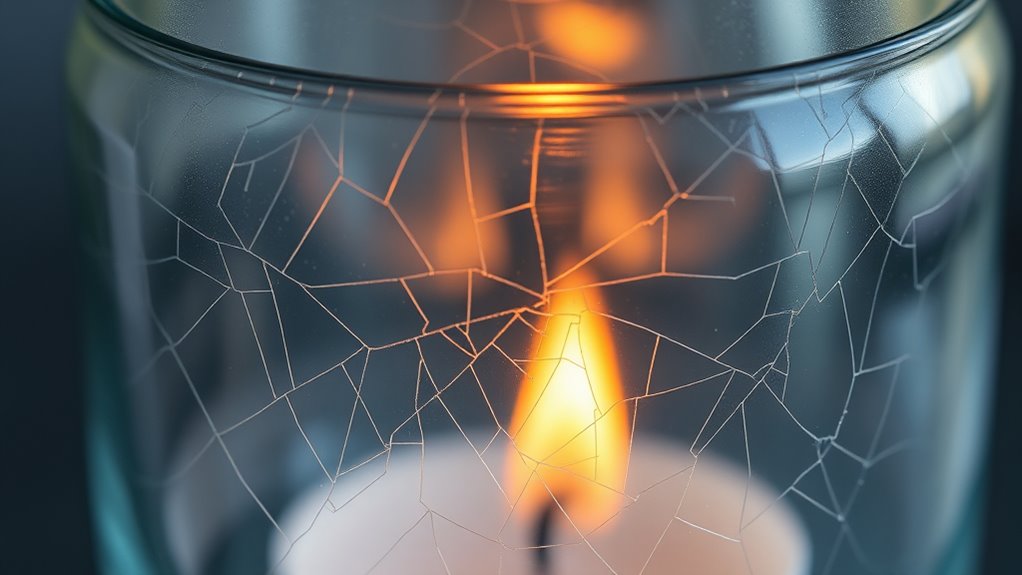
Cracks in candle jars often happen because of sudden temperature changes that stress the glass. The candle jar material plays a significant role in how susceptible it is to cracking. Some materials, like thin or low-quality glass, are more prone to breaking under stress. Manufacturing defects also contribute to cracks; these flaws—such as air bubbles, uneven thickness, or weak spots—compromise the jar’s integrity. When exposed to heat or temperature fluctuations, these weak points can cause the glass to fracture more easily. Choosing high-quality jars made from durable materials reduces this risk. Always inspect your candle jars for any imperfections before use, as even minor manufacturing flaws can lead to cracks over time when the jar is exposed to normal or sudden temperature changes. Additionally, understanding the importance of heat resistance in different glass types can help prevent unexpected breakage. Using proper temperature control methods can further mitigate the risk of cracking during candle use. Being aware of the thermal expansion properties of glass can also assist in selecting jars that are less likely to crack under heat stress. Moreover, selecting jars with consistent wall thickness can distribute heat more evenly and minimize stress points.

UDIKEFO Gifts for Dad, Fathers Day Christmas Birthday Dad Gifts from Daughter Son - Sandalwood Scented Candle
FUNNY GIFTS FOR DAD- This sandalwood candle with a humorous saying: Dad, Please Light This Candle.It is a...
As an affiliate, we earn on qualifying purchases.
How Temperature Changes Affect Glass Integrity
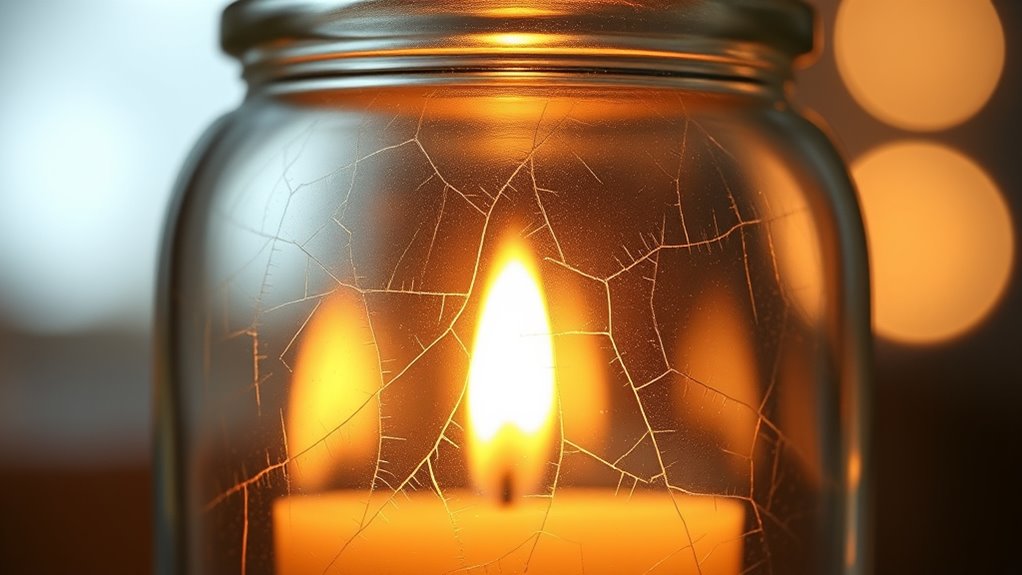
Have you ever wondered why sudden temperature changes can cause glass jars to crack? When exposed to rapid shifts, the glass undergoes thermal stress, which results from uneven glass expansion and contraction. As the temperature increases, the glass expands; when it cools quickly, it contracts. If these changes happen too fast, the outer layers may expand or contract at different rates than the inner layers, creating internal strain. This internal strain can weaken the glass structure, making it more prone to cracking or shattering. The key is understanding that glass isn’t very flexible when subjected to quick temperature swings. Managing these changes by avoiding abrupt temperature shifts helps maintain the glass’s integrity, preventing cracks caused by thermal stress. Additionally, using appropriate storage techniques can minimize the risk of sudden temperature fluctuations impacting the glass.

Homsolver Dad Gifts from Daughter Son, Gift for Dad Who Wants Nothing, Birthday Fathers Day Christmas for Stepdad Adoptive Father, Dad's Last Nerve Sandalwood Scented Candle
Dad's Gifts from Daughter: This black cedarwood juniper and sandalwood candle with a humorous saying "Dad's last nerve...
As an affiliate, we earn on qualifying purchases.
The Impact of Rapid Cooling and Heating
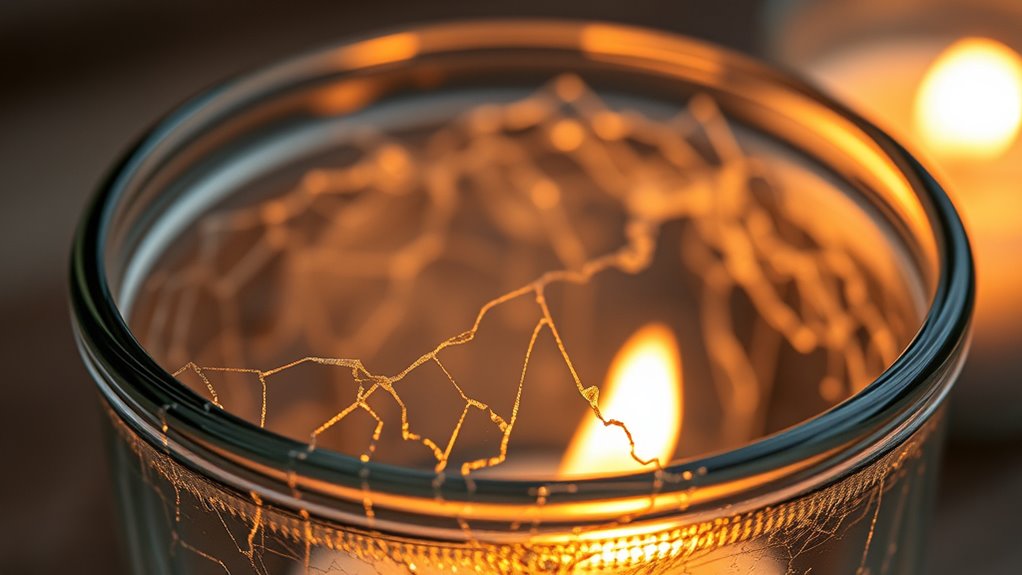
Rapid cooling and heating can markedly increase the risk of glass jars cracking because the sudden temperature changes cause uneven expansion and contraction. This phenomenon, known as thermal shock, stresses the glass and weakens its structure. When exposed to quick temperature shifts, your candle jar’s glass expands or contracts unevenly, increasing the chance of cracks. To avoid this, keep these points in mind:
- Avoid pouring hot wax into a cold jar or vice versa.
- Let the jar temper gradually after heating or cooling.
- Never expose the jar to direct flame or extreme temperature changes.
- Understanding the trustworthiness of AI models can help in designing safer, more resilient glassware with improved heat resistance. Additionally, advancements in automation in business can lead to innovations in manufacturing processes that enhance glass durability. Incorporating material science insights can further improve the heat resistance of glass jars, reducing the likelihood of cracking. Moreover, using thermal shock resistance glass types can significantly decrease cracking issues caused by rapid temperature fluctuations.
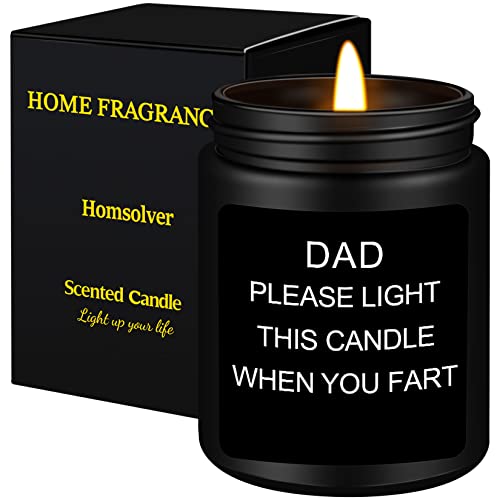
Homsolver Gift for Dad, Fathers Day Christmas Birthday Dad Gifts from Daughter Son - Sandalwood Scented Candle (7OZ)
FUNNY GIFTS FOR DAD- This black cedarwood juniper & sandalwood candle with a humorous saying: Dad, Please Light...
As an affiliate, we earn on qualifying purchases.
Choosing the Right Candle Containers for Safety
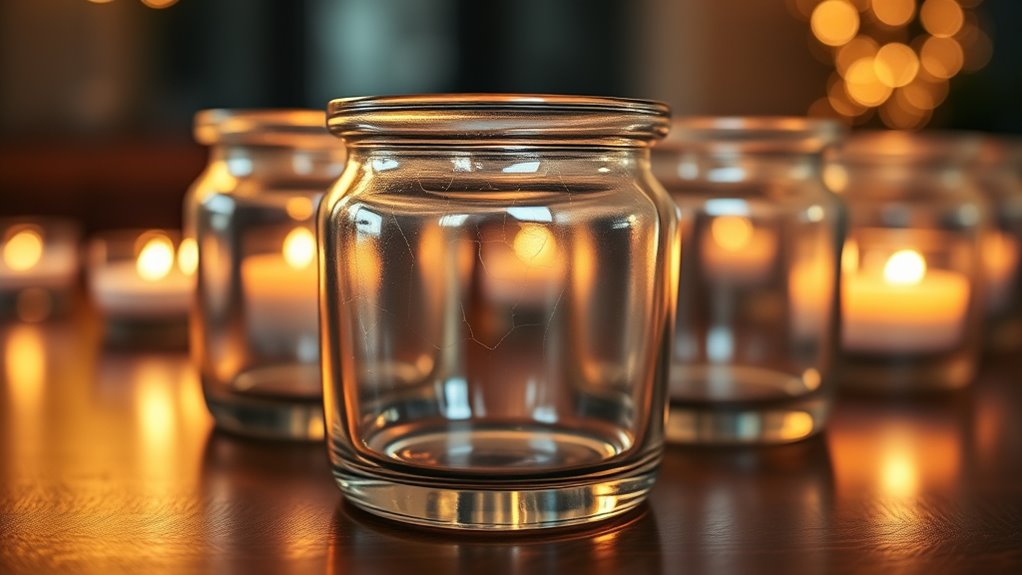
Choosing the right candle containers is essential for your safety and the longevity of your candles. Proper container selection guarantees candle safety by preventing overheating and cracking. Look for heat-resistant glass or metal that can withstand temperature changes without breaking. Avoid thin or fragile materials that risk shattering during use. Here’s a quick guide:
| Container Type | Why It Matters |
|---|---|
| Tempered Glass | Resists thermal shock, reducing risk |
| Metal Jars | Durable and heat-resistant |
| Thick Glass | Less likely to crack under heat |
| Ceramic | Stable, but ensure it’s oven-safe |
Choosing wisely minimizes accidents, protects your space, and keeps your candles safe to enjoy. Incorporating advanced heat-resistant materials and technology in container design can further prevent cracking, offering safer options for candle makers and users alike. Additionally, understanding thermal expansion properties of materials can help in selecting containers that accommodate temperature fluctuations without damage.
Tips for Preventing Glass Breakage During Candle Use
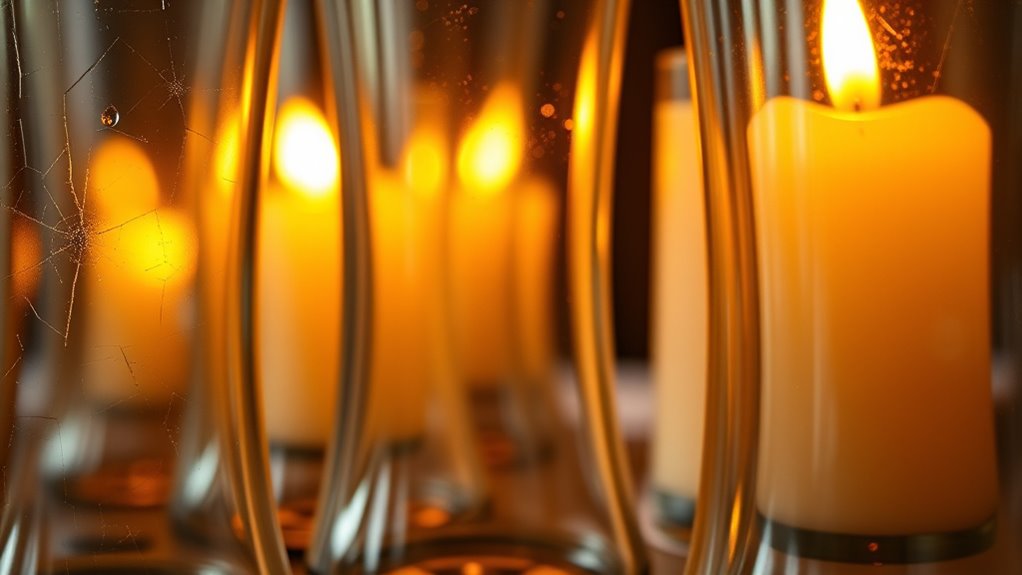
To prevent glass breakage during candle use, it’s essential to handle your jars carefully and follow proper burning practices. First, always burn your candle for no more than four hours at a time to avoid overheating the jar. Second, ensure you trim the wick to about ¼ inch before each use; this promotes candle fragrance safety and prevents excess soot or uneven burning. Third, let the wax pool completely to the edges before extinguishing, which helps prevent uneven heating and stress on the glass. Additionally, avoid placing your candle in drafts or near temperature fluctuations, as sudden changes can cause cracking. Proper candle safety measures are crucial for maintaining the integrity of your jars and enjoying your candles responsibly. Being aware of glass durability factors can further minimize the risk of breakage during use. Also, using appropriate candle holders can provide extra support and prevent accidental damage.
Frequently Asked Questions
Can Using Different Wax Types Cause Jar Cracking?
Yes, using different wax types can cause jar cracking if the wax composition isn’t compatible with your jar. Some waxes expand or contract more when heated or cooled, putting stress on the glass. To prevent this, make certain your wax matches the jar’s material and withstands temperature changes. Always check jar compatibility before switching wax types, and test small batches to avoid unexpected cracks.
How Does Humidity Influence Glass Candle Jar Durability?
A stitch in time saves nine, and understanding humidity effects can save your candle jars. High humidity causes glass expansion, making jars more prone to cracking. Conversely, low humidity can lead to uneven cooling and stress. To protect your candle jars, keep them in a stable environment with consistent humidity levels, avoiding drastic changes. This helps prevent stress cracks and extends their lifespan, ensuring your candles stay beautiful and intact.
Are There Specific Cleaning Agents That Weaken Glass Jars?
You should avoid using harsh cleaning chemicals like ammonia or bleach on glass jars, as they weaken glass strength over time. Instead, opt for mild dish soap and warm water to clean your candle jars. These gentle cleaning agents help preserve the integrity of the glass, reducing the risk of cracks or breakage. Always dry the jars thoroughly to prevent moisture buildup, which can also compromise glass strength.
What Are the Signs of Impending Glass Jar Failure?
You’ll notice signs of impending glass jar failure, like small cracks or cloudiness, often caused by glass stress from temperature fluctuations. Sudden changes in heat or cold can weaken the jar’s structure over time. If you see these signs, stop using the jar immediately to prevent breakage. Avoid exposing it to extreme temperature shifts, and handle it gently to minimize stress and prolong its lifespan.
Can Decorative Designs Increase the Risk of Cracking?
Decorative patterns and intricate design complexity can heighten the risk of cracking in candle jars. When you add detailed designs, the glass may become weaker or develop stress points, especially if the patterns are etched or painted deeply. These areas are more susceptible to thermal stress from the heat of the candle, making cracks more likely. To prevent this, choose simpler designs or confirm the glass is thick enough to withstand temperature changes.
Conclusion
To keep your candle jars crack-free, you need to be mindful of temperature changes and handle them with care. Sudden shifts can be the straw that breaks the camel’s back, so always let your candles cool gradually and choose sturdy containers. By following these simple tips, you’ll avoid unnecessary mishaps and keep your candles shining bright. Remember, a little caution goes a long way—don’t put all your eggs in one basket when it comes to glass safety.