TL;DR

Get decor and gifts delivered free with Prime
- Fast, free delivery on millions of items
- Prime Video, Amazon Music and more included
- Member-only deals all year
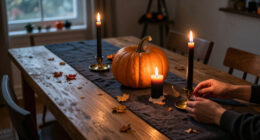
Livingetc published four Japanese tablescaping lessons for autumn hosting: combine individual place settings with shared dishes, choose tableware with its user in mind, treat vessels as part of the food, and change ceramics with the season. The report presents these as design ideas that can be adapted to Western dining; it does not report a new study or a formal change in Japanese custom.
Livingetc has published four Japanese-inspired tablescaping lessons for autumn hosting, recommending a mix of individual place settings and shared dishes, personal rather than uniform tableware, vessels chosen to complement food, and seasonal changes to plates and bowls. The report frames these as adaptable design ideas for Western homes, offering hosts ways to make a meal feel considered without changing the whole table.
The first suggestion is to combine a personal setting for each guest with shared dishes in the middle. The report describes an individual tray, or oshiki, holding a rice bowl, soup bowl and small plate, while guests serve themselves from communal platters. It says this approach brings together plated and family-style dining rather than choosing only one format.
Another lesson is to choose tableware for the person using it. The report describes family members having their own rice bowls, or chawan, and chopsticks, or hashi, selected for hand size and preferred feel. It contrasts this with the Western convention of buying a coordinated set, suggesting that a thoughtful mix can make a table more personal.
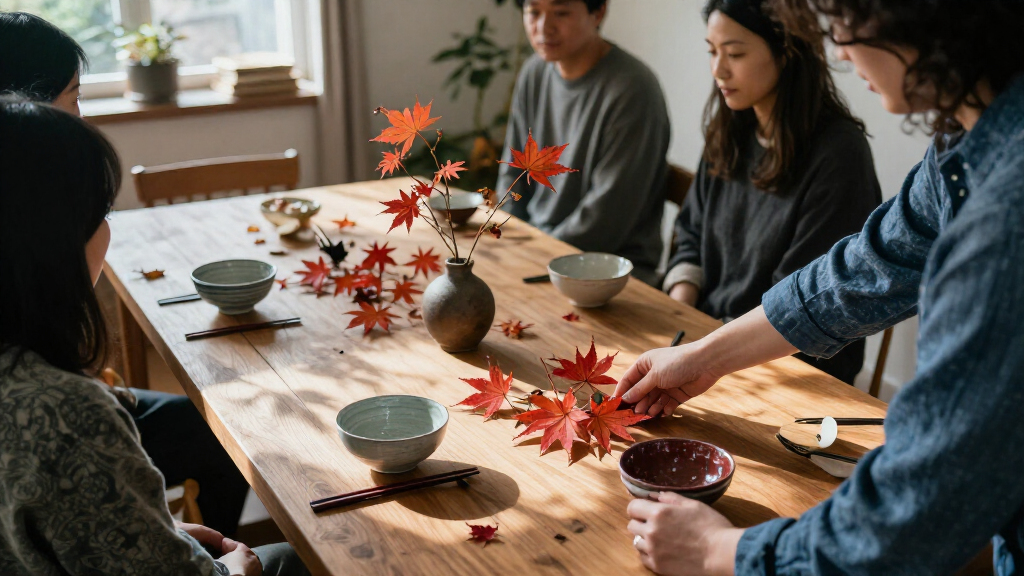
The remaining ideas focus on the relationship between food and its vessels, and on seasonal changes. The report attributes the saying that a vessel is the “kimono of the food” to potter Kitaōji Rosanjin. It recommends considering a plate’s open space, and the weight and warmth of a bowl, as well as collecting small plates called mame-zara. For autumn, it suggests warm clay and persimmon or rust glazes, with a small seasonal accent such as a chrysanthemum-shaped chopstick rest.
Small Changes for Autumn Hosting
The advice matters to readers planning seasonal gatherings because it offers practical adjustments rather than a full redesign. Hosts can use dishes they already own, set out shared platters alongside individual bowls, or add one autumn-colored ceramic piece. The ideas also shift attention from visual matching alone to how guests use and experience the tableware.
These are design recommendations, not evidence of a measurable effect on comfort or dining. Their appeal lies in the report’s emphasis on hospitality: personal settings give each guest a defined place, while shared dishes keep the meal communal. Seasonal ceramics can signal autumn without requiring candles or a large centerpiece.
Products Worth Considering

Philips Hue Secure Wired Video Doorbell, 2K, Black

Dyson V8 Cordless Vacuum

Dreame L50 Ultra Robot Vacuum and Mop
As an affiliate, we earn on qualifying purchases.
The Japanese Practices Behind the Ideas
The report was produced in collaboration with Nakagawa, a craft maker and retailer founded in Nara in 1716, according to the article. It uses Japanese dining terms to explain the practices it presents: meimei no ba refers to each person’s own place, while oshiki is the individual tray described in the article.
Its seasonal suggestions draw on the idea that Japanese homes adjust tableware through the year. The article contrasts summer glass and white porcelain with autumn’s warmer clay and glazes, and recommends introducing a seasonal touch slightly ahead of the season. It presents that timing as part of the seasonal calendar of daily life, rather than as a rule readers must follow.
““A Japanese table is laid as two things at once. A private setting in front of each person, and shared dishes in the middle for everyone to take from.””
— Livingetc report
What the Report Does Not Establish
The article offers design guidance and cultural description, not a survey of Japanese households or a formal set of rules. It does not quantify how widespread each practice is, establish that all Japanese homes use the arrangements described, or test whether the suggestions make guests feel more comfortable. The publication date is also not supplied in the source material.
The report names a craft retailer as a collaborator and includes product references, but it does not provide independent comparisons of the tableware or evidence about its performance. Readers should understand the recommendations as an editorial account of practices that can inspire a Western table, not as a claim that there is one definitive way to set a Japanese table.
How Hosts Can Adapt the Ideas
For an autumn meal, the report’s suggested next step is to start with the meal itself: set out individual bowls or plates, then place dishes for sharing within reach. Hosts can add personal details by choosing pieces for how they feel in the hand, and can mix small plates rather than buying a matching collection.
To mark the season, readers can swap in warm-toned ceramics or add one small seasonal object, such as a chrysanthemum-shaped chopstick rest. No broader table change is required by the approach described. Livingetc also points readers toward Japanese kitchen storage ideas, but the source does not give a further timeline or report any planned follow-up to the tablescaping article.
Key Questions
What are the four Japanese-inspired autumn tablescaping lessons?
Livingetc recommends combining personal settings with shared dishes, choosing tableware for the person using it, treating the vessel as part of the food, and changing plates or bowls to reflect the season.
What is an oshiki?
In the report, an oshiki is a flat individual tray holding a guest’s rice bowl, soup bowl and small plate. Communal dishes are placed separately in the middle of the table.
What tableware does the report suggest for autumn?
It suggests warm clay and persimmon or rust-colored glazes, with a small seasonal accent such as a chrysanthemum-shaped chopstick rest. These are examples, not requirements.
Does Livingetc say every Japanese home sets a table this way?
No. The article describes practices and design ideas, but it does not establish how common they are across Japanese households or present them as universal rules.
Source: livingetc.com